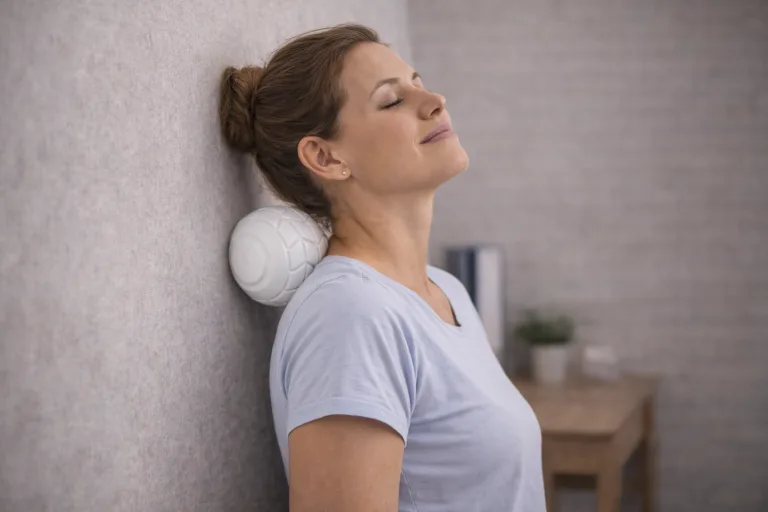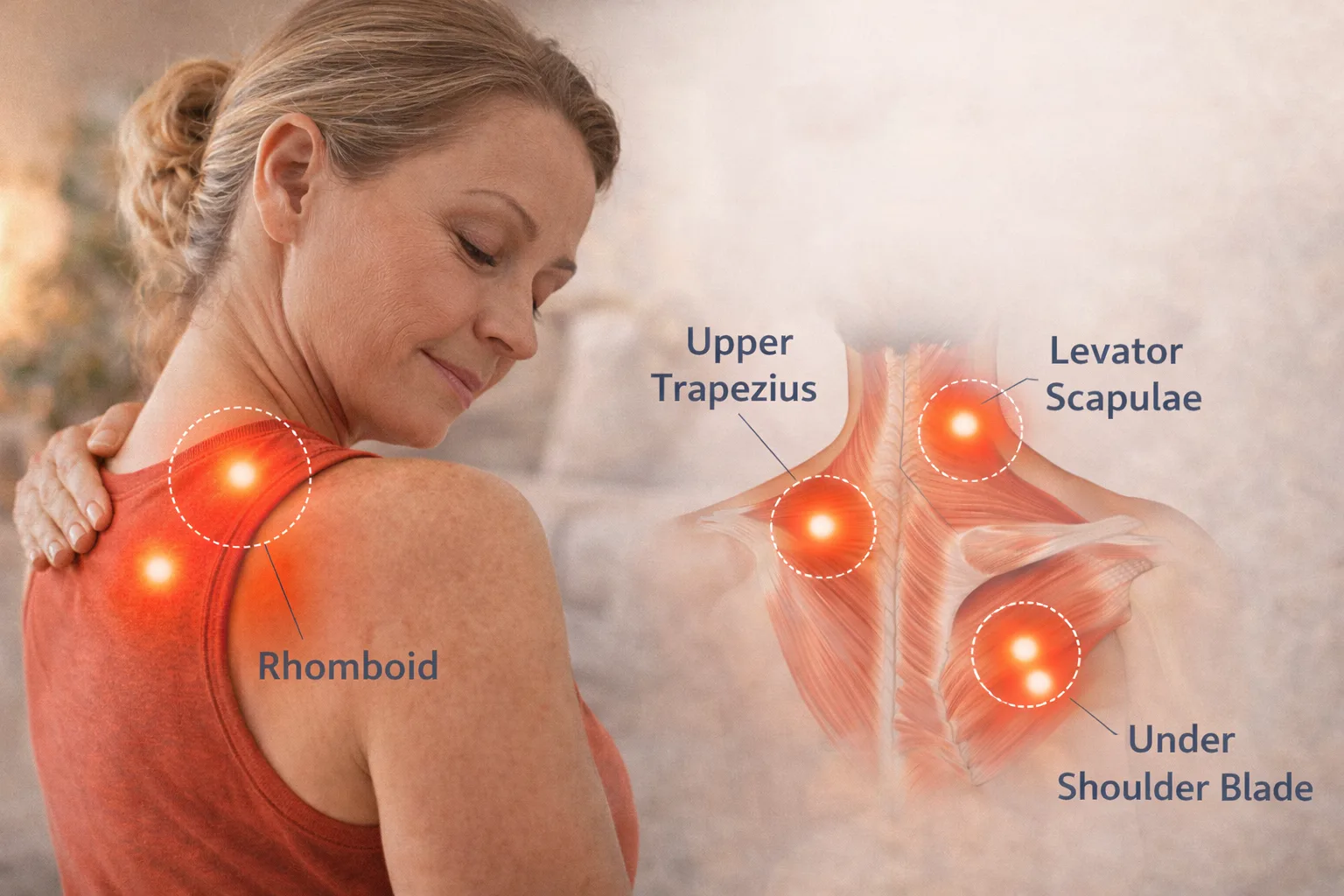
Trigger points in the upper back are one of the most common causes of persistent shoulder and back tension.
Many people describe the sensation as tight knots between the shoulder blades, stiffness in the upper shoulders, or pressure that builds after long hours of desk work.
Understanding where trigger points typically form can make it much easier to identify and relieve them.
If you’re new to the concept of trigger points, start with our complete overview:
Why Trigger Points Often Form in the Upper Back
The upper back is constantly working to support the head, shoulders, and arms throughout the day.
Modern lifestyle habits place even more stress on these muscles.
Common triggers include:
• long hours sitting at a computer
• forward head posture
• repetitive shoulder movement
• emotional stress and tension
Over time, small sections of muscle fibers can remain contracted, forming trigger points or muscle knots.
If you’re unsure whether what you’re feeling is a trigger point or a muscle knot, this guide explains the difference:
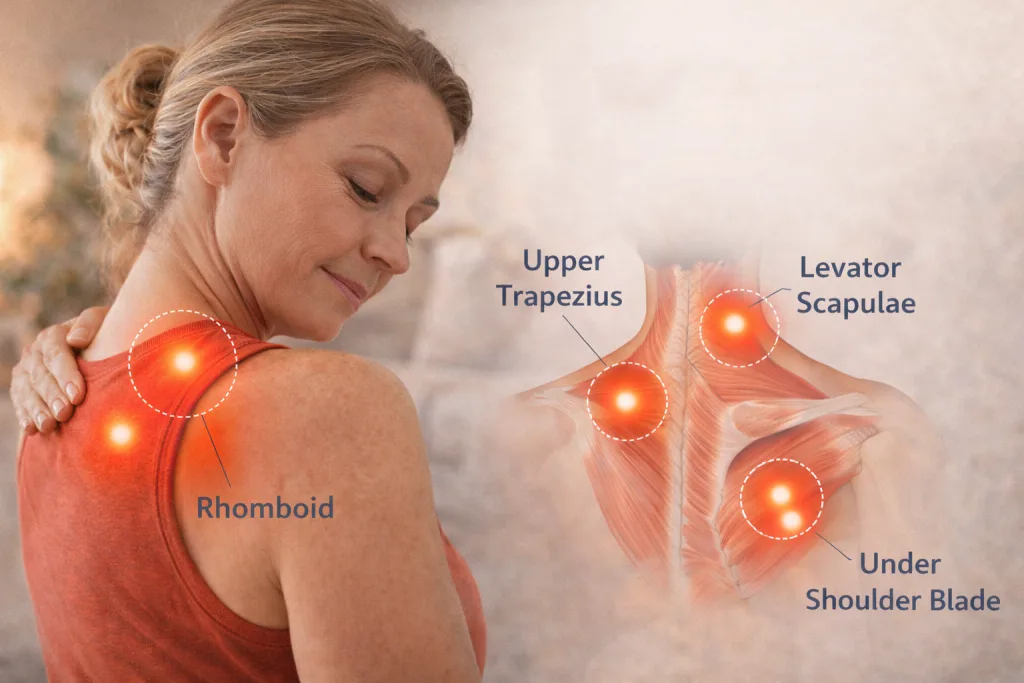
The Most Common Upper Back Trigger Point Locations
Although trigger points can appear in many muscles, several areas in the upper back are particularly prone to developing them.
Short daily sessions prevent accumulation.
For daily upper back tension:
For deeper, long standing tightness:
1. Upper Trapezius Trigger Points
The upper trapezius muscle runs from the neck to the shoulders.
Trigger points in this muscle are extremely common, especially among people who work at a desk.
Symptoms may include:
• tight shoulders
• neck stiffness
• headaches at the base of the skull
These trigger points often develop from holding the shoulders slightly elevated for long periods.
2. Rhomboid Trigger Points (Between the Shoulder Blades)
The rhomboid muscles sit directly between the shoulder blades.
These muscles are responsible for pulling the shoulder blades toward the spine and maintaining proper posture.
Trigger points here often feel like:
• deep knots between the shoulder blades
• pressure in the middle of the upper back
• soreness when leaning against a chair
This is one of the most common locations people notice when they say their upper back feels tight.
You can learn how to locate these spots here:
How to Find Trigger Points in Your Upper Back
3. Levator Scapulae Trigger Points
The levator scapulae muscle connects the neck to the top of the shoulder blade.
Trigger points here frequently cause:
• neck stiffness
• difficulty turning the head
• tightness along the side of the neck
These trigger points are often associated with poor posture and prolonged sitting.
A deeper explanation of this tension pattern is covered here:
Why Your Shoulders Feel Tight After Desk Work
4. Trigger Points Under the Shoulder Blade
Some trigger points form slightly under or around the shoulder blade, making them harder to reach.
These spots may cause:
• deep aching in the upper back
• pressure when leaning against a chair
• discomfort during certain arm movements
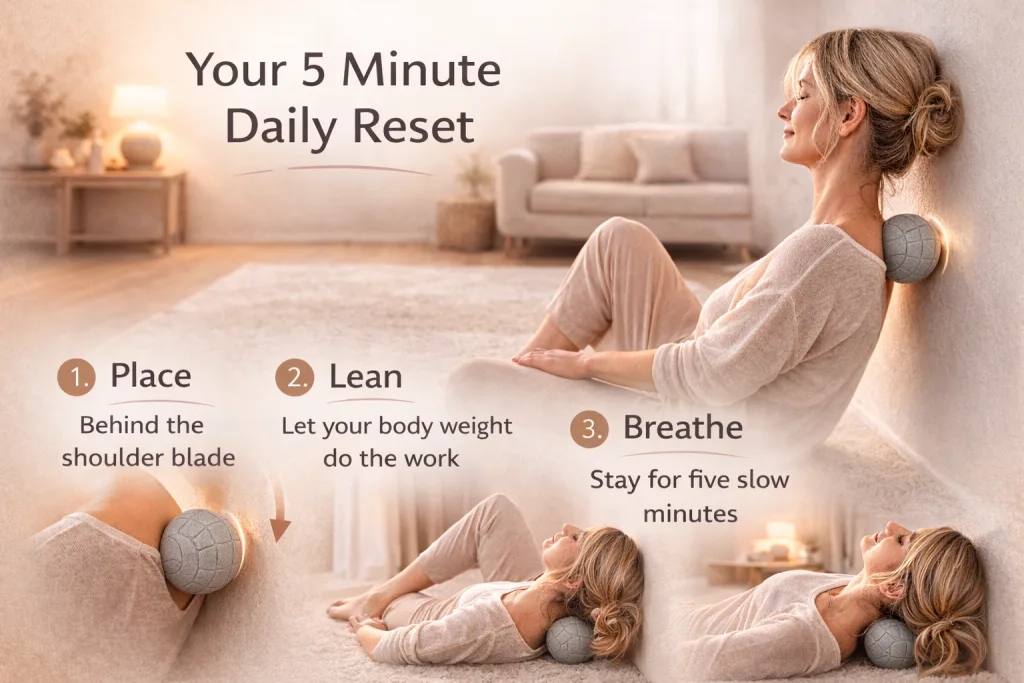
Because these areas are difficult to reach with the hands, many people use wall pressure techniques to apply gentle sustained pressure.
One simple technique is explained here:
How to Release Deep Shoulder Blade Tension at Home
Why Trigger Points Often Feel Worse at the End of the Day
Many people notice that upper back trigger points feel worse in the evening.
This usually happens because the muscles have been under constant tension throughout the day.
Contributing factors include:
• prolonged sitting
• reduced circulation in the muscles
• accumulated muscle fatigue
Over time, these tight spots can become more sensitive if they are not released regularly.
How to Release Upper Back Trigger Points
Trigger points respond best to steady, controlled pressure.
Common self-release methods include:
• massage balls
• foam rollers
• wall pressure techniques
• manual massage
The goal is not aggressive pressure, but gentle sustained compression that allows the muscle fibers to gradually relax.
Many people combine trigger point release with short daily routines that restore shoulder movement.
One example is:
The 5 Minute Shoulder and Upper Back Reset Routine
Why Trigger Points Keep Returning
Even after a trigger point is released, it may return if the underlying tension patterns remain.
Common causes include:
• poor posture
• lack of movement
• repetitive strain
• stress related muscle tension
Addressing both the trigger point and the daily habits that caused it is the best way to prevent the knots from returning.
The Takeaway
Trigger points in the upper back commonly develop in the trapezius, rhomboid, and levator scapulae muscles.
These small areas of tight muscle fibers can cause persistent tension between the shoulder blades and across the upper back.
Learning where these trigger points typically appear makes it easier to identify the source of discomfort and apply the right type of release technique.
With consistent attention to posture, movement, and gentle self-massage, many people can significantly reduce upper back tension.