Many people feel tightness or pressure in their upper back but struggle to identify exactly where the discomfort is coming from.
Often, the cause is a trigger point a small, sensitive knot inside a tight band of muscle fibers.
Trigger points frequently develop in the muscles between the shoulder blades and the upper shoulders. Once you learn how to locate them, it becomes much easier to relieve the tension safely.
If you’re new to the concept, our full explanation of trigger points is available here:

What Does a Trigger Point Feel Like?
A trigger point usually feels like a small, firm knot inside the muscle.
When you press on it, you may notice:
• a deep aching sensation
• localized tenderness
• a feeling of pressure or tightness
• discomfort spreading slightly around the area
Many people describe trigger points as feeling like a tight pea or marble under the skin.
These knots are different from general muscle soreness because they are very specific, localized spots.
If you’re unsure whether what you’re feeling is a trigger point, you may want to read:
What Is a Trigger Point in the Upper Back
Where Trigger Points Usually Appear in the Upper Back
The upper back contains several muscles that commonly develop trigger points.
The most frequent locations include:
Upper Trapezius
This muscle runs from the neck to the shoulders and helps support the head.
Trigger points here often cause:
• shoulder stiffness
• neck tightness
• tension headaches
Rhomboid Muscles
These muscles sit between the shoulder blades and are heavily involved in posture.
Trigger points here often feel like:
• knots between the shoulder blades
• deep pressure in the upper back
• discomfort after long desk work
If you regularly experience this pattern, it may relate to prolonged sitting, explained here:
Why Your Shoulders Feel Tight After Desk Work
Levator Scapulae
This muscle connects the neck to the shoulder blade.
Trigger points in this area often cause:
• stiffness when turning the head
• tightness along the side of the neck
• discomfort when lifting the shoulder
A Simple Way to Locate Trigger Points
One of the easiest ways to find trigger points is through gentle self-exploration.
Try this simple method:
Sit or stand in a relaxed position.
Use your fingers to slowly press into the muscles between the shoulder blades.
Move gradually across the upper back area.
Notice spots that feel tighter or more sensitive than the surrounding muscle.
When you press a trigger point, you may feel a familiar sensation of tension.
This is often the exact spot responsible for the discomfort.
The Wall Method for Finding Trigger Points
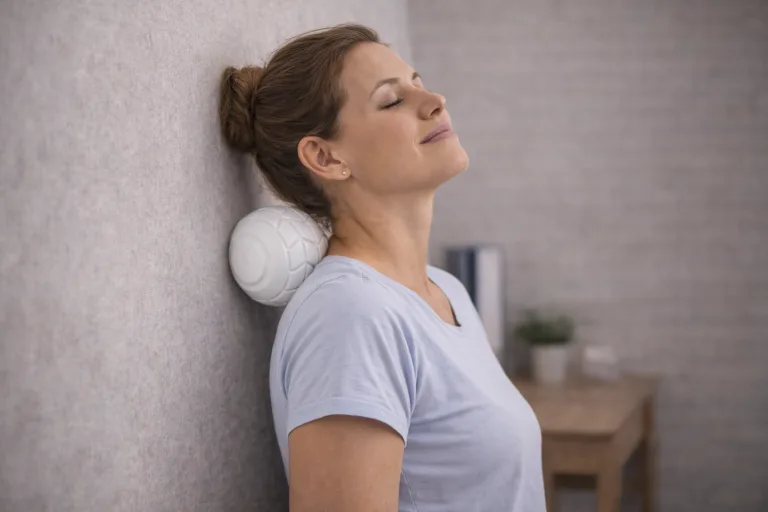
Another effective way to locate trigger points is using a wall.
This method allows you to apply pressure safely without straining your arms.
Steps:
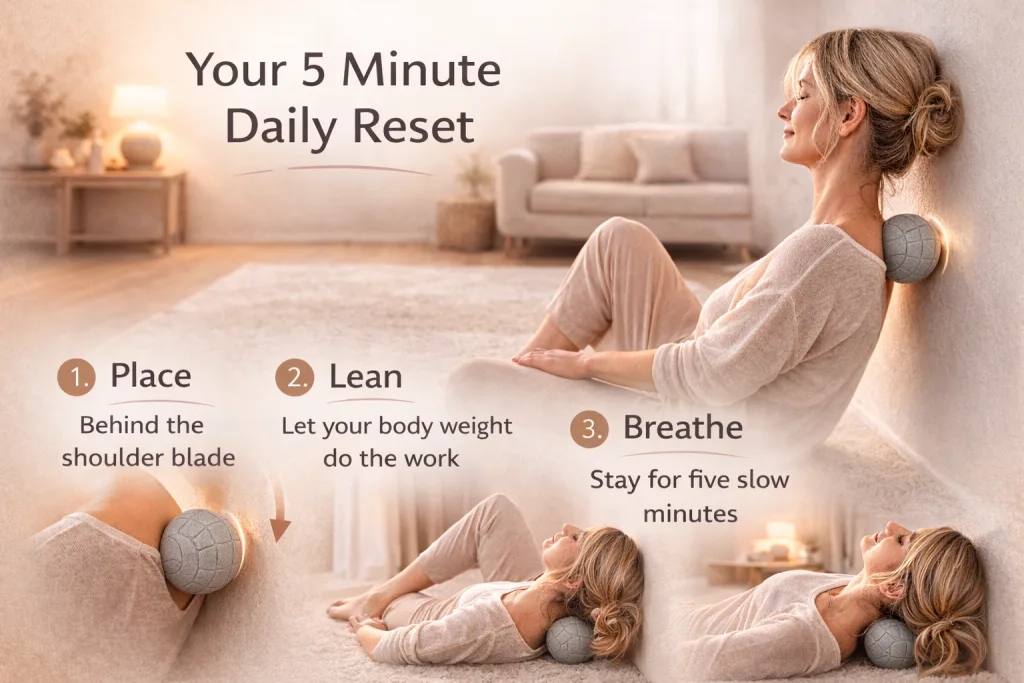
Stand with your back against a wall.
Place a massage ball between the wall and your upper back.
Lean gently into the ball.
Slowly move your body up or down.
When the ball reaches a trigger point, you will usually feel:
• deeper pressure
• increased sensitivity
• a release sensation after a few seconds
A more detailed technique is explained in:
How to Release Deep Shoulder Blade Tension at Home
Why Trigger Points Are Often Hard to Find
Trigger points can sometimes be difficult to locate because the discomfort may spread beyond the actual knot.
For example:
• a trigger point between the shoulder blades may cause pain across the upper back
• a trigger point near the neck may create headaches
• tension may radiate toward the shoulder
This phenomenon is known as referred tension.
It is one reason why trigger points are often misunderstood.
What to Do After You Find a Trigger Point
Once you’ve located a trigger point, the next step is applying gentle pressure to encourage the muscle to relax.
Common methods include:
• massage balls
• wall pressure techniques
• foam rollers
• manual massage
The goal is not to press aggressively but to apply steady, controlled pressure.
Many people combine trigger point release with short daily mobility routines to prevent knots from returning.
One example is:
The 5 Minute Shoulder and Upper Back Reset Routine
Why Trigger Points Keep Returning
Finding and releasing a trigger point can provide immediate relief.
However, trigger points often return if the underlying causes remain unchanged.
Common causes include:
• long hours of sitting
• poor posture
• repetitive shoulder movements
• emotional stress
Over time, untreated tension can develop into persistent upper back discomfort.
If you’re curious about what happens when tension patterns continue, you may want to read:
What Happens If You Ignore Upper Back Pain
The Takeaway
Trigger points are one of the most common causes of upper back tension.
Learning how to locate them is the first step toward relieving muscle knots and restoring comfortable movement.
By understanding where trigger points form and how they feel, you can identify the tight areas responsible for your discomfort and begin releasing them safely.
With consistent attention to posture, movement, and gentle self-massage, most people can significantly reduce upper back tension.
Short daily sessions prevent accumulation.
For daily upper back tension:
For deeper, long standing tightness: