Muscle tension in the upper back rarely appears suddenly.
For most people, it develops slowly through daily habits like desk work, stress, poor posture, and long hours of sitting.
At first, it may feel like simple tightness.
But over time, that tension often turns into something more specific small painful spots known as trigger points, or what many people call muscle knots.
Understanding how trigger points work is the first step toward relieving them safely and preventing them from returning.
What Is a Trigger Point?
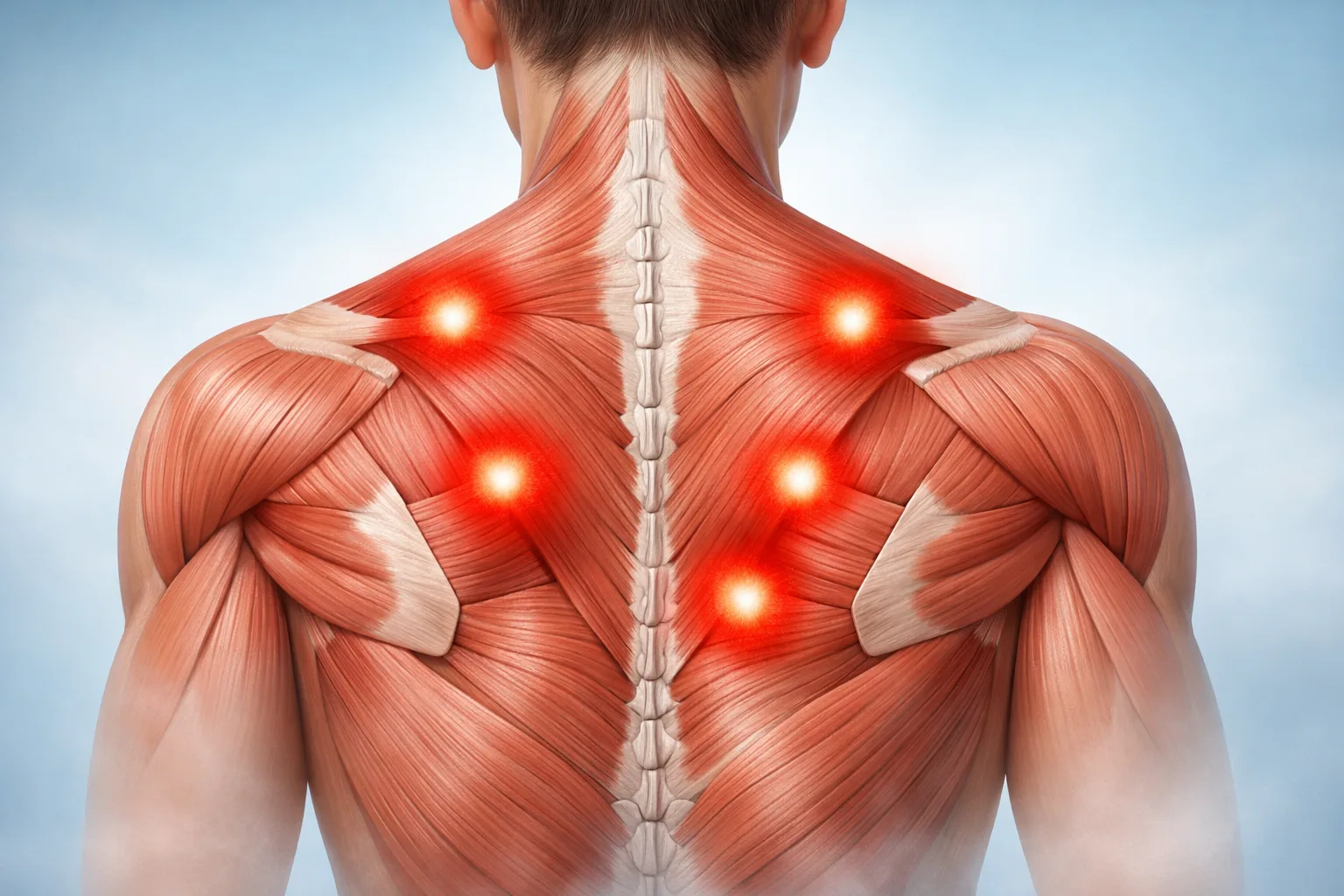
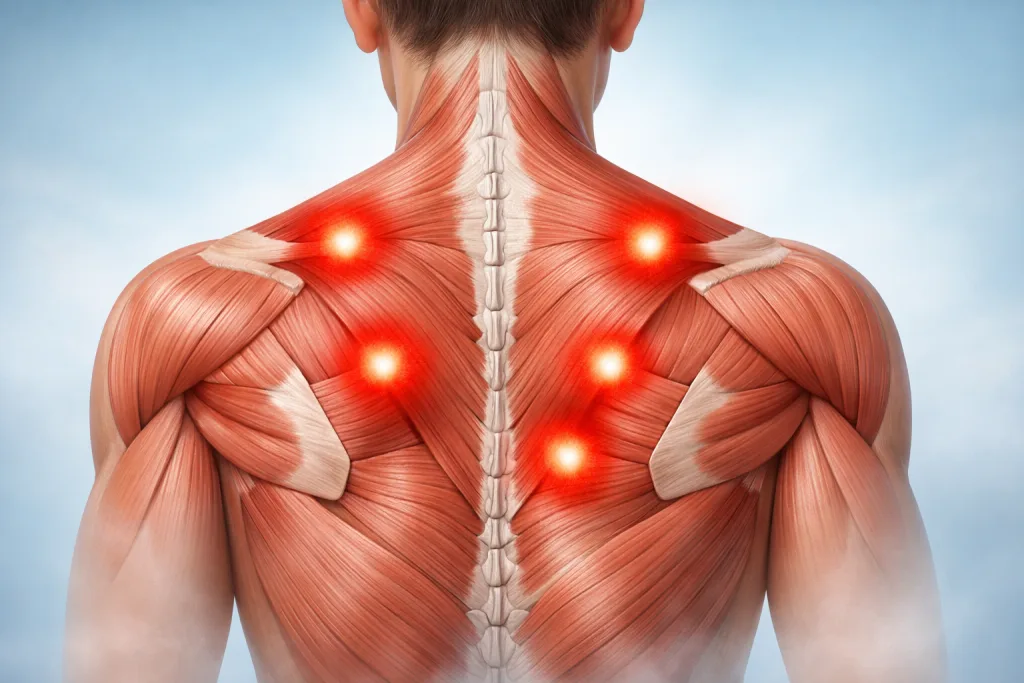
A trigger point is a small, sensitive spot within a tight band of muscle fibers.
When pressure is applied to this spot, it may cause:
• localized tenderness
• aching in surrounding muscles
• burning sensations
• referred discomfort in nearby areas
Trigger points commonly form in muscles that stay contracted for long periods.
In the upper back, the most affected muscles include:
• upper trapezius
• rhomboids
• levator scapulae
These muscles stabilize the shoulders and help maintain posture throughout the day.
When they become overloaded, trigger points can develop.
If you often feel tightness after long hours at a computer, you may recognize the pattern explained in:
Why Your Shoulders Feel Tight After Desk Work
Why Trigger Points Form in the Upper Back
Trigger points are usually caused by repetitive stress and muscle imbalance.
Some of the most common triggers include:
Prolonged sitting
Remaining in a forward leaning position places constant load on the upper back muscles.
Postural imbalance
Rounded shoulders can shorten chest muscles while overworking the muscles between the shoulder blades.
You can learn more about this pattern in:
How to Fix Rounded Shoulders and Upper Back Posture Naturally
Stress and nervous system tension
Emotional stress often causes the shoulders to lift unconsciously.
Over time this keeps upper back muscles partially contracted.
This relationship is explained further in:
How Stress Causes Shoulder and Upper Back Tension
Common Symptoms of Trigger Points
Trigger points can feel different from ordinary muscle soreness.
Typical symptoms include:
• a deep aching sensation
• small painful knots in the muscle
• burning between the shoulder blades
• stiffness in the neck and shoulders
Some people notice that pressing a trigger point causes pain to spread across the upper back.
This sensation is sometimes mistaken for nerve pain.
If you’ve experienced burning discomfort in the upper back, the mechanism is explained in:
Why You Feel a Burning Sensation Between Your Shoulder Blades
How Trigger Point Massage Works
Trigger point massage works by applying controlled pressure to the tight muscle fibers.
This pressure helps:
• restore blood circulation
• reduce muscle contraction
• calm nerve sensitivity
• release accumulated tension
Unlike general massage, trigger point work focuses on specific tight areas rather than large muscle groups.
When applied consistently, it can help restore normal muscle function.
How to Perform Trigger Point Massage at Home
You don’t need professional equipment to begin releasing trigger points.
Many people successfully perform self massage using simple tools.
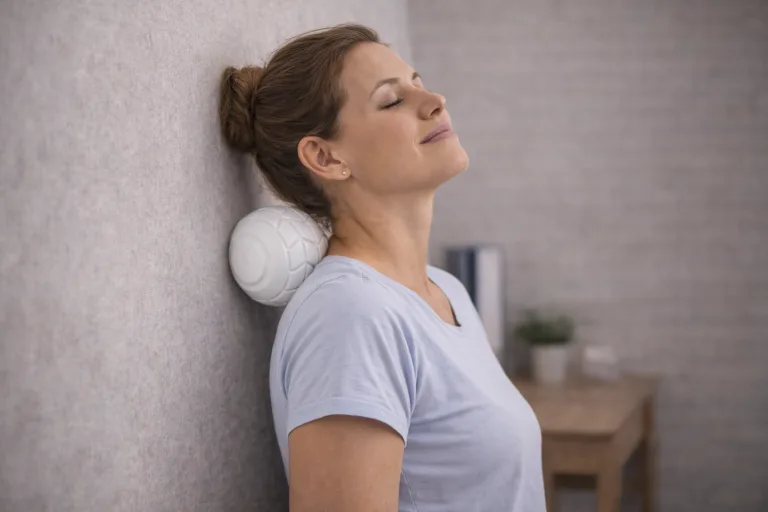
A common technique involves:
Standing against a wall
Placing a massage ball between the wall and the upper back
Leaning gently into the ball
Slowly moving to locate tight areas
When you find a sensitive spot, pause and apply light pressure while breathing slowly.
Hold for about 20–30 seconds before moving to the next area.
A more detailed step by step method is explained in:
How to Release Deep Shoulder Blade Tension at Home
The Wall Technique for Trigger Point Release
One of the most effective self treatment methods is the wall release technique.
This method allows controlled pressure without requiring another person.
Benefits include:
• precise pressure control
• easy access to shoulder blade areas
• safe self treatment
Wall based release techniques are especially helpful for people who experience tension after long periods of sitting.
You can explore the technique in detail here:
→ Trigger Point Wall Release Technique

Why Trigger Points Often Return
Many people experience temporary relief from massage, only to see the knots return later.
This happens because trigger points rarely have a single cause.
They often result from a combination of factors:
• muscle tightness
• weak stabilizing muscles
• poor posture habits
• daily stress patterns
Addressing only one factor may provide short term relief but not long term change.
A balanced approach that includes posture correction, mobility, and consistent release is usually more effective.
Daily Habits That Prevent Trigger Points
Preventing trigger points is often easier than treating them.
Simple daily habits can significantly reduce muscle tension.
Examples include:
• taking short breaks from sitting
• maintaining neutral shoulder posture
• performing short mobility exercises
• using gentle pressure techniques to release tension early
Many people benefit from short daily routines designed to reset shoulder posture and release accumulated tension.
One example is:
The 5 Minute Shoulder & Upper Back Reset Routine
When Trigger Points Become Chronic
If trigger points are ignored for long periods, tension patterns can become more persistent.
People may notice:
• recurring knots in the same areas
• worsening posture
• increased burning sensations
• discomfort during sleep
Understanding how tension progresses is important.
If you’re curious about the long term effects, you may want to read:
What Happens If You Ignore Upper Back Pain?
Early intervention often prevents these patterns from becoming chronic.
The Takeaway
Trigger points are one of the most common causes of upper back tension.
They develop gradually through posture habits, stress, and repetitive muscle use.
The good news is that trigger points are often highly responsive to consistent self care.
With proper awareness, gentle release techniques, and daily posture resets, most people can significantly reduce muscle knots and restore comfortable movement.
Short daily sessions prevent accumulation.
For daily upper back tension:
For deeper, long standing tightness: