Upper back tension is one of the most common complaints among people who spend long hours sitting.
Many people experience:
stiffness between the shoulder blades
muscle knots in the upper back
neck tightness caused by shoulder tension
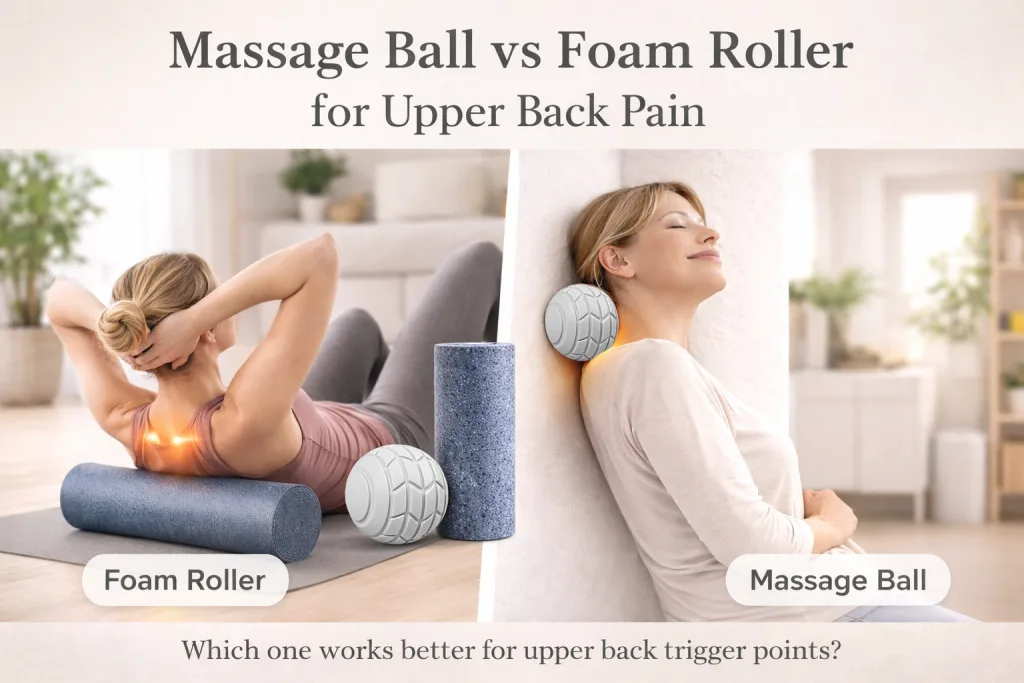
Two of the most popular self massage tools used to relieve this tension are:
foam rollers
Both can help release tight muscles, but they work in different ways.
Understanding when to use each tool can help you choose the best option for your upper back pain.
What Causes Upper Back Pain?
Upper back pain often develops gradually due to posture and repetitive muscle strain.
The muscles most commonly involved include:
rhomboids
trapezius
levator scapulae
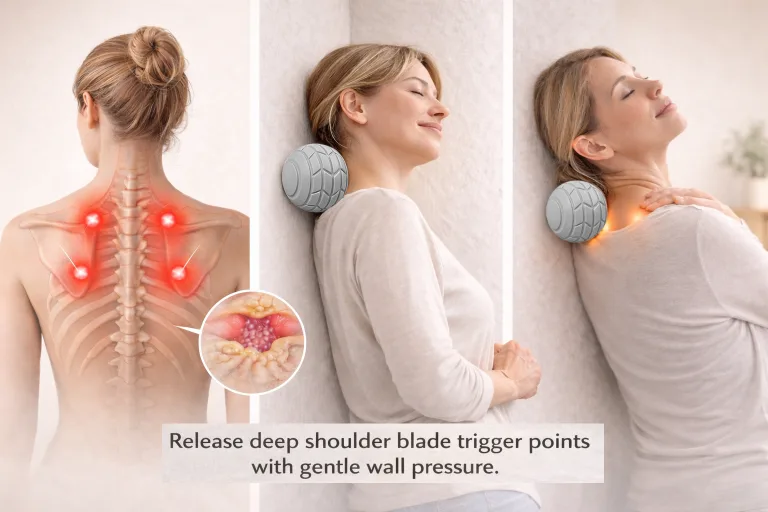
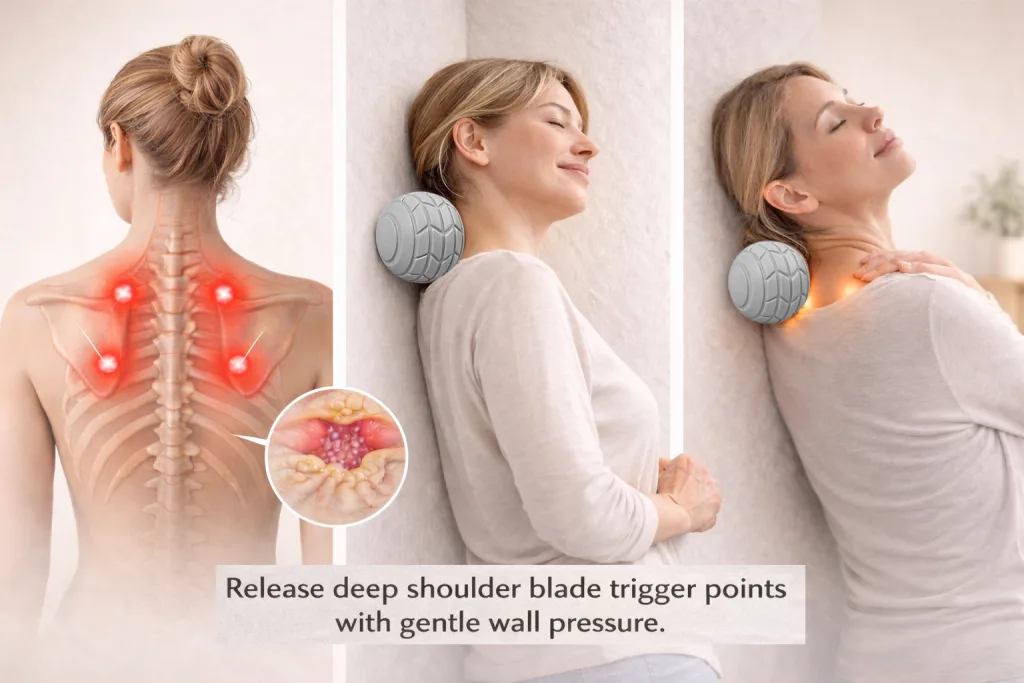
When these muscles stay contracted for long periods, they can develop trigger points small areas of tight muscle fibers that become painful when pressed.
You can learn more about trigger points here:
What Are Trigger Points in the Shoulder Blade
What Is a Foam Roller?
A foam roller is a cylindrical foam tool used to massage larger muscle groups.
It is commonly used for:
back muscles
legs
hips
glutes
Foam rollers are excellent for broad muscle release and are widely used in sports recovery.
Because of their larger surface area, they apply pressure across a wide region of muscle.
What Is a Massage Ball?
Massage balls are smaller tools designed to apply targeted pressure to specific muscle points.
They are commonly used for:
trigger points
muscle knots
tight spots between the shoulder blades
Massage balls allow you to focus pressure on small areas that foam rollers may not reach effectively.
Key Differences Between Foam Rollers and Massage Balls
Surface Area
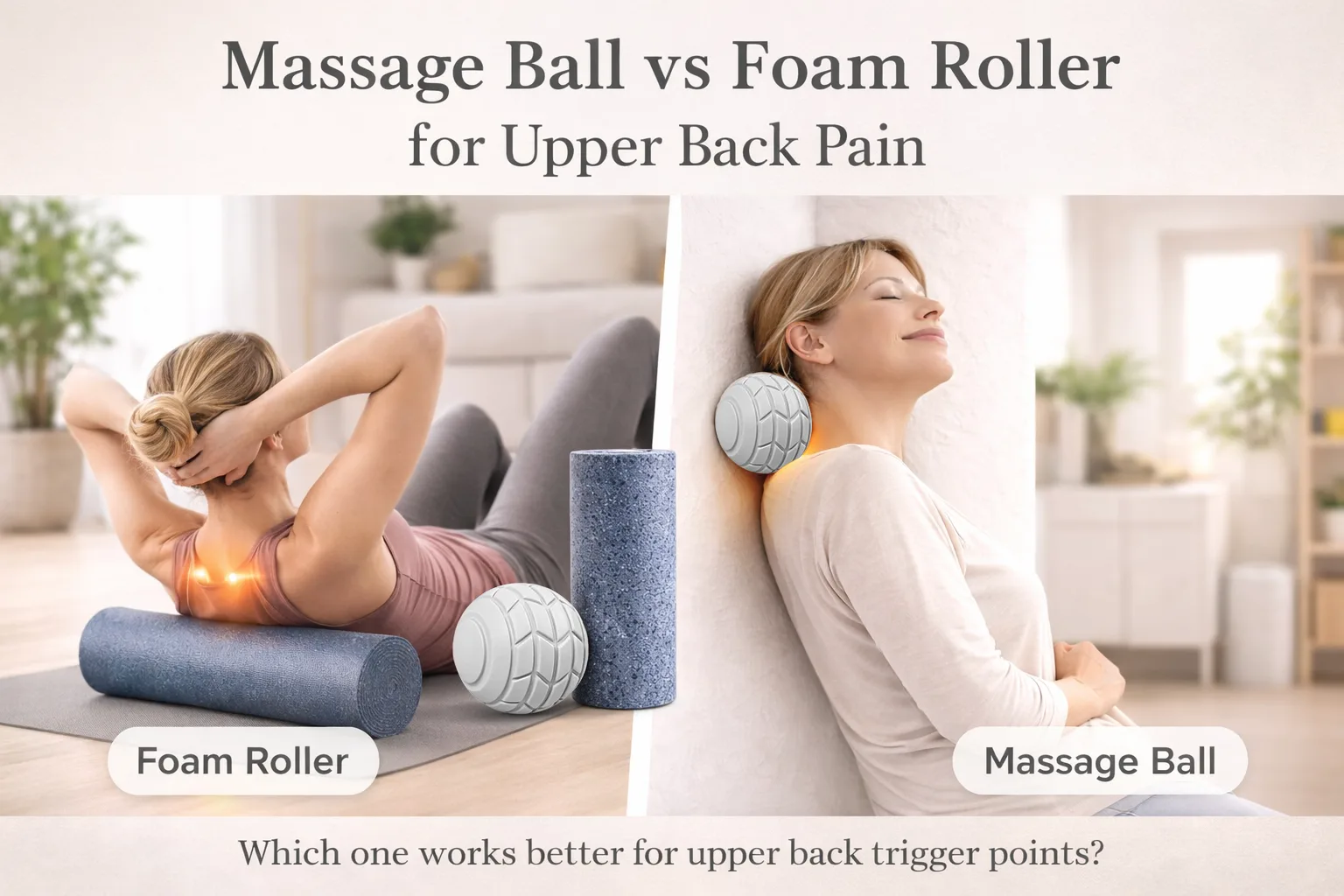
Foam rollers distribute pressure across a large area.
Massage balls concentrate pressure on a smaller point.
This makes massage balls better for precise trigger point release.
Control
Foam rollers require lying on the floor and rolling your body.
Massage balls can be used:
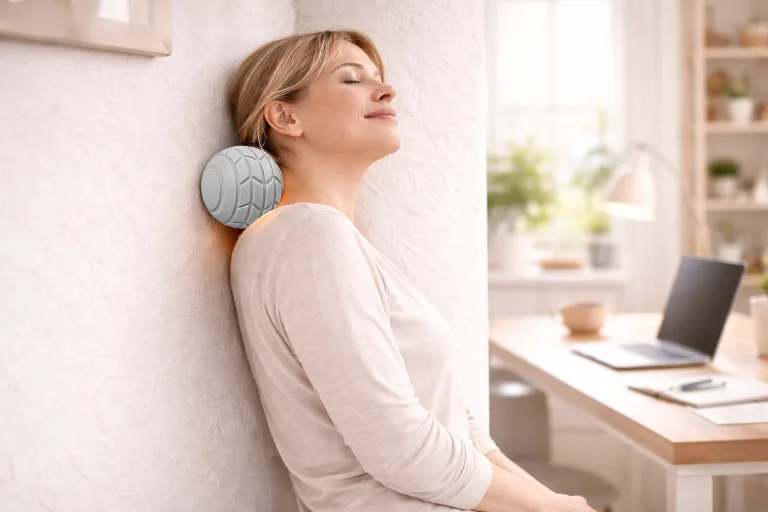
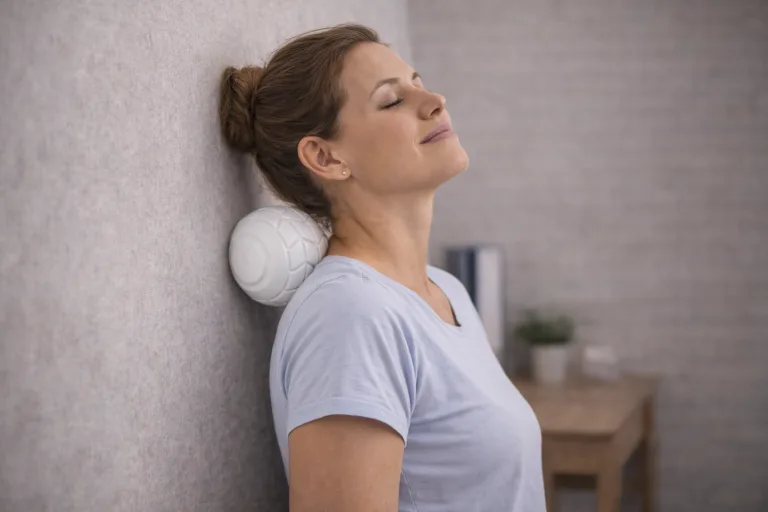
against a wall
on the floor
while standing
This often provides more control over pressure and position.
Targeting the Shoulder Blade Area
The muscles between the shoulder blades are relatively small.
Because of this, foam rollers may roll over the area without applying enough focused pressure.
Massage balls are often better suited for targeting these specific muscles.
You can see the common trigger point locations here:
Upper Back Trigger Points Explained
When a Foam Roller Works Best
Foam rollers are especially helpful for:
large muscle groups
general muscle tightness
warm up or recovery routines
For example, foam rollers are widely used for:
lower back muscles
quadriceps
hamstrings
They are ideal when you want to release large areas of muscle tension.
When a Massage Ball Works Better
Massage balls are often more effective for:
trigger points
deep muscle knots
shoulder blade tension
Because they apply pressure to a smaller area, they allow more precise release of tight muscle fibers.
Many people use massage balls specifically for:
upper back trigger points
knots between the shoulder blades
tight spots caused by desk posture
A Simple Tool Designed for Shoulder Blade Tension
Some massage balls are designed specifically for the upper back.
For example, AcuMag Shoulder Reset uses a 12 cm surface, which spreads pressure more evenly across the shoulder blade area.
This allows pressure to remain firm but comfortable, making it easier to hold pressure on trigger points without the sharp intensity of smaller balls.
The design is intended for short daily routines that help release upper back tension.
Which Tool Should You Choose?
Both tools can be useful depending on your needs.
A foam roller may be better if you want:
general muscle recovery
large area muscle release
full body rolling routines
A massage ball may be better if you want:
targeted trigger point release
relief between the shoulder blades
controlled pressure against a wall
Many people actually use both tools in different situations.
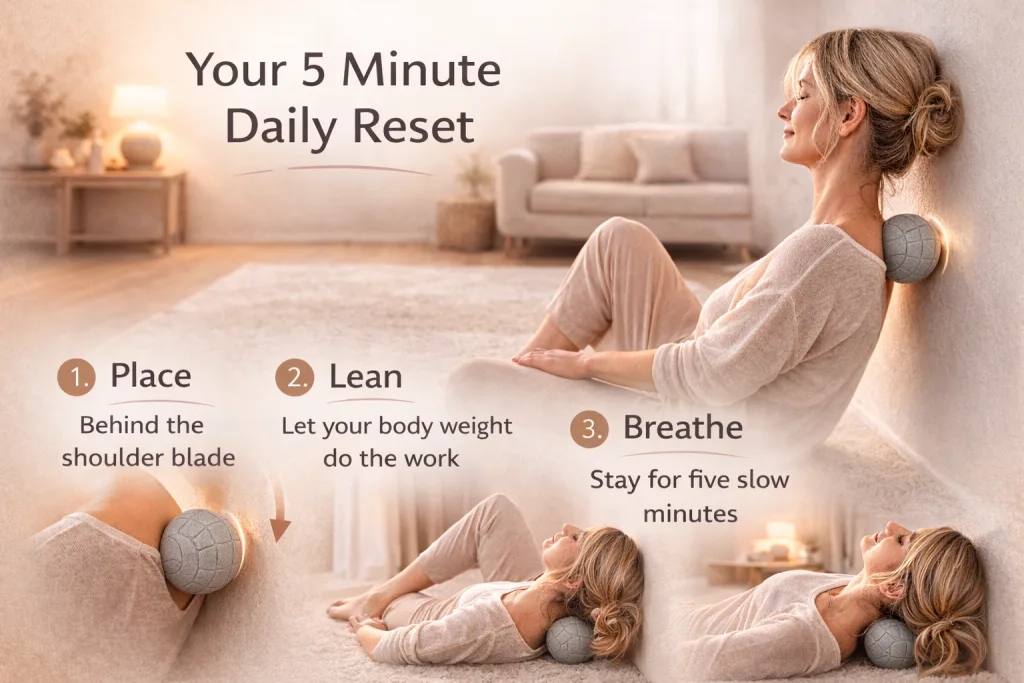
A Simple Daily Routine for Upper Back Relief
Upper back tension often develops slowly over time.
Because of this, short daily routines are often more helpful than occasional long sessions.
Using a massage ball against a wall for just a few minutes per day can help release tight spots between the shoulder blades and reduce accumulated tension.
Final Thoughts
Both foam rollers and massage balls can help relieve upper back pain.
However, when it comes to trigger points between the shoulder blades, massage balls often provide more precise pressure and control.
A short daily routine using a massage ball can be an effective way to release muscle knots and maintain relaxed shoulders.
Does a Massage Ball Help Shoulder Blade Pain? (What Experts Say)