Tight trigger points between the shoulder blades are extremely common, especially for people who spend long hours at a desk.
Many people feel:
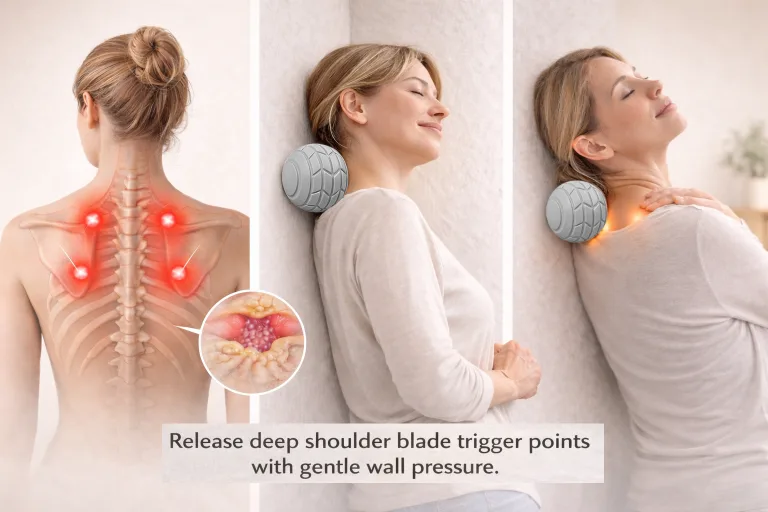
a deep knot under the shoulder blade
tension spreading into the neck
stiffness when turning the head
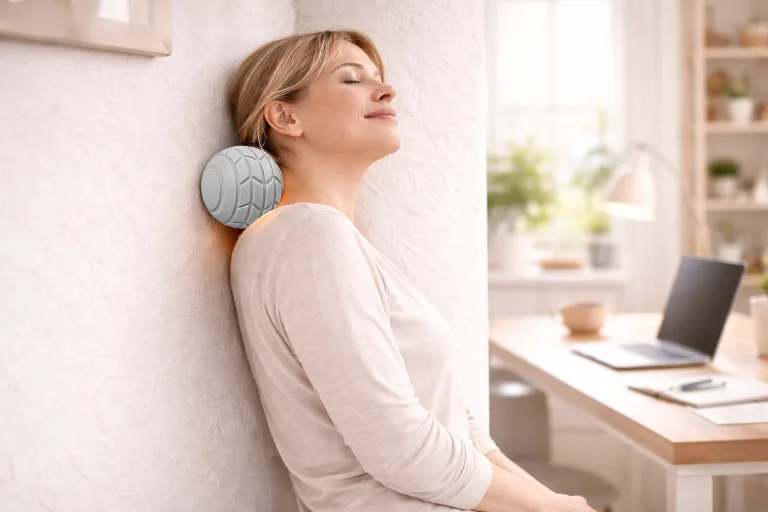
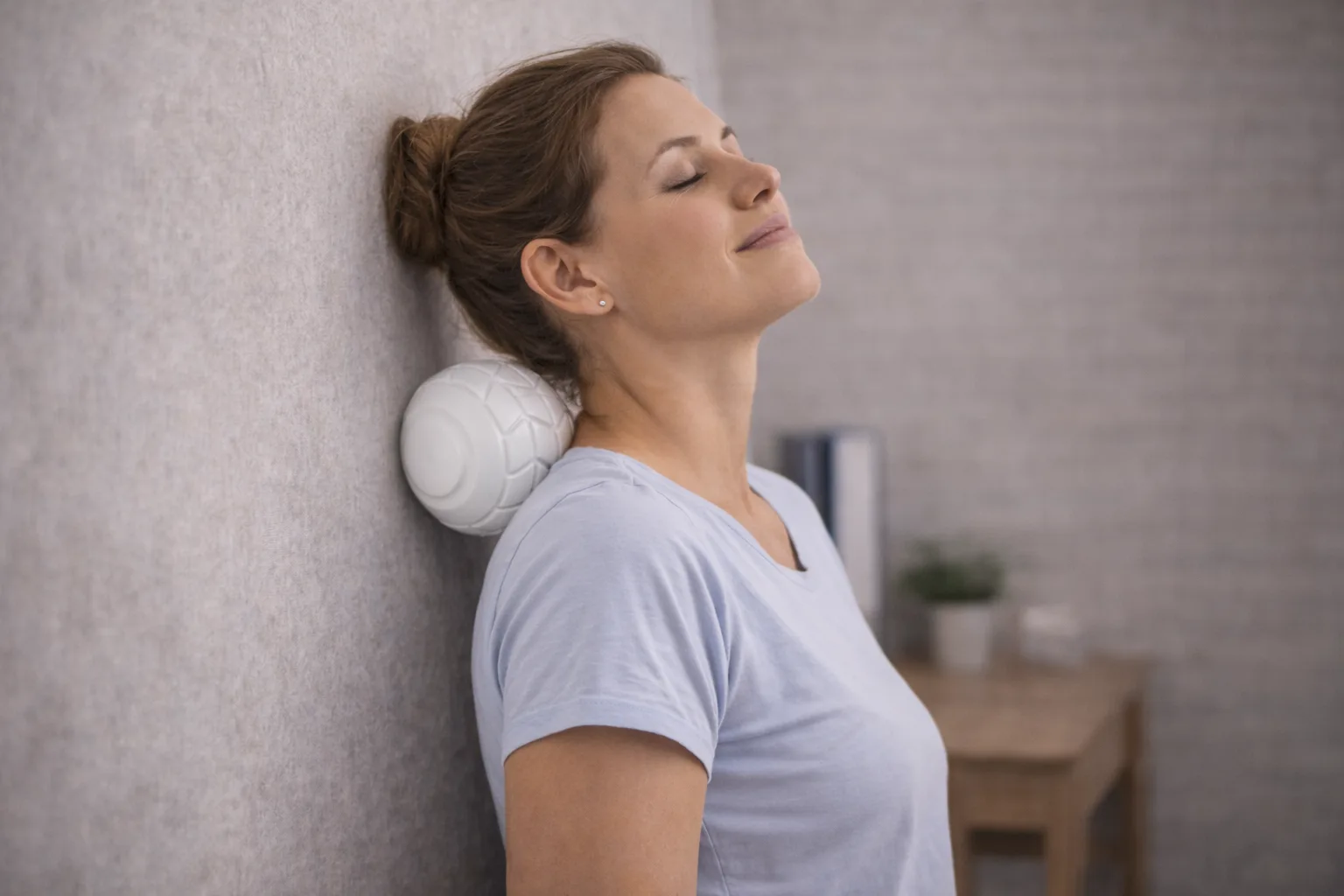
One of the easiest ways to release these trigger points is using a massage ball against a wall.
This method allows you to apply gentle pressure while controlling how much weight you use.

Why the Wall Technique Works So Well
The wall technique works because it allows controlled pressure on the muscle.
Instead of pressing the muscle with your hands, your body weight provides steady pressure.
This helps the muscle slowly relax.
The wall also allows you to:
move slightly to locate trigger points
adjust pressure easily
keep the spine supported
For many people, this makes it easier than floor exercises.
Where Shoulder Blade Trigger Points Usually Appear
Trigger points most commonly form in the muscles between and around the shoulder blades.
These include:
Rhomboids
Middle trapezius
Levator scapulae
If you want to see the most common locations, read:
Upper Back Trigger Points Explained: The Most Common Locations
These areas often become tight after:
long computer sessions
sitting with rounded shoulders
repetitive desk work
Step by Step: Massage Ball Wall Technique
Here is a simple routine you can do at home.
Step 1: Stand Against a Wall
Stand with your back facing a wall.
Place the massage ball between the wall and your upper back.
Step 2: Position the Ball Near the Shoulder Blade
Move the ball slightly to the side of the spine.
Avoid placing pressure directly on the spine.
Most trigger points are found along the inner edge of the shoulder blade.
Step 3: Lean Gently Into the Ball
Slowly lean your body weight into the ball.
You should feel firm but comfortable pressure.
Avoid forcing the pressure.
Step 4: Find the Tight Spots
Move your body slowly up, down, or side to side.
When you locate a tight area, pause.
Hold pressure for 20–30 seconds.
Step 5: Breathe Slowly
Take slow breaths while holding pressure.
This helps the muscle relax.
Many trigger points soften naturally when pressure is applied for a short time.
How Long Should You Do This?
You do not need long sessions.
Most people use the wall technique for about:
3–5 minutes per area
A short daily routine is usually more effective than occasional long sessions.
Consistency allows muscles to gradually release tension.
Choosing the Right Massage Ball
The shoulder blade area is sensitive.
Using a ball that is too small or too hard can feel uncomfortable.
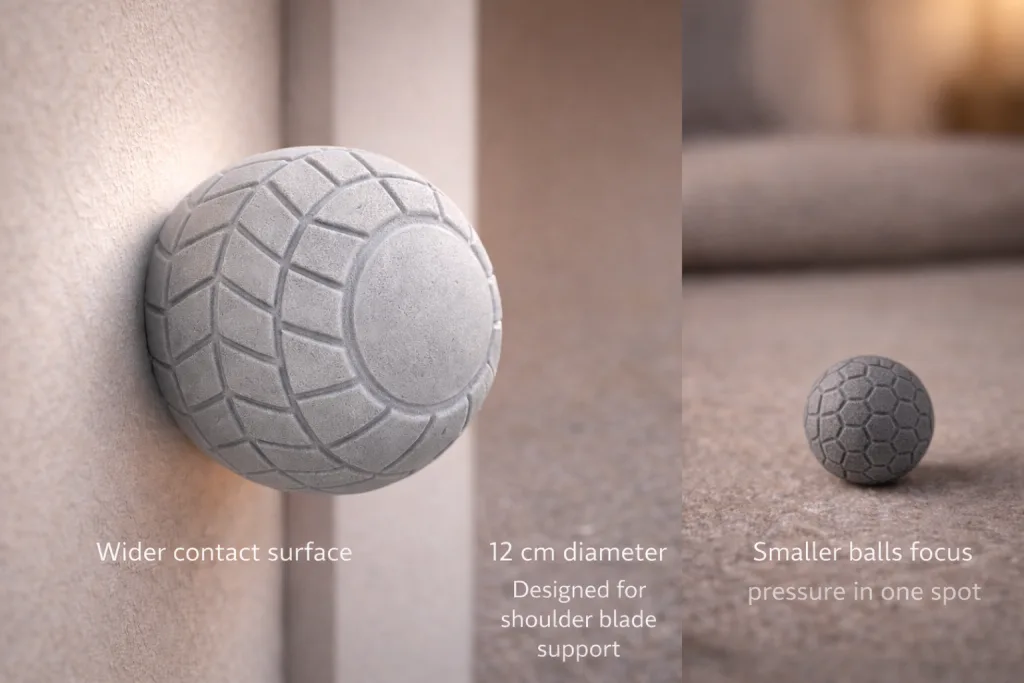
A slightly larger massage ball often distributes pressure more evenly.
For example, the AcuMag Shoulder Reset uses a 12 cm surface, which spreads pressure more gently across the upper back.
This makes it easier for many people to apply consistent pressure without the sharp intensity of smaller balls.
Best Massage Ball for Upper Back Trigger Points
Common Mistakes When Using a Massage Ball
Applying Too Much Pressure
More pressure is not always better.
Too much pressure can cause muscles to tighten.
Rolling Too Quickly
Slow movement works better for trigger point release.
Pause on tight areas.
Placing the Ball on the Spine
Always keep the ball slightly to the side of the spine.
Focus on muscle tissue instead.
When to Use This Routine
The wall technique can help if you experience:
knots between the shoulder blades
tightness after desk work
neck stiffness from shoulder tension
upper back fatigue
Many people do this routine after work or before bed.
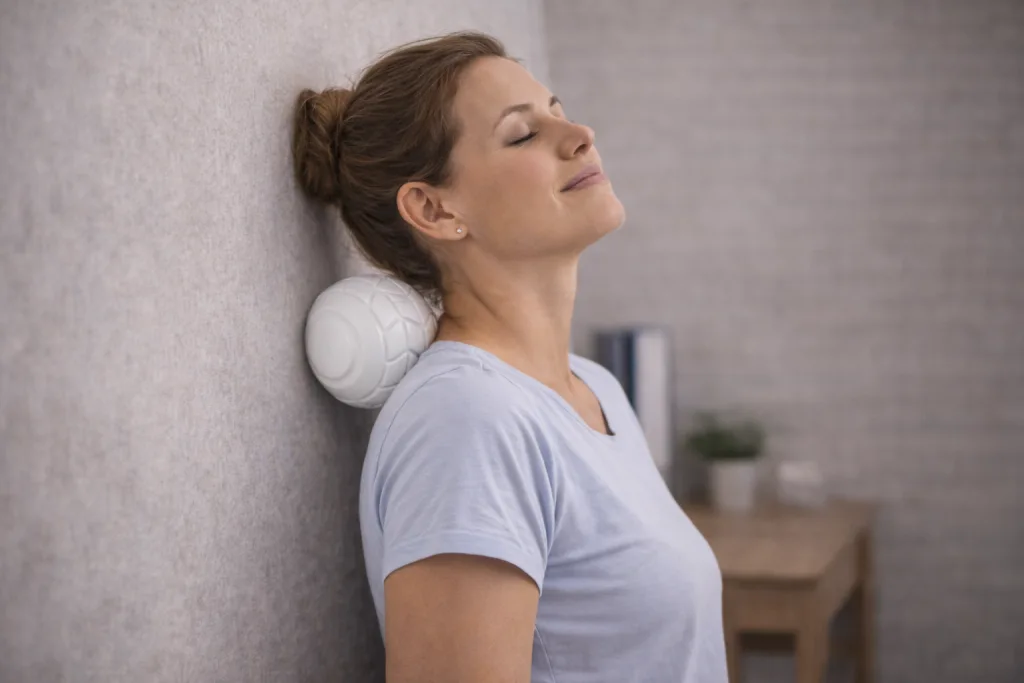
A Simple Daily Reset for Desk Shoulders
Trigger point release does not need to be complicated.
A short daily routine using a massage ball against a wall can help relax tight muscles and restore comfort to the upper back.
Over time, consistent gentle pressure can make a noticeable difference in how your shoulders feel.