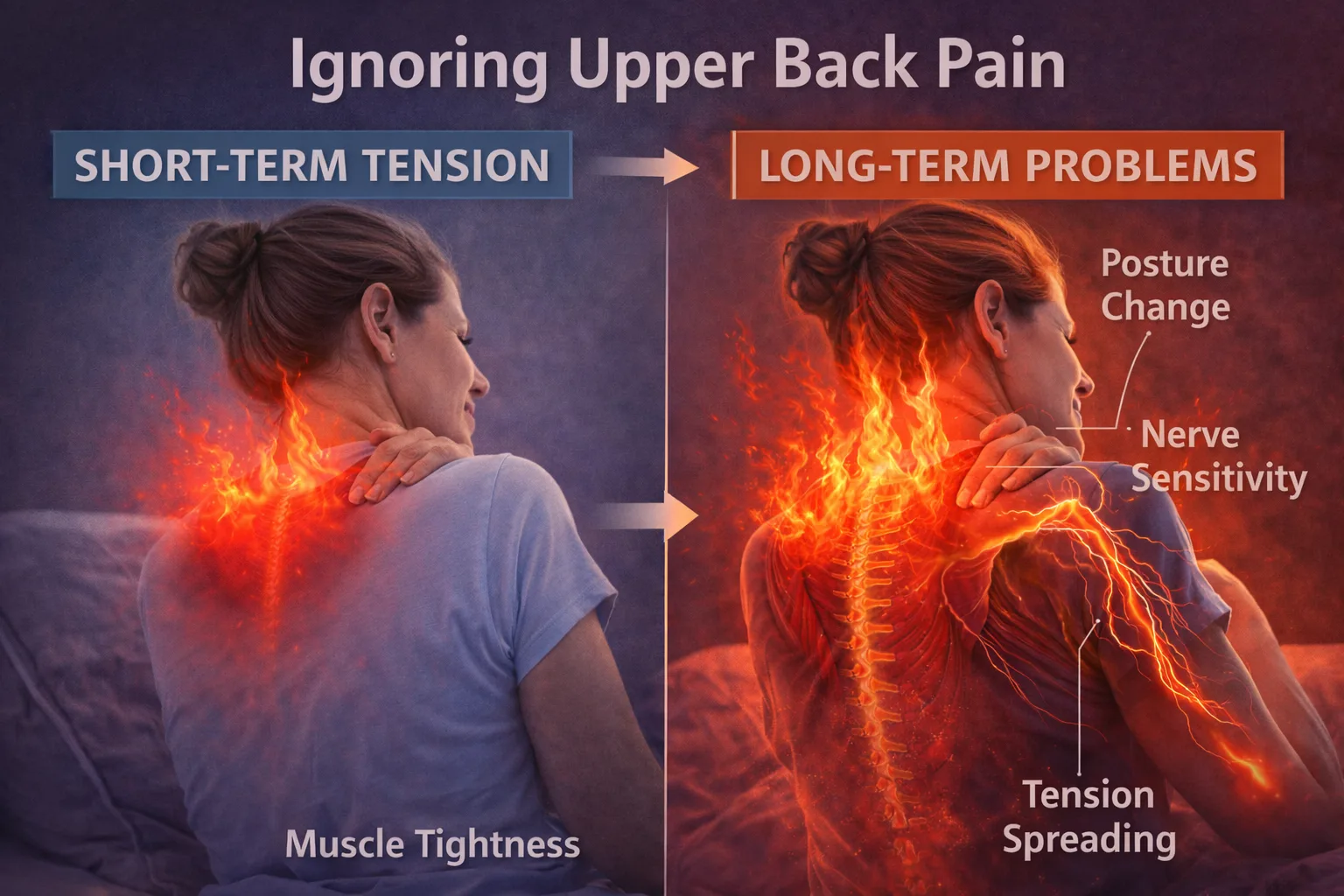
Upper back pain often starts quietly.
A little tightness between the shoulder blades.
A burning sensation after desk work.
A stiff neck that fades overnight.
So most people ignore it.
But what actually happens if you don’t address upper back pain?
The short answer: it rarely stays the same.
Let’s break down what can develop over time and why early correction matters more than most people realize.
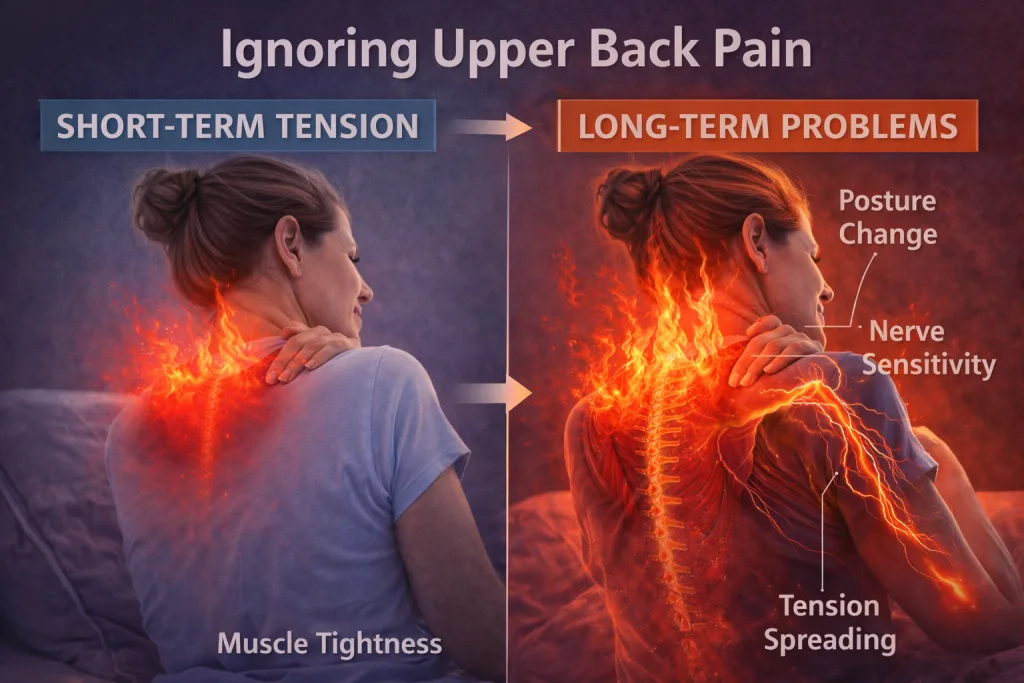
1. Muscle Tightness Turns Into Chronic Tension
At first, upper back discomfort is usually muscular.
Long hours at a desk
Forward head posture
Stress driven shoulder elevation
The muscles between your shoulder blades (rhomboids, middle trapezius, levator scapulae) stay slightly contracted all day.
If that tension never fully resets, your nervous system begins to treat it as “normal.”
Over time:
• Tightness becomes constant
• Mobility decreases
• Recovery time increases
• The burning sensation appears more frequently
This is how temporary tension becomes chronic tension.
For people who spend long hours at a desk, this progression often begins with subtle daily strain.
Why Your Shoulders Feel Tight After Desk Work
2. Trigger Points Become More Sensitive
Unresolved muscle tightness often leads to trigger point formation.
Trigger points are small hyper irritable spots inside muscle fibers.
When compressed, they can radiate discomfort into the neck, shoulders, or even down the arms.
If ignored:
• They grow more reactive
• Pain spreads more easily
• Simple activities feel exhausting
The longer they remain untreated, the more sensitive they become.
If trigger points are involved, learning how to release deep shoulder blade tension at home can prevent escalation.
How to Release Deep Shoulder Blade Tension at Home
3. Posture Gradually Changes (Without You Noticing)
Here’s something most people miss:
Upper back tension doesn’t just hurt it slowly reshapes posture.
Chronic tightness pulls the shoulders forward.
The head shifts slightly ahead of the body.
The thoracic spine rounds.
This creates:
• Increased neck strain
• Reduced shoulder mobility
• Compression around the shoulder blades
Postural change is gradual which is why it’s easy to ignore.
But over months and years, it compounds.
Addressing posture early can prevent long-term muscular imbalance.
How to Fix Rounded Shoulders and Upper Back Posture Naturally
4. Nerve Sensitivity Can Increase
When muscles stay tight for long periods, the surrounding nerves can become more reactive.
You may notice:
• Burning between the shoulder blades
• Tingling or warmth
• Sensitivity to touch
• Pain that feels “deeper” than muscle soreness
This isn’t necessarily structural damage but rather nervous system sensitization.
And once the nervous system becomes involved, pain recovery becomes slower.
If you’re already experiencing a burning sensation between your shoulder blades, it may help to understand why this happens and what it signals about underlying tension patterns.
Why You Feel a Burning Sensation Between Your Shoulder Blades
5. Sleep Quality Can Decline
Many people only realize the problem is serious when it begins affecting sleep.
Upper back tension can:
• Make side sleeping uncomfortable
• Cause nighttime burning sensations
• Lead to frequent repositioning
• Trigger morning stiffness
Sleep disruption then increases stress hormones which further increases muscle tension.
It becomes a loop.
Optimizing your sleeping position can significantly reduce overnight aggravation.
Best Sleeping Positions for Shoulder and Upper Back Pain
6. Compensation Patterns Develop
If the upper back isn’t functioning properly, other areas compensate.
Common compensation patterns include:
• Neck overworking
• Lower back tightening
• Shoulder impingement
• Reduced overhead mobility
The original issue may have started small.
But compensation spreads load across the body.
So… Will It Always Get Worse?
Not necessarily.
But untreated tension rarely improves on its own.
Upper back discomfort is usually not caused by one dramatic injury.
It’s caused by accumulated daily stress.
Which means the solution isn’t aggressive treatment it’s consistent reset.
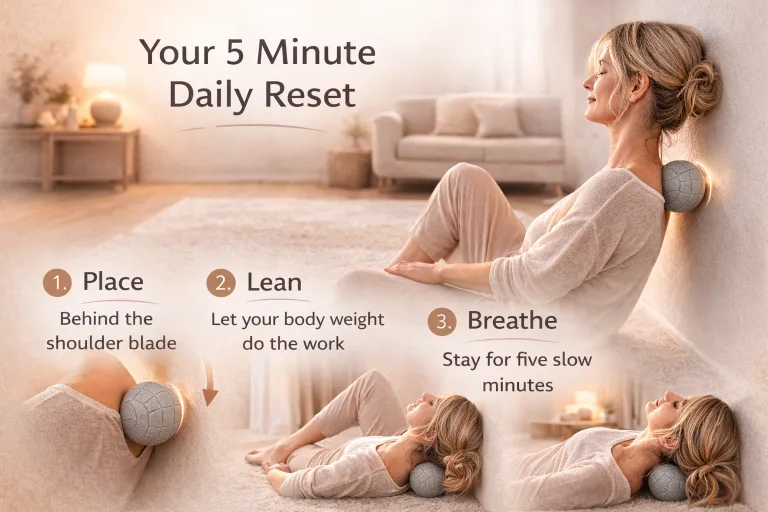
Short daily sessions prevent accumulation.
For daily upper back tension:
For deeper, long standing tightness:

What Actually Prevents It From Escalating?
Three principles:
Restore mobility in the thoracic spine
Reduce trigger point sensitivity
Create daily micro reset moments
This doesn’t require extreme routines.
It requires consistency.
Many people find that combining posture correction, wall based release work, and targeted pressure on trigger areas helps interrupt the tension cycle before it becomes chronic.
The Bottom Line
Upper back pain is rarely dangerous.
But it is progressive.
Ignoring it doesn’t usually cause sudden damage it causes slow adaptation.
And slow adaptation is harder to reverse.
The earlier you begin addressing tension, the easier it is to restore balance.
If you’ve been experiencing recurring upper back tightness, burning, or stiffness, this is your signal to stop waiting for it to resolve on its own.
Because most of the time It doesn’t.