Understanding referred pain, compensation patterns, and natural pain relief
Many people notice something confusing about chronic pain:
one week it’s the knee,
then the shoulder,
then the lower back or neck.
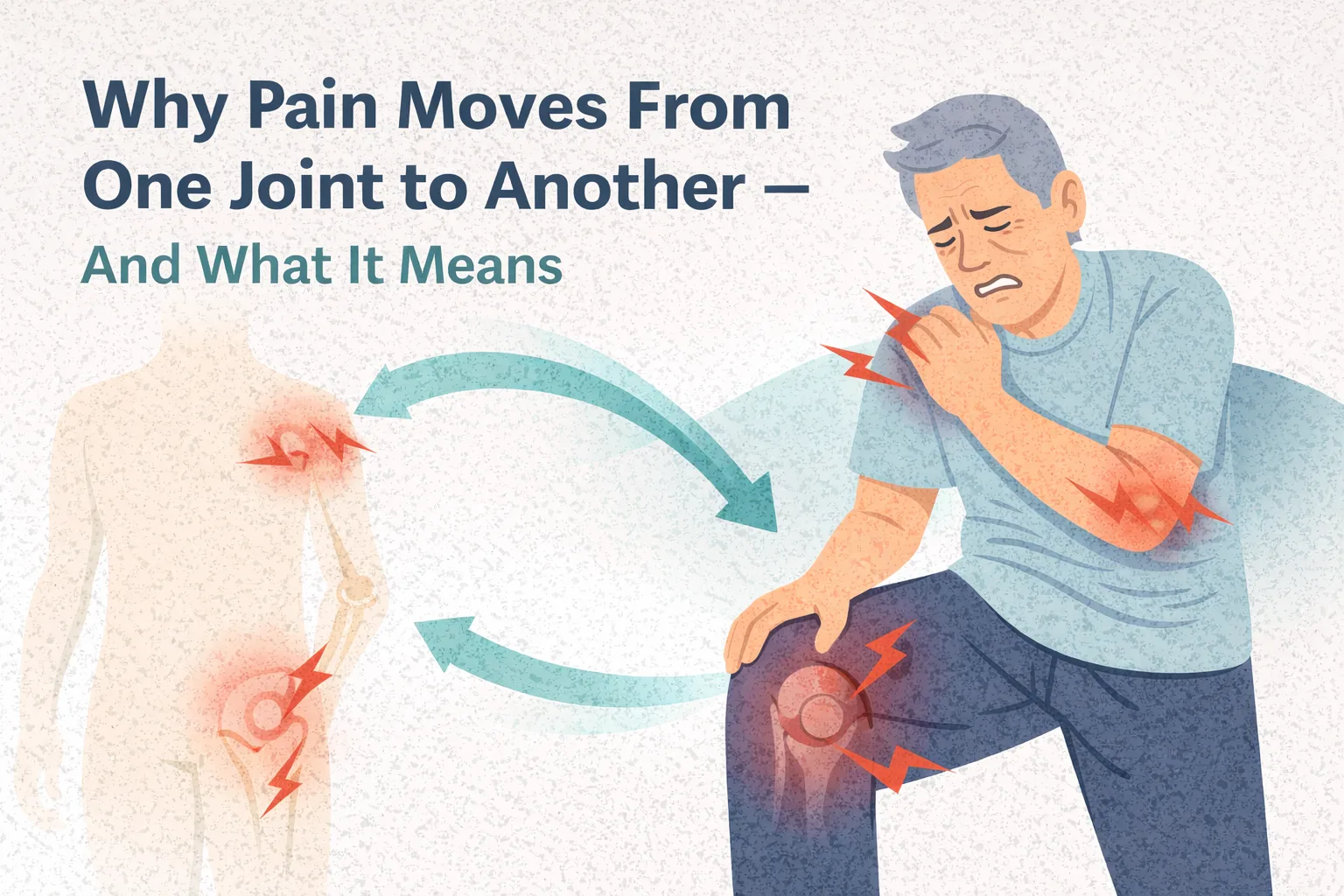
This can feel alarming but in most cases, moving pain does not mean worsening damage.
In this article, you’ll learn:
Why pain can shift between joints
What “moving pain” actually means
When it’s a warning sign and when it’s not
How to reduce migrating pain naturally, without medication
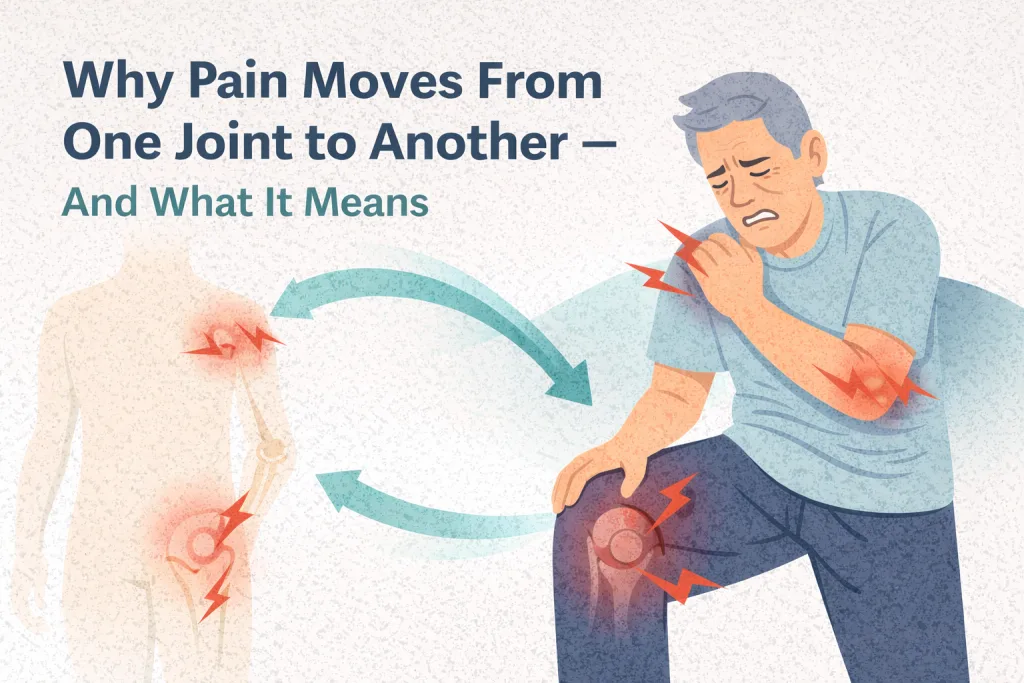
1. Why Pain Can Move From One Joint to Another
Pain does not always stay where the problem started.
This happens because pain is influenced by nerves, muscles, circulation, and movement patterns.
Common reasons include:
Referred pain — nerves send signals to nearby areas
Compensation — the body shifts load away from painful joints
Muscle imbalance — tight muscles pull on other joints
Circulation issues — reduced blood flow affects multiple areas
In short:
Pain often moves because the body is adapting not because damage is spreading.
2. The Difference Between Local Pain and Referred Pain
Local pain
Felt directly at the injured or inflamed joint
Usually sharp or specific
Referred pain
Felt in a different joint or muscle
Often dull, aching, or spreading
For example:
Hip stiffness can cause knee pain
Shoulder tension can cause neck pain
Lower back issues can create pain in hips or thighs
This is why treating only the painful spot often fails.
3. Why Chronic Pain Often “Migrates” Over Time
When pain lasts for weeks or months, the body begins to compensate.
Common patterns:
Favoring one side of the body
Reduced movement in one joint
Overuse of surrounding muscles
Over time, this creates secondary pain, which feels like the pain is “moving.”
This is common in:
Knee pain
Shoulder and neck pain
Lower back pain
Joint stiffness with aging
4. When Moving Pain Is (and Isn’t) a Red Flag
Usually NOT serious if:
Pain changes location gradually
Pain improves with movement or warmth
No swelling, redness, or sharp pain
Pain improves after rest or circulation support
Get medical advice if:
Pain moves rapidly and intensely
Severe swelling or heat appears
Pain is accompanied by numbness or weakness
Fever or sudden injury is involved
Most migrating pain is functional, not structural.
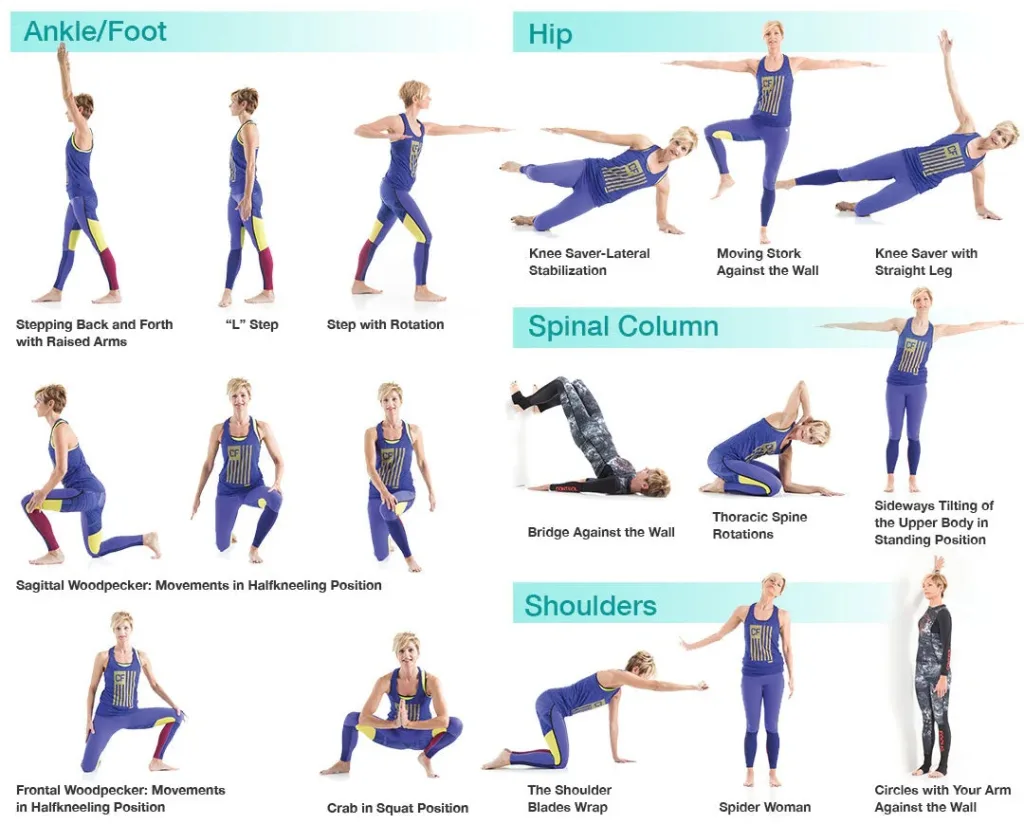
5. Natural Ways to Reduce Migrating Joint Pain
The key is addressing circulation and movement patterns, not just symptoms.
5.1 Gentle full body mobility
Light movement keeps joints lubricated and muscles balanced.
5.2 Avoid overprotecting one joint
Excessive guarding increases compensation pain elsewhere.
5.3 Heat for circulation
Heat relaxes tight muscles and improves blood flow.
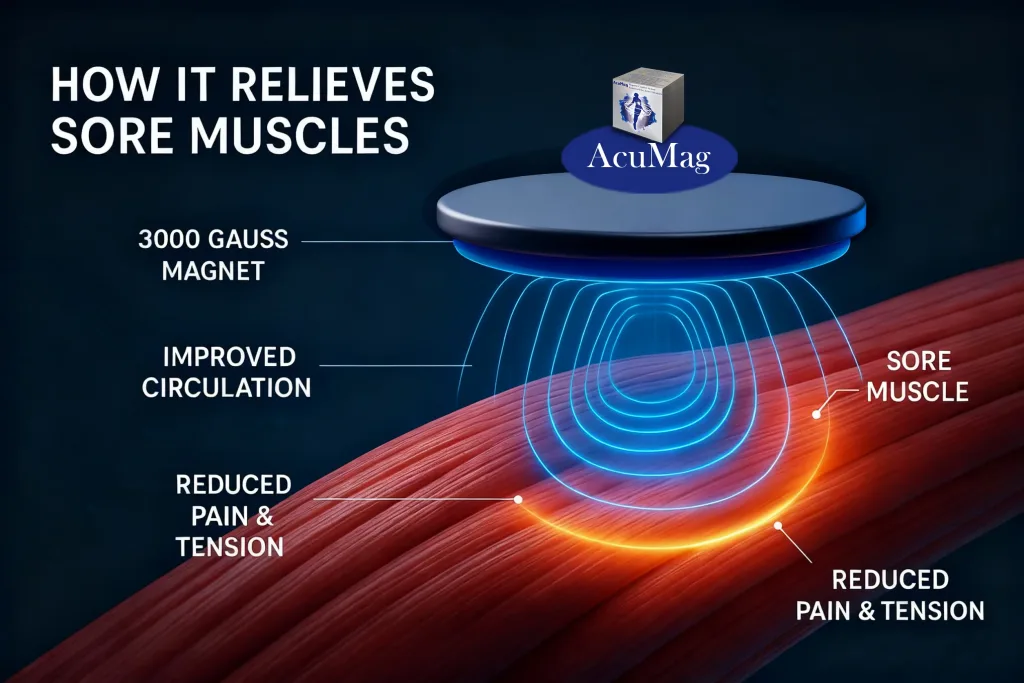
5.4 Magnetic therapy (circulation based support)
Magnetic therapy supports microcirculation, which helps tissues recover evenly instead of shifting stress to other joints.
NIH reviewed research suggests static magnetic fields may influence circulation and tissue relaxation key factors in migrating pain patterns.
6. Why Magnetic Therapy Helps With Moving Pain
Migrating pain often reflects uneven recovery.
Magnetic therapy helps by:
Supporting circulation across affected areas
Reducing muscle tension that pulls on joints
Allowing stressed joints to recover without overcompensation
Working continuously for 48–72 hours
This makes it especially useful for chronic, shifting pain.
7. AcuMag™ vs. Symptom Only Solutions
| Method | Treats Root Cause? | Limitations |
|---|---|---|
| Pain pills | ❌ | Side effects |
| Massage | Partial | Short term |
| Stretching | Partial | Requires consistency |
| AcuMag™ Magnetic Patches | ✅ | Drug free |
AcuMag™ provides:
3000 Gauss medical grade magnets
Long wear, reusable design
Continuous circulation support
FAQ
Q1: Is it normal for joint pain to move around?
Yes. It’s common with chronic stiffness or compensation.
Q2: Does moving pain mean arthritis is spreading?
No. Arthritis progression does not move suddenly between joints.
Q3: Can circulation affect multiple joints at once?
Yes. Poor circulation impacts the entire musculoskeletal system.
Q4: Can magnetic therapy help migrating pain?
Yes. It supports balanced recovery across joints.
Conclusion
When pain moves from one joint to another, it’s usually a sign of compensation and circulation imbalance, not worsening damage.
By supporting circulation and reducing muscle tension naturally, you can help your body recover evenly.
AcuMag™ Magnetic Pain Relief Patches offer a simple, drug free way to support joint comfort even when pain feels unpredictable.
👉 Exploring AcuMag™ for Pain Relief
Read Next:
Why Pain Comes Back After Exercise — And How to Recover Properly
Why Your Joints Hurt When the Weather Changes — And What Actually Helps
Why Pain Feels Worse at Night — And How to Relieve It Without Medication
Why Pain Returns After Sitting Too Long — And How to Prevent It Naturally