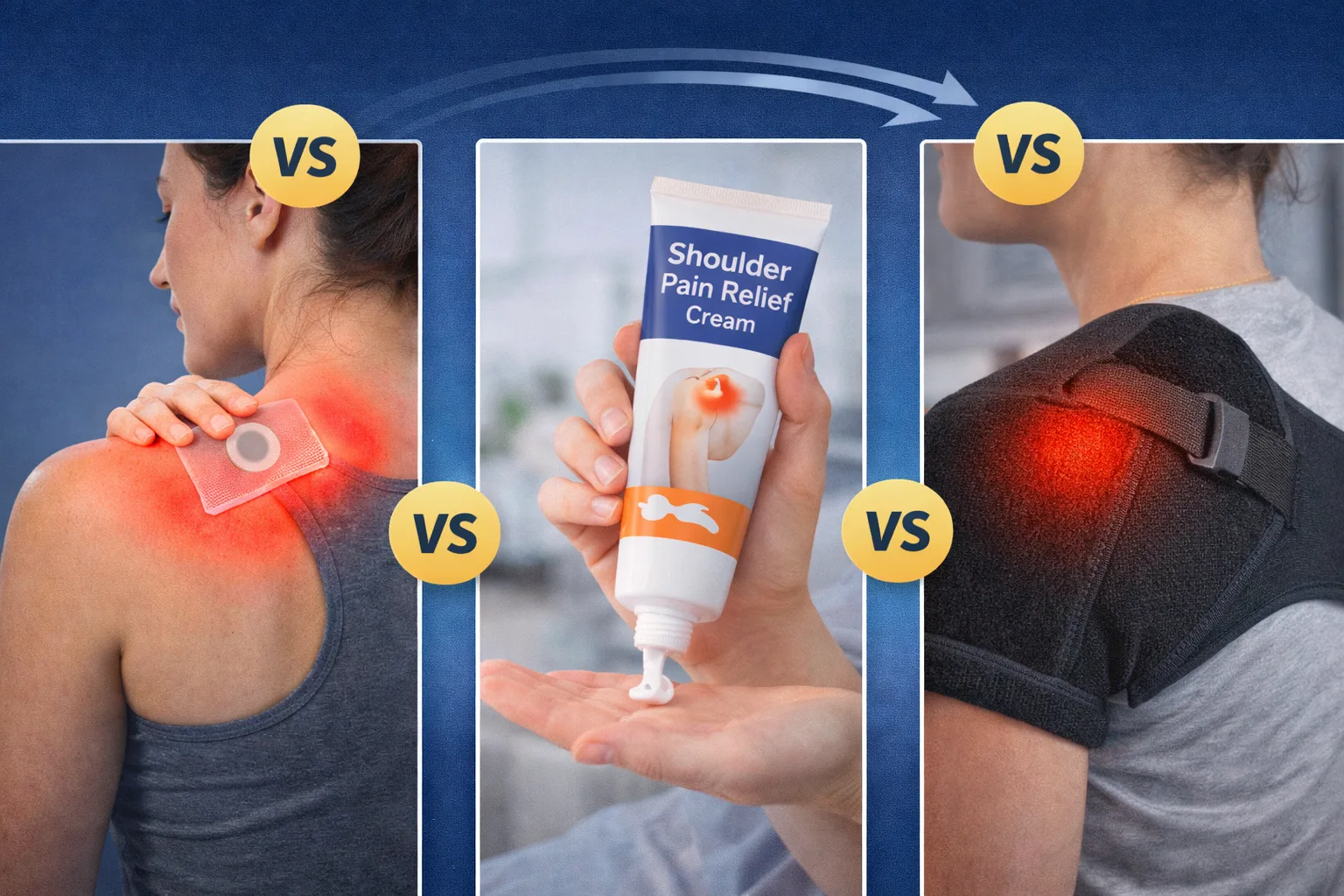
When shoulder pain becomes part of daily life, many people start comparing options.
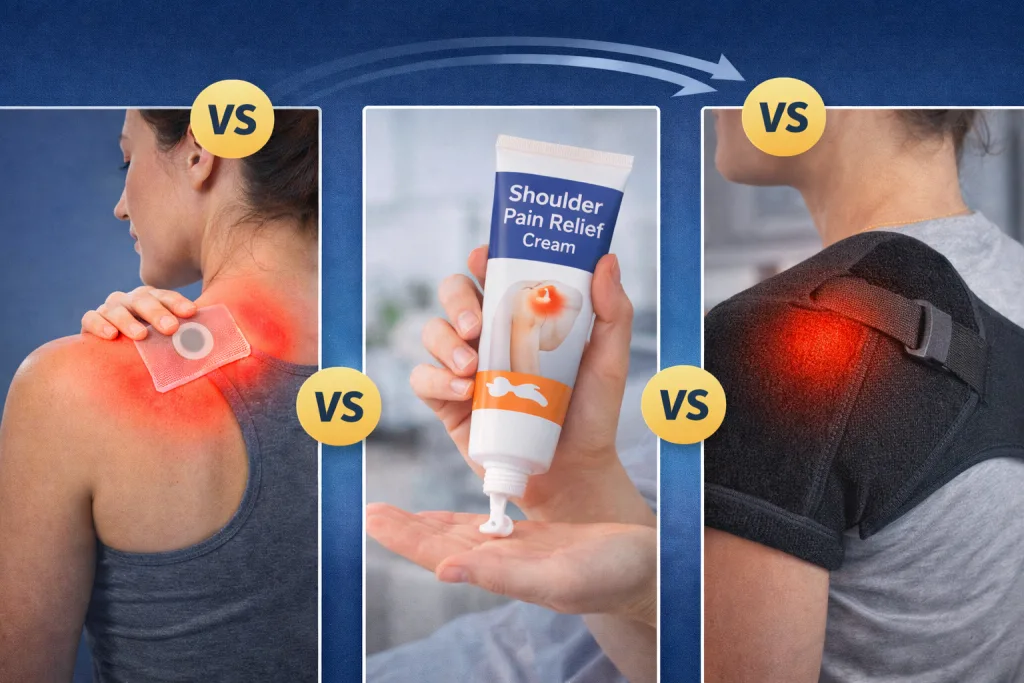
Should you use a shoulder pain relief patch, apply a topical cream, or wear a brace?
Each approach works differently and the best choice often depends on how and when your shoulder discomfort occurs, not which option claims to be strongest.
This guide compares patches, creams, and braces in practical terms, without exaggeration.
How Shoulder Pain Relief Patches Work
Shoulder pain relief patches are designed to provide localized, continuous support over the shoulder area.
They are often used because they:
Work without medication
Stay in place for extended periods
Provide steady support during rest or daily activity
Patches are commonly chosen for ongoing shoulder stiffness or tension, especially when discomfort builds gradually.
How Topical Creams and Gels Work
Creams and gels are designed to deliver short term surface level relief.
They are often used because they:
Act quickly
Are easy to apply
Create warming or cooling sensations
However, their effects usually last a short time, which may require frequent reapplication.
Creams may be more suitable for temporary discomfort, rather than ongoing daily stiffness.
How Shoulder Braces Work
Shoulder braces are designed to provide structural support and movement limitation.
They are commonly used when:
Stability is needed
Movement needs to be restricted
Support is required during specific activities
However, braces can:
Feel bulky under clothing
Limit natural movement
Be uncomfortable for long term wear
Braces are often used for specific activities, rather than continuous daily support.
Comparing Shoulder Pain Relief Options
| Option | Duration | Best For | Limitations |
|---|---|---|---|
| Creams & gels | 1–2 hours | Temporary relief | Short lasting |
| Braces | While worn | Activity support | Restricts movement |
| Patches | 24–72 hours | Continuous support | Requires proper placement |
Each option has a place, but they are designed for different needs.
Which Option Is Best for You?
There is no single solution that works for everyone.
You may prefer:
Creams for short term relief after activity
Braces for specific movement support
Patches for consistent, low maintenance comfort
Some people even combine approaches depending on the situation.

How This Fits Into a Shoulder Care Routine
For many people, shoulder discomfort is not constant it fluctuates.
Understanding how different options work can help you:
Choose the right tool at the right time
Avoid overusing short term solutions
Build a more sustainable shoulder care routine
For a full overview of when shoulder pain relief patches help and how to use them safely, see:
Shoulder Pain Relief Patch: When It Helps & How to Use It Safely
Final Thought
Shoulder pain relief patches, creams, and braces all serve different purposes.
The best option is often the one that fits your daily routine and discomfort pattern, rather than the strongest or most aggressive solution.