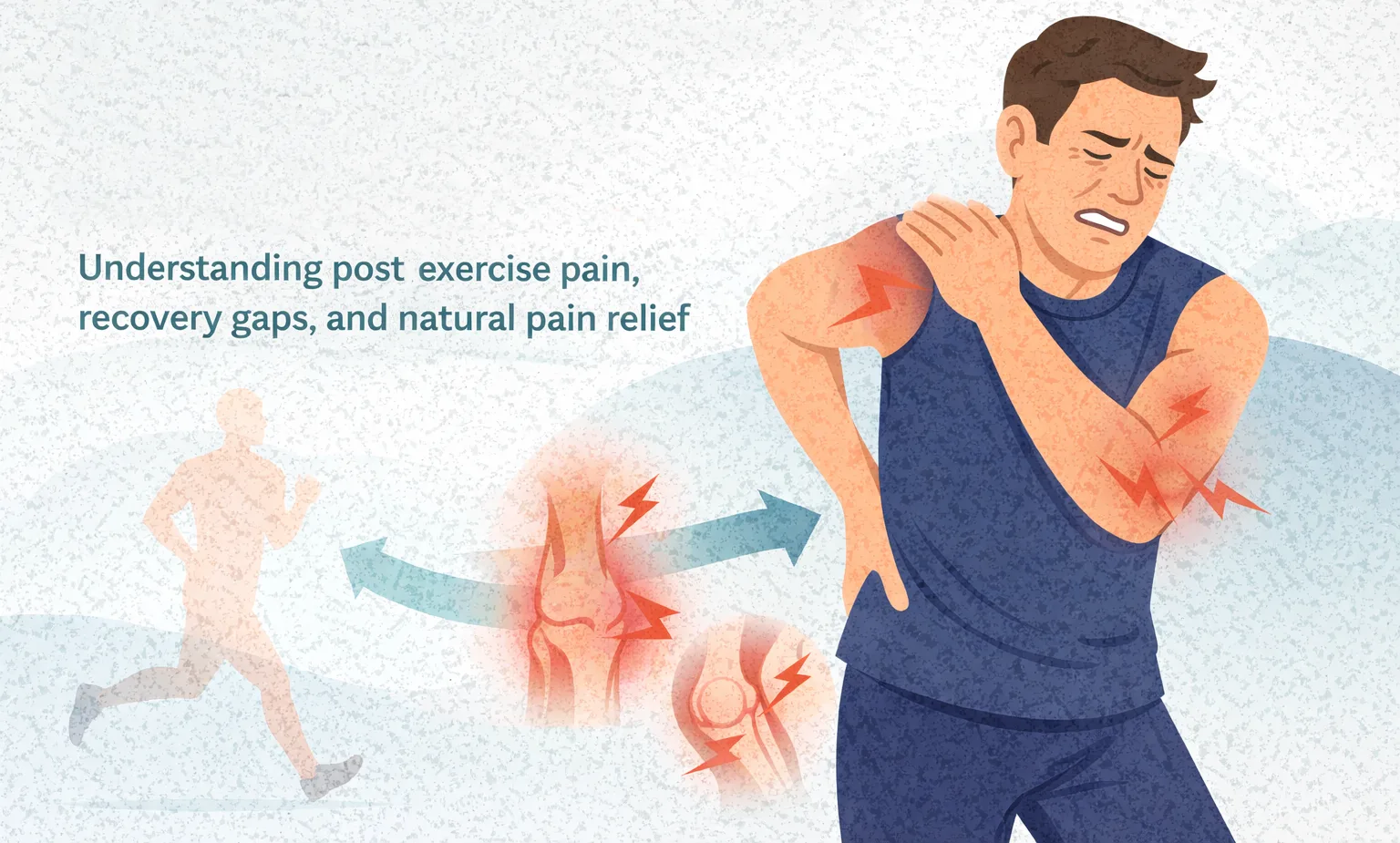
Understanding post exercise pain, recovery gaps, and natural pain relief
Many people experience the same frustration:
you exercise, feel fine afterward but pain returns hours or even days later.
Your knees ache after walking.
Your shoulders tighten after light workouts.
Your lower back feels sore after stretching.
This doesn’t mean exercise is bad for you.
In most cases, it means recovery is incomplete.
In this article, you’ll learn:
Why pain returns after exercise
The difference between normal soreness and recovery-related pain
What slows down recovery
How to recover properly without medication
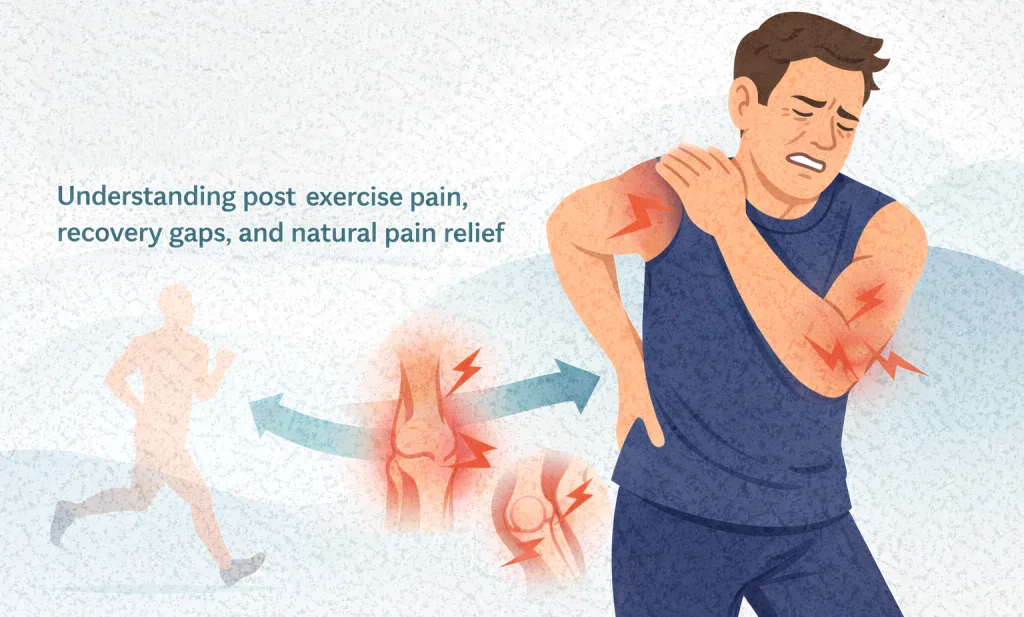
1. Why Pain Often Returns After Exercise
Exercise creates micro stress in muscles and joints.
This is normal and necessary for strength and mobility.
Pain returns when the body does not fully repair that stress.
Key reasons include:
Micro inflammation after activity
Reduced circulation during rest
Muscle tightening as tissues cool
Joint lubrication lag
When circulation drops too quickly after activity, waste products build up causing soreness and stiffness.
2. Normal Soreness vs. Recovery Related Pain
Normal soreness (DOMS)
Appears 12–48 hours later
Feels dull or tight
Improves with light movement
Recovery related pain
Returns repeatedly after exercise
Affects joints more than muscles
Feels stiff, achy, or deep
Worsens when circulation drops
Most recurring pain falls into the second category.
3. Common Recovery Mistakes That Cause Pain to Return
❌ Skipping cool down
Stopping suddenly causes blood flow to drop too fast.
❌ Not hydrating
Dehydrated tissues recover more slowly.
❌ Exercising the same joints daily
Joints need time to recover just like muscles.
❌ Ignoring mild pain
Minor discomfort can turn into chronic stiffness.
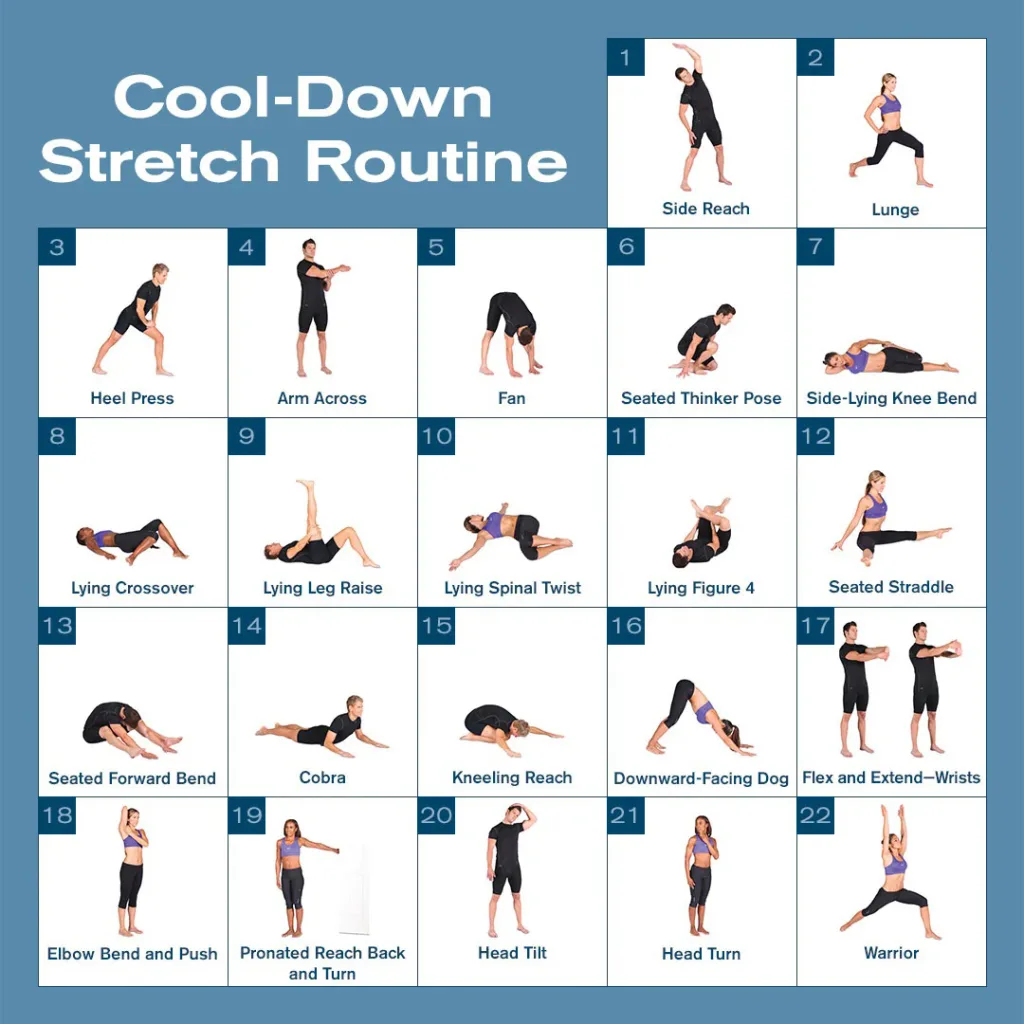
4. Natural Ways to Recover and Prevent Pain
4.1 Active recovery
Light walking or gentle stretching keeps circulation moving.
4.2 Heat therapy after exercise
Heat relaxes muscles and improves blood flow.
4.3 Adequate rest between sessions
Especially important for knees, shoulders, and lower back.
4.4 Magnetic therapy (recovery focused support)
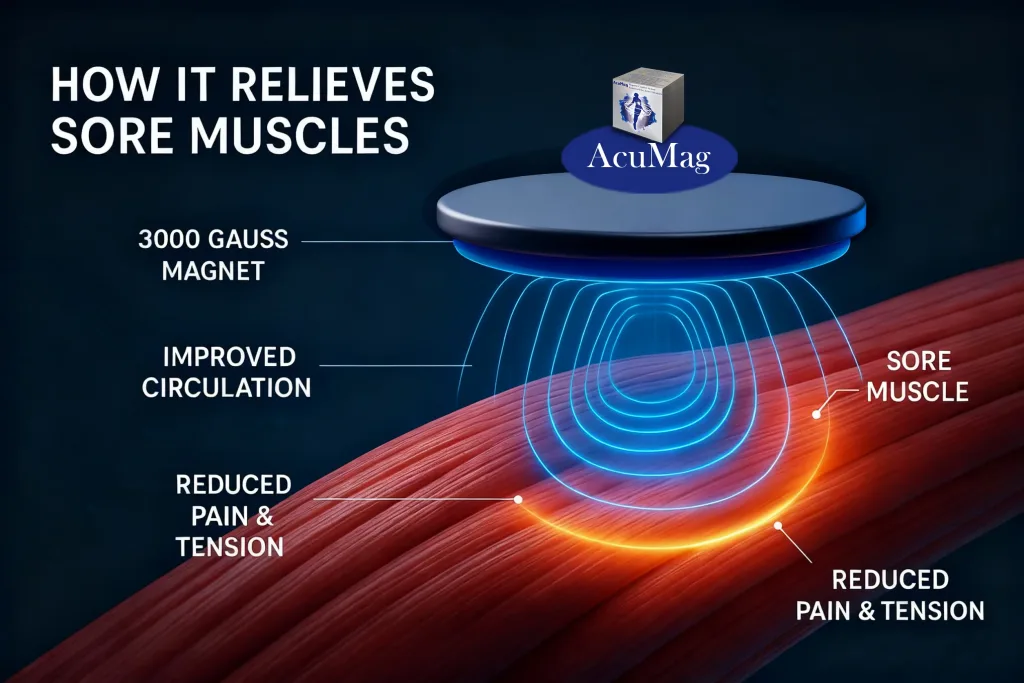
Magnetic therapy supports microcirculation, helping tissues clear waste products and recover more evenly after exercise.
NIH-reviewed research suggests static magnetic fields may influence circulation and tissue relaxation both critical for recovery.
5. Why Magnetic Therapy Helps Post Exercise Pain
Unlike stretching or massage, magnetic therapy works continuously.
Key benefits:
Supports circulation for 24–72 hours
Reduces post exercise stiffness
Helps joints recover without pressure
Works even during rest or sleep
This makes it especially useful for people who exercise regularly but struggle with recurring pain.
6. AcuMag™ vs. Other Recovery Methods
| Method | Duration | Limitations |
|---|---|---|
| Ice | 10–15 mins | Can reduce circulation |
| Stretching | Minutes | Temporary |
| Massage | 1–2 hrs | Costly |
| AcuMag™ Magnetic Patches | 48–72 hrs | Drug free |
AcuMag™ patches are designed to support recovery not just mask pain.
7. When You’ll Notice Improvement
Most users report:
Less stiffness the day after exercise
Faster recovery between sessions
Reduced joint soreness over time
Recovery consistency matters more than intensity.
FAQ
Q1: Is pain after exercise normal?
Some soreness is normal, but recurring pain means recovery is incomplete.
Q2: Should I stop exercising if pain returns?
Not necessarily adjust recovery, not activity.
Q3: Can magnetic therapy help with workout recovery?
Yes. It supports circulation and tissue relaxation.
Q4: Which joints benefit most?
Knees, shoulders, hips, and lower back.
Conclusion
Pain returning after exercise isn’t a failure it’s feedback.
Your body is asking for better recovery, not less movement.
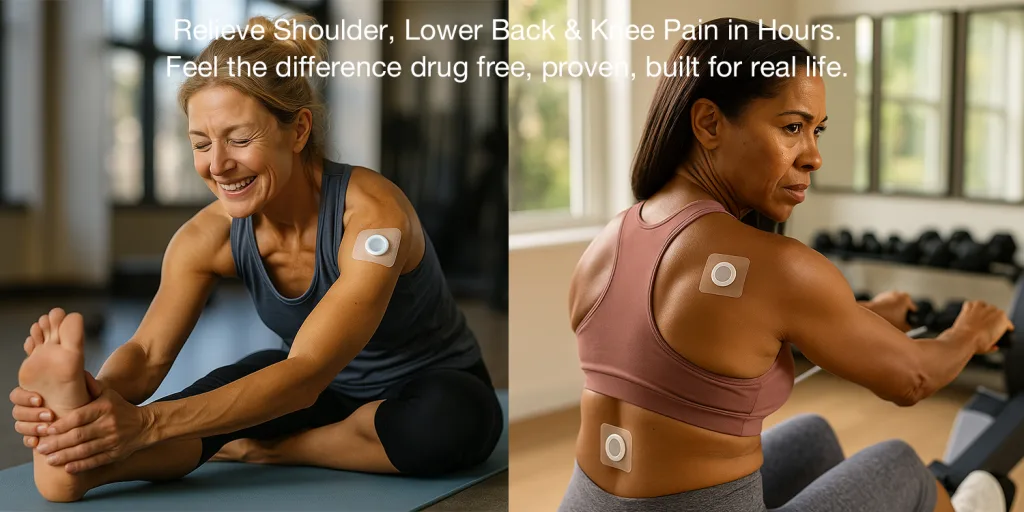
By supporting circulation and joint recovery naturally, AcuMag™ Magnetic Pain Relief Patches help you stay active without recurring pain.
👉 Exploring AcuMag™ for Pain Relief
Read Next:
Why Pain Moves From One Joint to Another — And What It Means
Why Your Joints Hurt When the Weather Changes — And What Actually Helps
Why Pain Feels Worse at Night — And How to Relieve It Without Medication
Why Pain Returns After Sitting Too Long — And How to Prevent It Naturally
Why Knee Pain Gets Worse at Night — And How Knee Pain Relief Patches Help