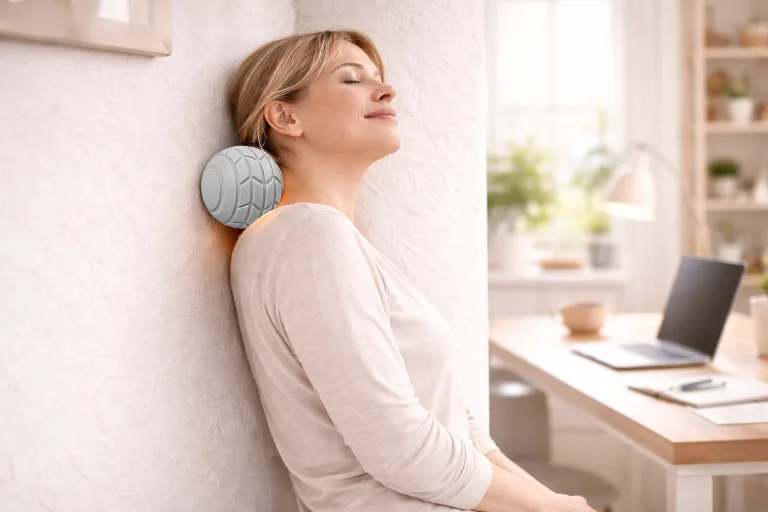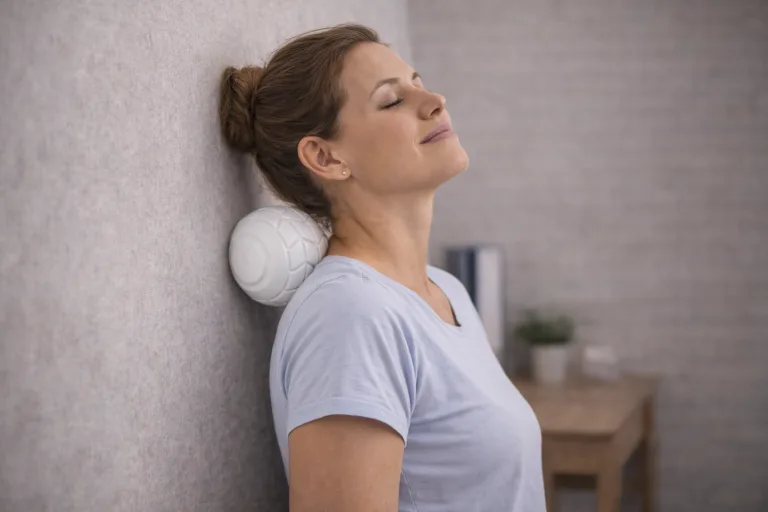
Trigger points in the upper back often develop from long hours of sitting, poor posture, and repetitive shoulder strain.
One of the simplest and most effective ways to relieve these tight spots is the wall release technique.
This method allows you to apply controlled pressure directly to trigger points in the upper back without straining your arms.
If you are new to trigger points, you may want to start with this guide:
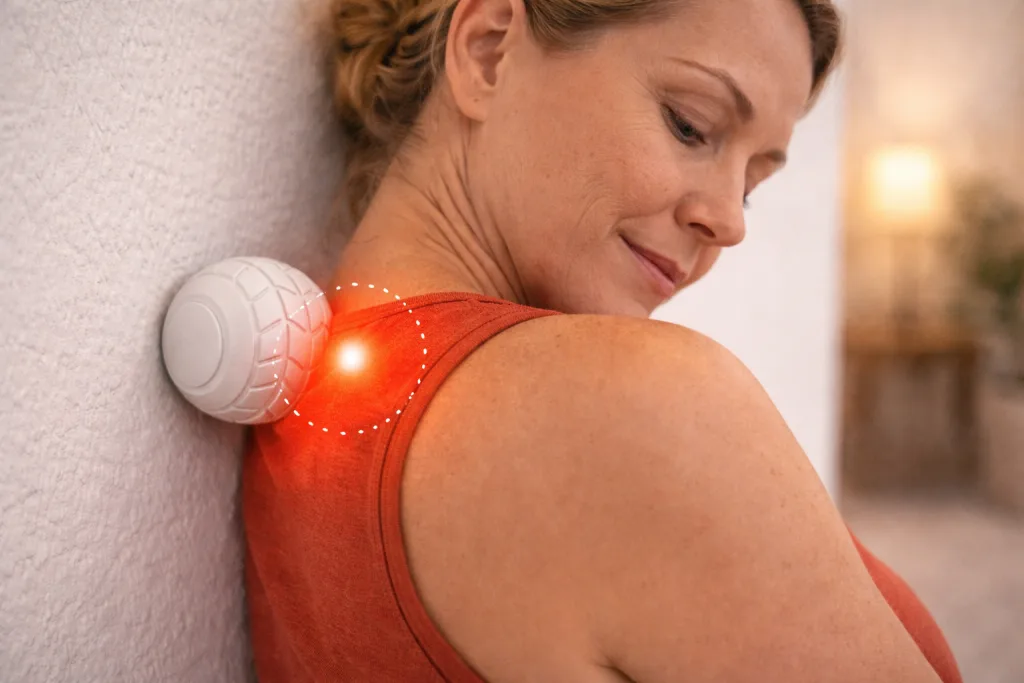
Why the Wall Method Works
Trigger points respond best to steady, sustained pressure.
The wall technique works because it allows you to:
• control the amount of pressure
• target specific tight spots
• maintain stable body positioning
Unlike handheld massage, using a wall lets you apply pressure using your body weight, which makes it easier to reach muscles between the shoulder blades.
Short daily sessions prevent accumulation.
For daily upper back tension:
For deeper, long standing tightness:
Step by Step: The Wall Release Technique
Follow these simple steps to safely release trigger points in the upper back.
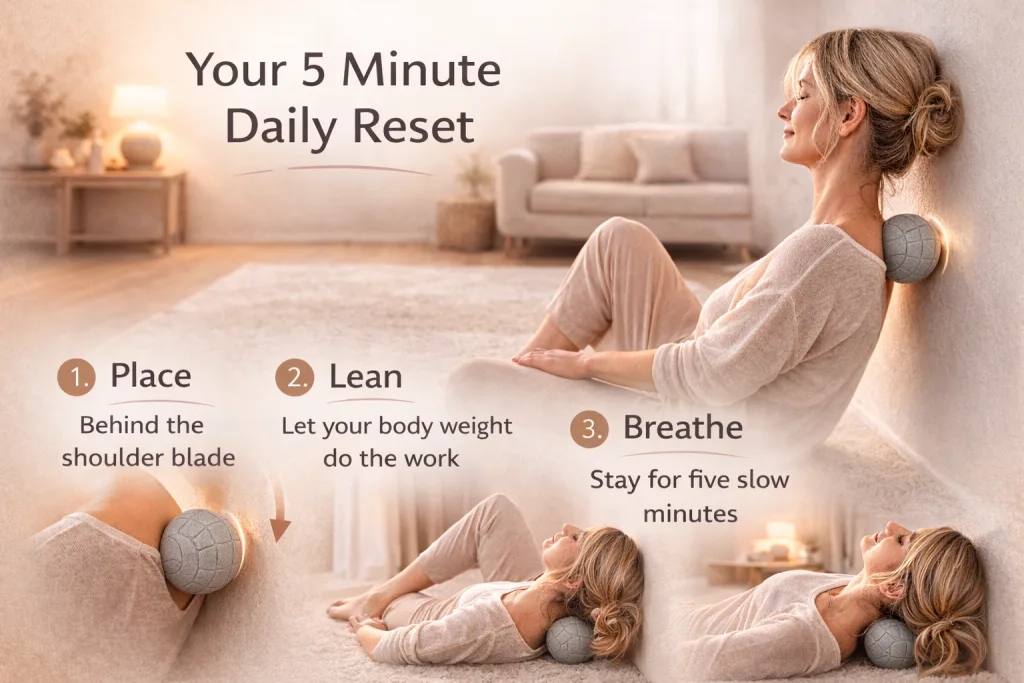
Step 1: Position Yourself Against a Wall
Stand with your back facing a wall.
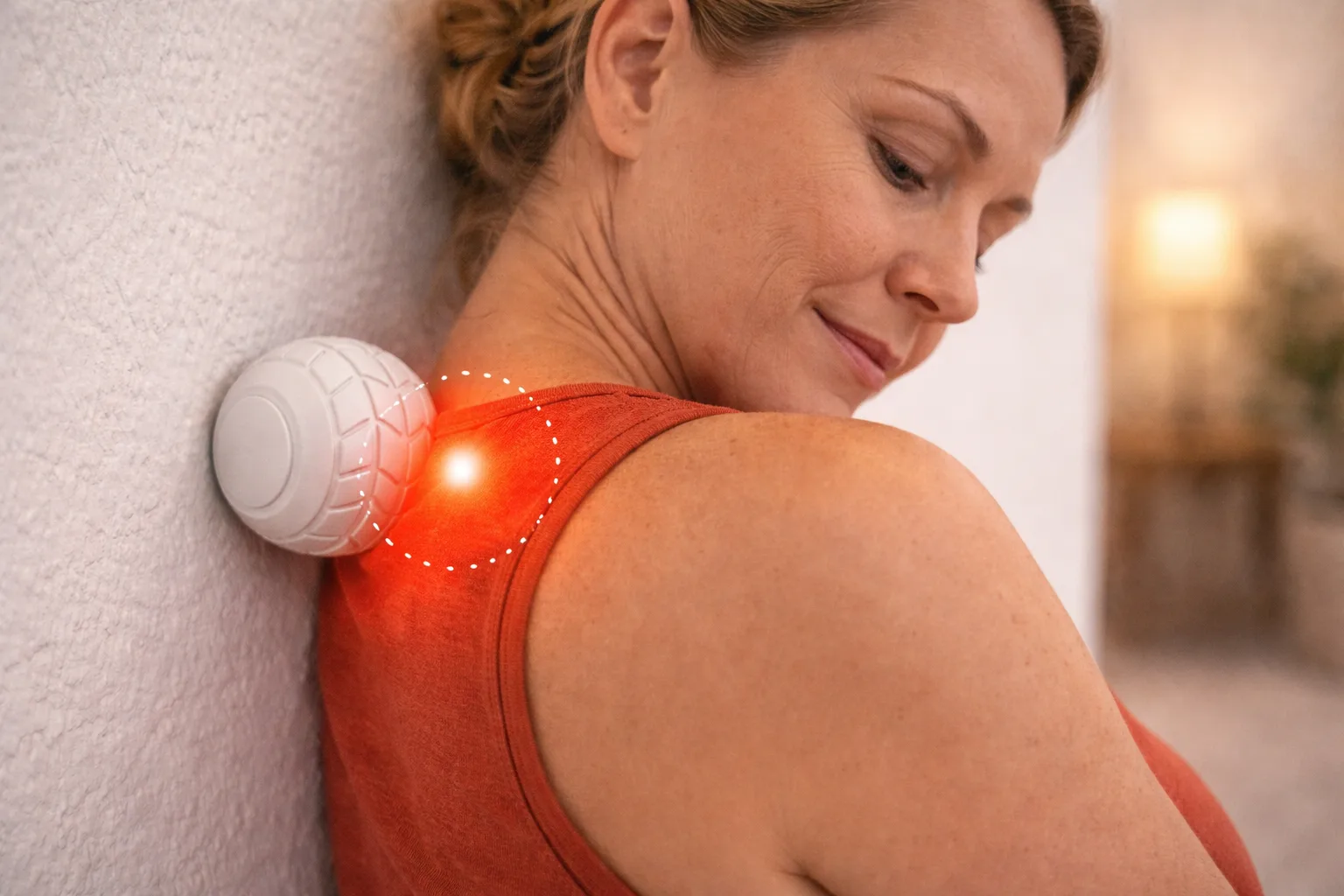
Place a massage ball between the wall and the area of your upper back where you feel tightness.
Most people find trigger points between the shoulder blades or along the upper shoulders.
If you’re unsure where these spots are, read this guide:
How to Find Trigger Points in Your Upper Back
Step 2: Apply Gentle Pressure
Lean slowly into the wall so the ball presses into the tight muscle.
You should feel firm but manageable pressure, not sharp pain.
Hold the pressure for about 20–30 seconds.
During this time, the muscle fibers begin to relax.
Step 3: Move Slowly
Once you locate a sensitive spot, stay on that area briefly.
Then move your body slowly:
• up and down
• side to side
• small circular movements
This helps release tension in the surrounding muscle tissue.
Step 4: Breathe and Relax
Many people hold their breath while applying pressure.
Instead, try to breathe slowly and deeply while maintaining pressure on the trigger point.
This helps the nervous system relax and allows the muscle to release more easily.
Where to Use the Wall Release Technique
The wall technique works best for trigger points in several common areas.
Upper Trapezius
These trigger points sit near the top of the shoulders and often cause stiffness in the neck.
Rhomboid Muscles
These muscles lie between the shoulder blades and frequently develop deep muscle knots from desk work.
If you regularly feel tension here, this article explains why:
Why Your Shoulders Feel Tight After Desk Work
Under the Shoulder Blade
Some trigger points develop slightly beneath the shoulder blade.
Because they are difficult to reach with the hands, wall pressure techniques can be particularly helpful.
How Long Should You Apply Pressure?
Most trigger point release techniques work best when pressure is applied for 20–60 seconds.
Signs the muscle is releasing include:
• reduced tenderness
• warmth in the area
• improved range of motion
However, avoid pressing aggressively.
Gentle, consistent pressure is usually more effective than strong force.
Why Trigger Points Keep Returning
Even when trigger points are released, they may return if the underlying tension patterns remain.
Common causes include:
• prolonged sitting
• poor posture
• repetitive shoulder movements
• emotional stress
Because of this, many people combine trigger point release with short daily routines designed to restore shoulder movement.
One helpful example is:
The 5 Minute Shoulder and Upper Back Reset Routine
The Takeaway
The wall release technique is one of the simplest ways to relieve trigger points in the upper back.
By using controlled pressure and slow movement, you can target tight spots between the shoulder blades and gradually release muscle tension.
Practicing this technique regularly can help reduce upper back stiffness and prevent trigger points from returning.