
Many people use the terms trigger point and muscle knot interchangeably.
If you have ever felt a tight lump between your shoulder blades or in the upper back, you may have wondered:
Is this a muscle knot, or is it a trigger point?
The truth is that these two terms are closely related but they are not exactly the same.
Understanding the difference can help you choose the most effective way to relieve upper back tension.
If you are new to the concept of trigger points, start here:
What Is a Muscle Knot?
A muscle knot is a commonly used term that describes a small area of tight muscle fibers.
It usually feels like:
• a firm lump inside the muscle
• localized tightness
• stiffness when moving
Muscle knots are very common in the upper back and shoulders, especially for people who sit at a desk for long periods.
You may notice them when:
• pressing the muscles between the shoulder blades
• stretching your shoulders
• leaning against a hard surface
These knots are typically caused by muscle overuse, poor posture, or stress.
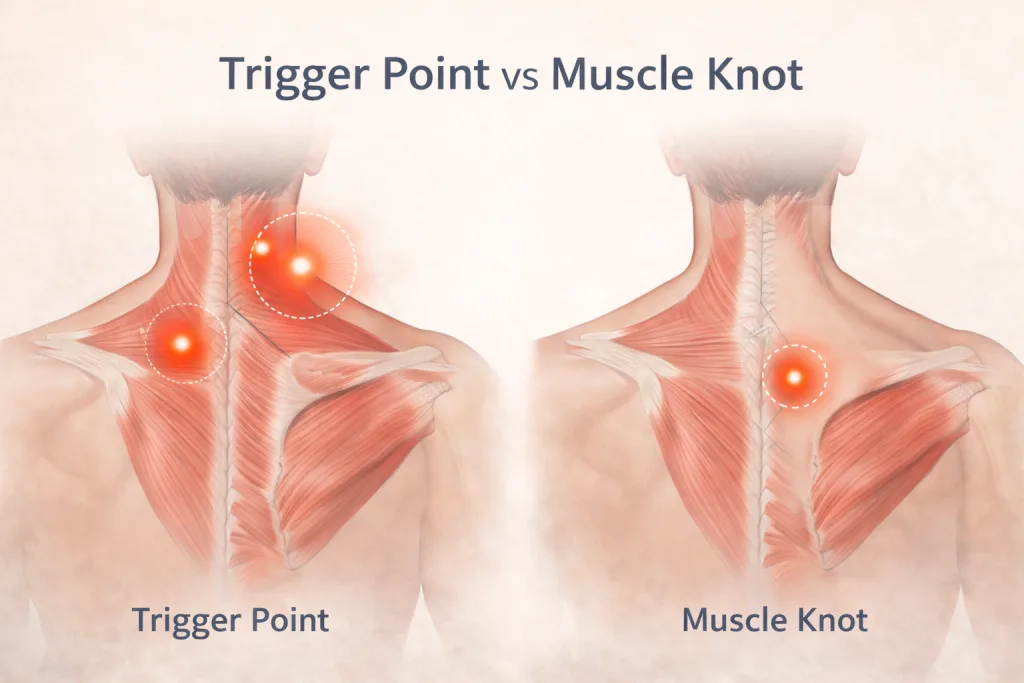
What Is a Trigger Point?
A trigger point is a more specific medical term.
It describes a sensitive spot inside a tight band of muscle fibers that can cause pain when pressed.
Unlike a simple muscle knot, trigger points may also cause referred discomfort, meaning the sensation spreads beyond the original spot.
For example:
• a trigger point near the shoulder blade may cause tension across the upper back
• a trigger point in the upper trapezius may lead to neck stiffness
You can learn how to identify these spots in detail here:
How to Find Trigger Points in Your Upper Back
Key Differences Between Trigger Points and Muscle Knots
Although the two terms are often used together, there are a few important differences.
Muscle Knot
• general term
• describes tight muscle tissue
• usually localized discomfort
Trigger Point
• specific clinical concept
• highly sensitive pressure spot
• may cause referred tension
In simple terms:
Most trigger points feel like muscle knots but not every muscle knot behaves like a trigger point.
Short daily sessions prevent accumulation.
For daily upper back tension:
For deeper, long standing tightness:
Why These Knots Develop in the Upper Back
The upper back is especially prone to tension because of modern lifestyle habits.
Common causes include:
• prolonged desk work
• forward head posture
• stress related muscle tightening
• lack of shoulder movement
Over time, these factors cause small areas of muscle fibers to remain contracted.
This is why people often experience the familiar feeling of tight spots between the shoulder blades.
If this pattern sounds familiar, you may want to read:
Why Your Shoulders Feel Tight After Desk Work
How to Release Trigger Points and Muscle Knots
The most effective way to relieve these tight spots is through gentle sustained pressure.
Common self release methods include:
• massage balls
• wall pressure techniques
• foam rolling
• manual massage
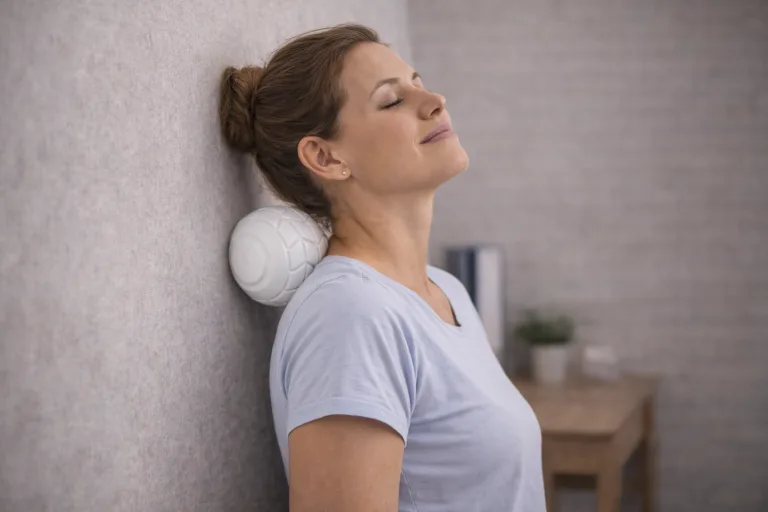
Many people use a wall and a massage ball to apply controlled pressure directly to the upper back muscles.
This technique allows the muscle fibers to gradually relax.
A simple example is explained here:
How to Release Deep Shoulder Blade Tension at Home

Why These Knots Keep Coming Back
Even when a muscle knot or trigger point is released, it may return if the underlying causes remain.
Common triggers include:
• poor posture
• lack of movement
• emotional stress
• repetitive shoulder strain
This is why many people combine trigger point release with short daily mobility routines.
One helpful routine is:
The 5 Minute Shoulder and Upper Back Reset Routine
The Takeaway
Muscle knots and trigger points are closely related concepts that describe areas of tight muscle tissue.
While the terms are sometimes used interchangeably, trigger points are more specific and may cause wider patterns of discomfort.
Learning how to identify and release these tight spots can help reduce upper back tension and improve overall mobility.
With regular attention to posture, movement, and gentle self-massage, most people can significantly reduce the recurring tightness that develops in the upper back.


It’s very easy to find out any matter on web as compared to textbooks, as I found this piece of writing at this web
site.