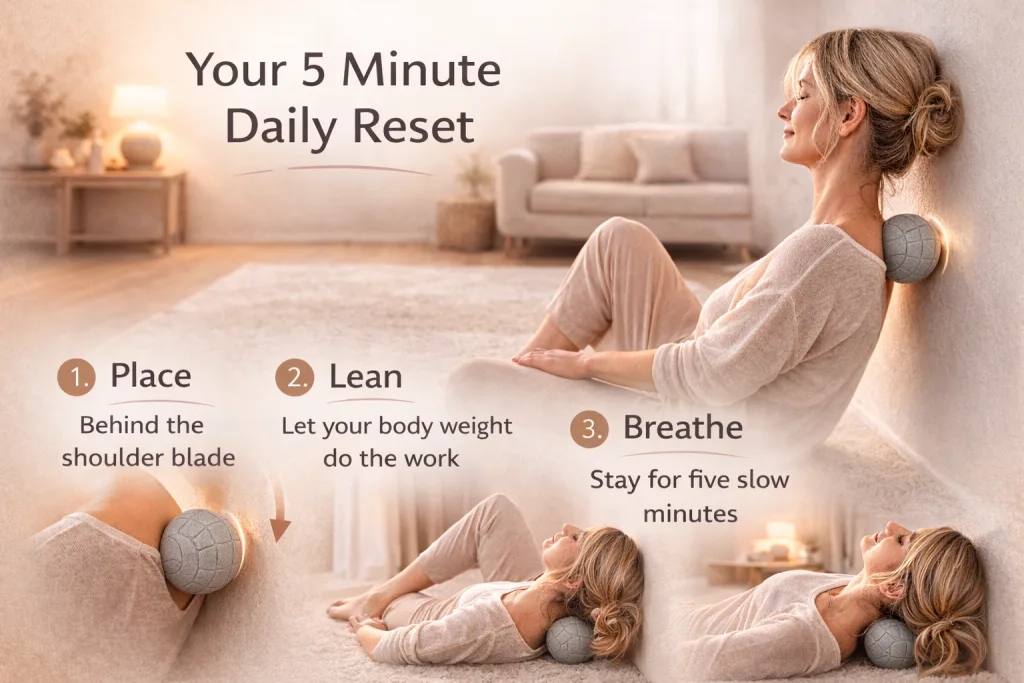
Many people describe upper back discomfort as tightness, pressure, or a persistent knot between the shoulder blades.
When these sensations appear repeatedly in the same spot, they are often caused by something known as a trigger point.
Trigger points are extremely common, especially for people who spend long hours sitting, working at a desk, or using digital devices.
Understanding how trigger points form can help you relieve tension more effectively and prevent it from becoming chronic.
What Exactly Is a Trigger Point?
A trigger point is a small, sensitive spot located within a tight band of muscle fibers.
These spots form when muscle fibers remain contracted for extended periods of time.
Instead of relaxing normally, the muscle stays partially tightened, creating a localized knot.
When pressure is applied to this area, it may cause:
• localized soreness
• deep aching
• stiffness in surrounding muscles
• pain that spreads to nearby areas
Because of this, trigger points are often referred to as muscle knots.
When these painful knots appear repeatedly in the same area, they are often related to trigger points small tight spots inside muscle fibers.
If you’re new to this concept, our Trigger Point Massage Guide explains how these muscle knots develop and how to release them safely.
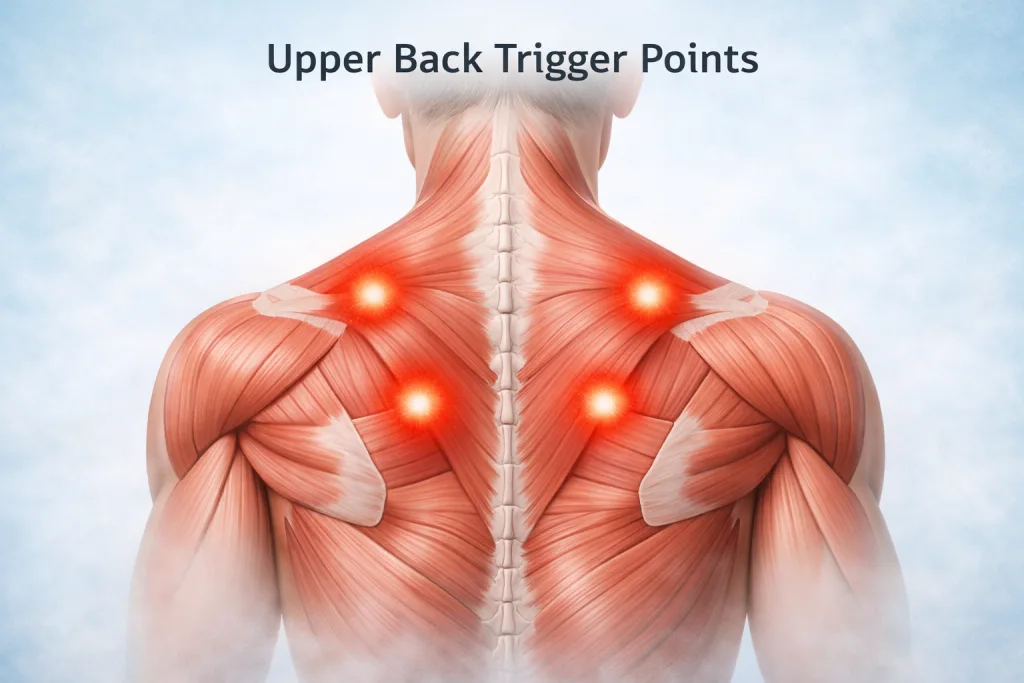
Where Trigger Points Commonly Occur in the Upper Back
Trigger points most frequently appear in muscles that stabilize the shoulders and neck.
The most common locations include:
Upper Trapezius
Located between the neck and shoulder, this muscle helps support the head and shoulders throughout the day.
Rhomboids
These muscles sit between the shoulder blades and play an important role in posture.
Levator Scapulae
This muscle connects the neck to the shoulder blade and is highly active during desk work.
When these muscles remain under constant load, trigger points can gradually develop.
This is why many people notice upper back tightness after long hours of computer work.
If you experience this regularly, you may relate to the explanation in:
Why Your Shoulders Feel Tight After Desk Work
What Causes Trigger Points to Develop?
Trigger points usually form when muscles are exposed to repetitive strain or sustained tension.
Some of the most common causes include:
Prolonged sitting
Sitting for extended periods often places constant load on upper back muscles.
Forward head posture
When the head moves forward in front of the shoulders, upper back muscles must work harder to stabilize the spine.
Emotional stress
Stress often causes unconscious shoulder elevation, which keeps upper back muscles contracted.
You can learn more about this pattern in:
How Stress Causes Shoulder and Upper Back Tension
Limited movement
When muscles remain in the same position for long periods, circulation decreases and tension builds.
Symptoms of Upper Back Trigger Points
Trigger points can create a variety of sensations that people often mistake for general muscle fatigue.
Common symptoms include:
• deep muscle knots between the shoulder blades
• aching in the upper back
• burning sensations in the back muscles
• neck stiffness
• shoulder tightness
Some trigger points may also cause referred discomfort, meaning the pain spreads slightly away from the original spot.
If you have experienced burning discomfort in the upper back, the mechanism is explained in:
Why You Feel a Burning Sensation Between Your Shoulder Blades
How Trigger Points Affect Daily Movement
Although trigger points are small, they can influence the way muscles function.
When a muscle contains multiple trigger points, it may:
• lose flexibility
• become weaker
• restrict shoulder mobility
• cause fatigue in surrounding muscles
Over time, this can affect posture and increase tension in nearby areas.
This is one reason upper back tension often develops together with rounded shoulder posture.
You can explore this relationship in:
How to Fix Rounded Shoulders and Upper Back Posture Naturally
How to Release Trigger Points Safely
The most common method for releasing trigger points is controlled pressure applied directly to the tight muscle area.
This can be done through:
• manual massage
• foam rollers
• massage balls
• wall pressure techniques
Applying gentle pressure helps restore blood flow and encourages the muscle fibers to relax.
A simple self release technique is explained here:
How to Release Deep Shoulder Blade Tension at Home

Why Early Trigger Point Relief Matters
Trigger points often start small but can become persistent if ignored.
When tension remains in the same muscle areas for long periods, it may lead to:
• chronic muscle tightness
• recurring shoulder tension
• restricted movement
• worsening posture
Addressing trigger points early can help prevent these patterns from becoming long term problems.
You can learn about long term progression here:
What Happens If You Ignore Upper Back Pain?
The Bottom Line
Trigger points are one of the most common causes of upper back tension and muscle knots.
They develop when muscles remain contracted for long periods due to posture, stress, or repetitive activity.
Fortunately, trigger points usually respond well to consistent self care techniques such as gentle pressure release, posture awareness, and daily mobility routines.
Understanding how they form is the first step toward restoring comfortable movement and reducing upper back tension.
Just controlled, repeatable support that allows tissue to relax safely.
You can explore:
AcuMag Shoulder Reset
For daily stress related tension
AcuMag Deep Reset
For long standing tightness patterns