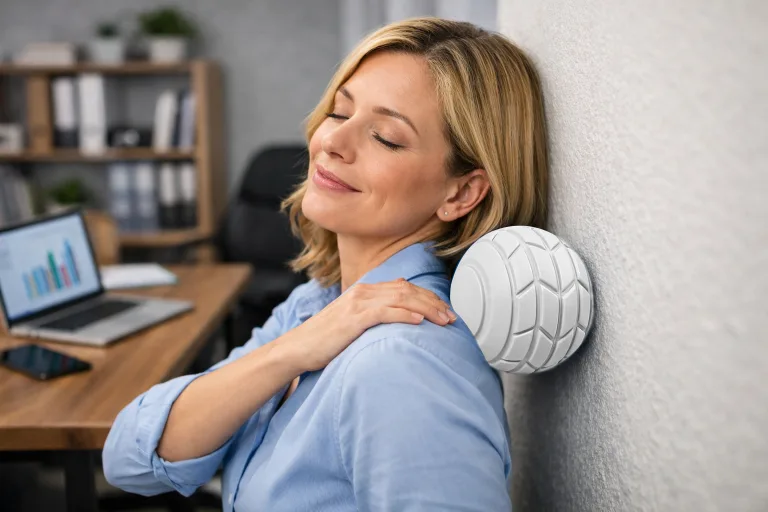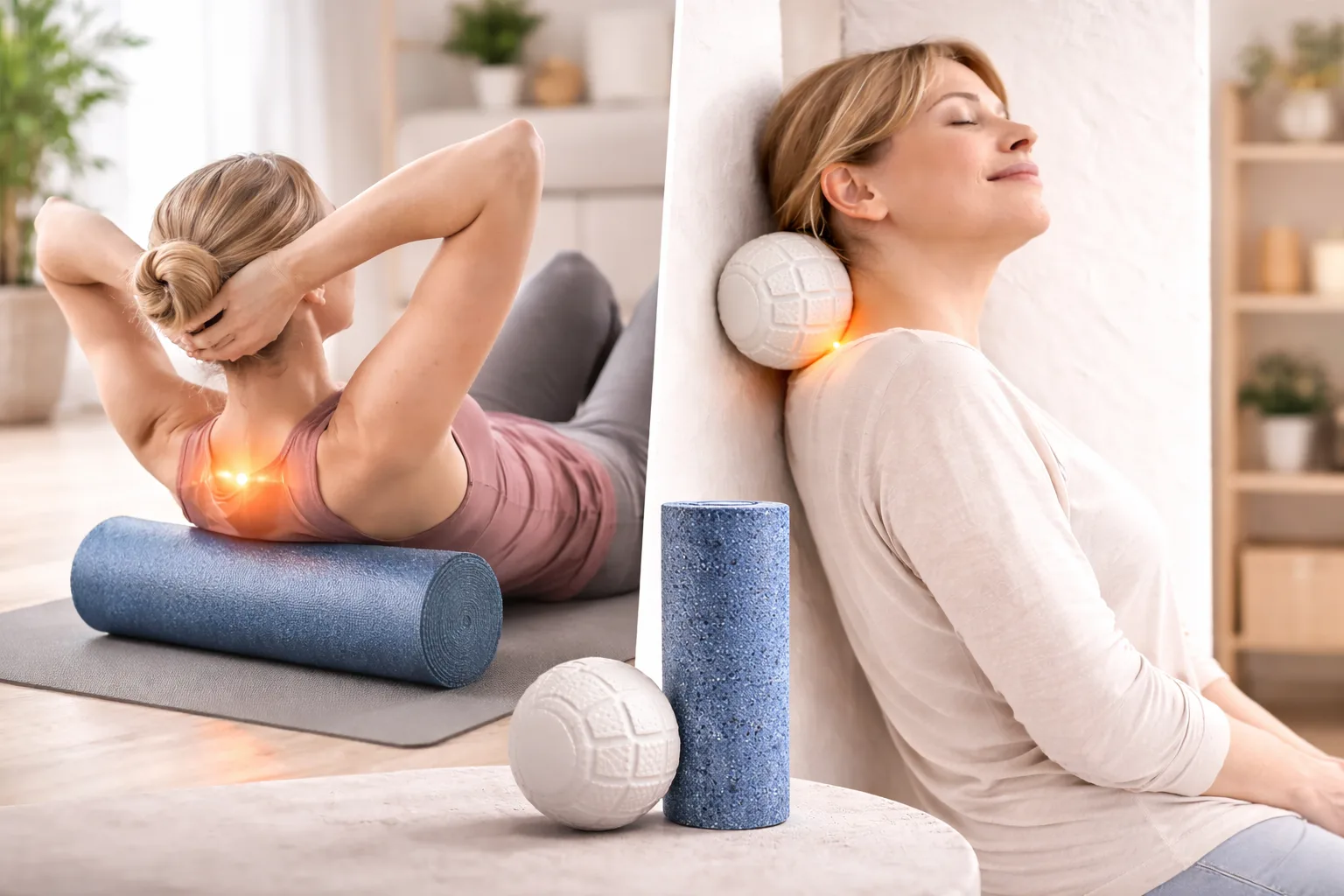
If you sit at a desk all day, you’ve probably felt it:
A tight, heavy feeling between your shoulder blades that doesn’t fully go away.
You stretch. You move around.
But the tension keeps coming back.
At some point, most people start looking for tools to help.
But which ones actually work?
The Most Common Tools People Try
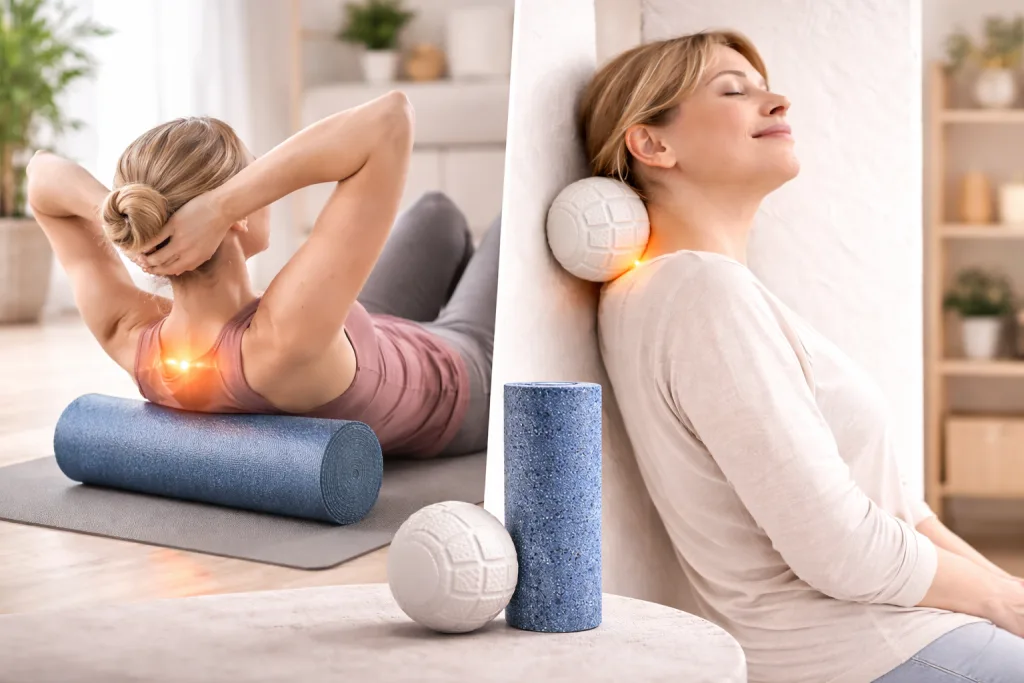
There are three main approaches people use to relieve shoulder tension from desk work.
Some help a little.
Some don’t work as well as expected.
1. Stretching
Stretching is usually the first thing people try.
It can feel good temporarily and helps improve mobility.
But here’s the limitation:
It doesn’t reach deep muscle tension
Relief is often short lived
Tight spots return quickly
Stretching helps but it’s rarely enough on its own.
2. Foam Roller
Foam rollers are widely used for muscle recovery.
They work well for:
Legs
Lower back
Large muscle groups
But for upper back and shoulder blade areas:
The surface is too broad
Hard to target specific tension points
Limited control over pressure
This makes foam rollers less effective for precise shoulder blade pain.
Learn more here: Massage Ball vs Foam Roller for Upper Back Pain
3. Massage Ball
Massage balls are designed for more targeted pressure.
They allow you to:
Focus on specific tight spots
Control pressure using body weight
Reach areas between the shoulder blades
This makes them especially useful for desk-related tension.
Why Massage Balls Work Better for Shoulder Blade Pain
The key difference is precision and control.
Unlike broader tools, massage balls allow you to:
Apply pressure exactly where tension builds
Stay on one spot long enough to release it
Adjust intensity naturally
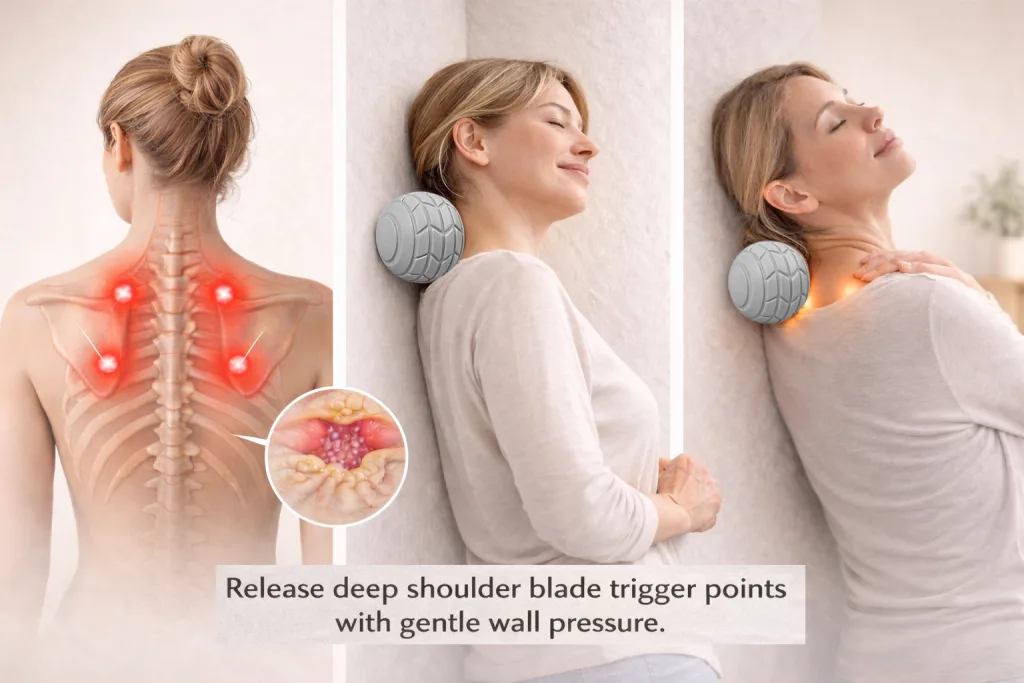
This is important because shoulder blade pain usually comes from deep trigger points, not surface-level tightness.
Not sure what trigger points are? Trigger Point vs Muscle Knot
The Problem With Most Massage Balls
Not all massage balls feel good to use.
Many are:
Too small → creates sharp pressure
Too hard → uncomfortable for daily use
Too intense → body resists instead of relaxing
As a result, people stop using them consistently.
And consistency is what actually creates relief.
A More Practical Option for Daily Use
For desk related shoulder tension, a better approach is:
a slightly larger, gentler massage ball
This allows pressure to:
Spread across the shoulder blade area
Feel firm but not painful
Be used regularly without discomfort
A Better Option for Office Shoulder Pain
Tools like
👉 AcuMag Shoulder Reset
are designed with this in mind.
Instead of aggressive pressure, they focus on:
A larger contact surface
Controlled, even pressure
Comfort for everyday use
This makes them easier to use consistently especially for people who sit long hours.
What Actually Works (Simple Answer)
If your shoulder pain comes from desk work:
Stretching → helps temporarily
Foam rollers → too broad for upper back
Massage balls → most effective option
But only if the pressure is comfortable enough to use daily
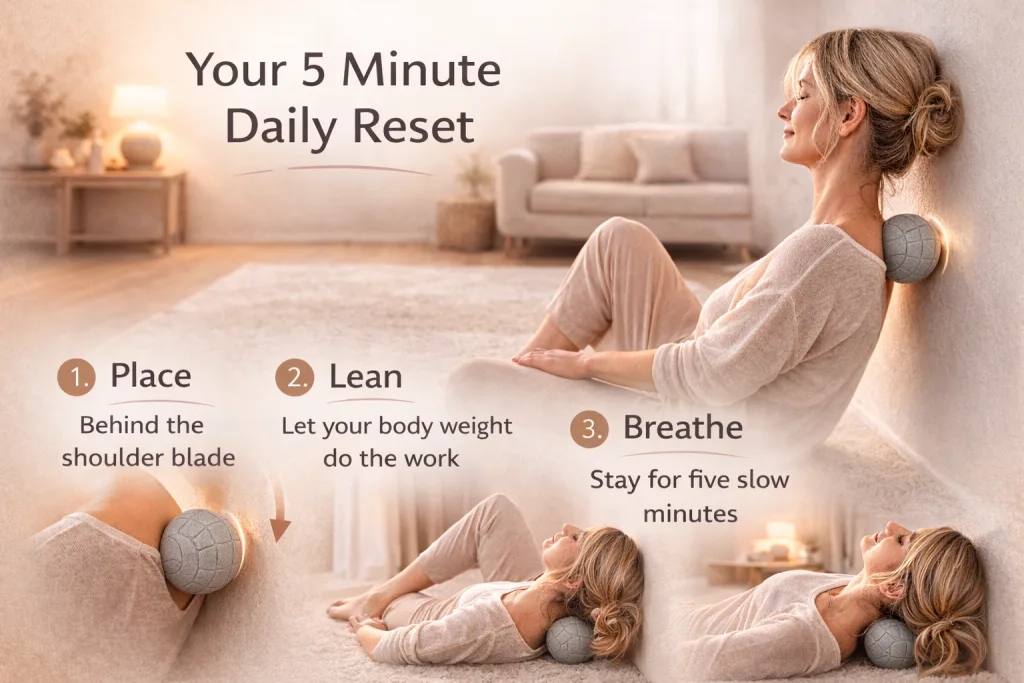
How to Use It Effectively
You don’t need complicated routines.
A simple method:
Place the ball between your back and a wall
Lean into it gently
Hold for 20–40 seconds
Move slowly to the next spot
Full guide here: How to Use a Massage Ball on the Wall for Shoulder Blade Trigger Points
Final Thought
Shoulder tension from desk work builds slowly over time.
And the best solutions are simple and consistent.
The right tool doesn’t need to be aggressive.
It just needs to work with your body, not against it.