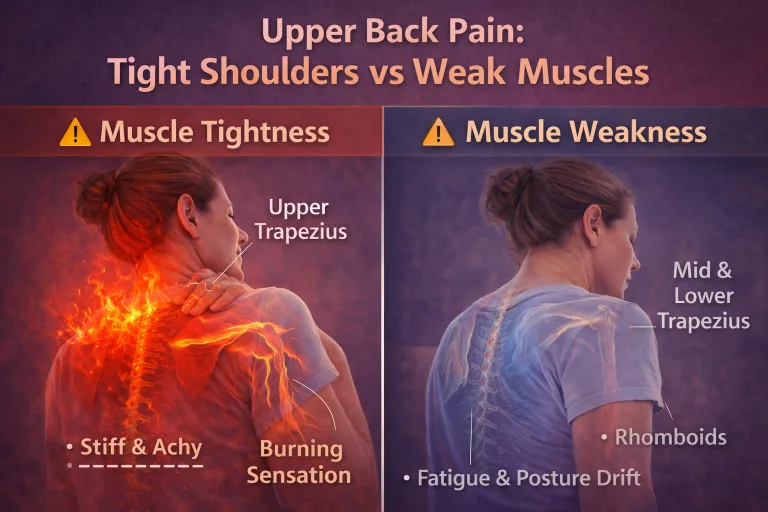
You didn’t lift anything heavy.
You didn’t injure your shoulder.
And yet by evening, your upper back feels tight and heavy.
That tension may not be mechanical.
It may be neurological.
Why Your Shoulders React to Stress
When you feel stressed even mentally your body activates its fight or flight system.
This response:
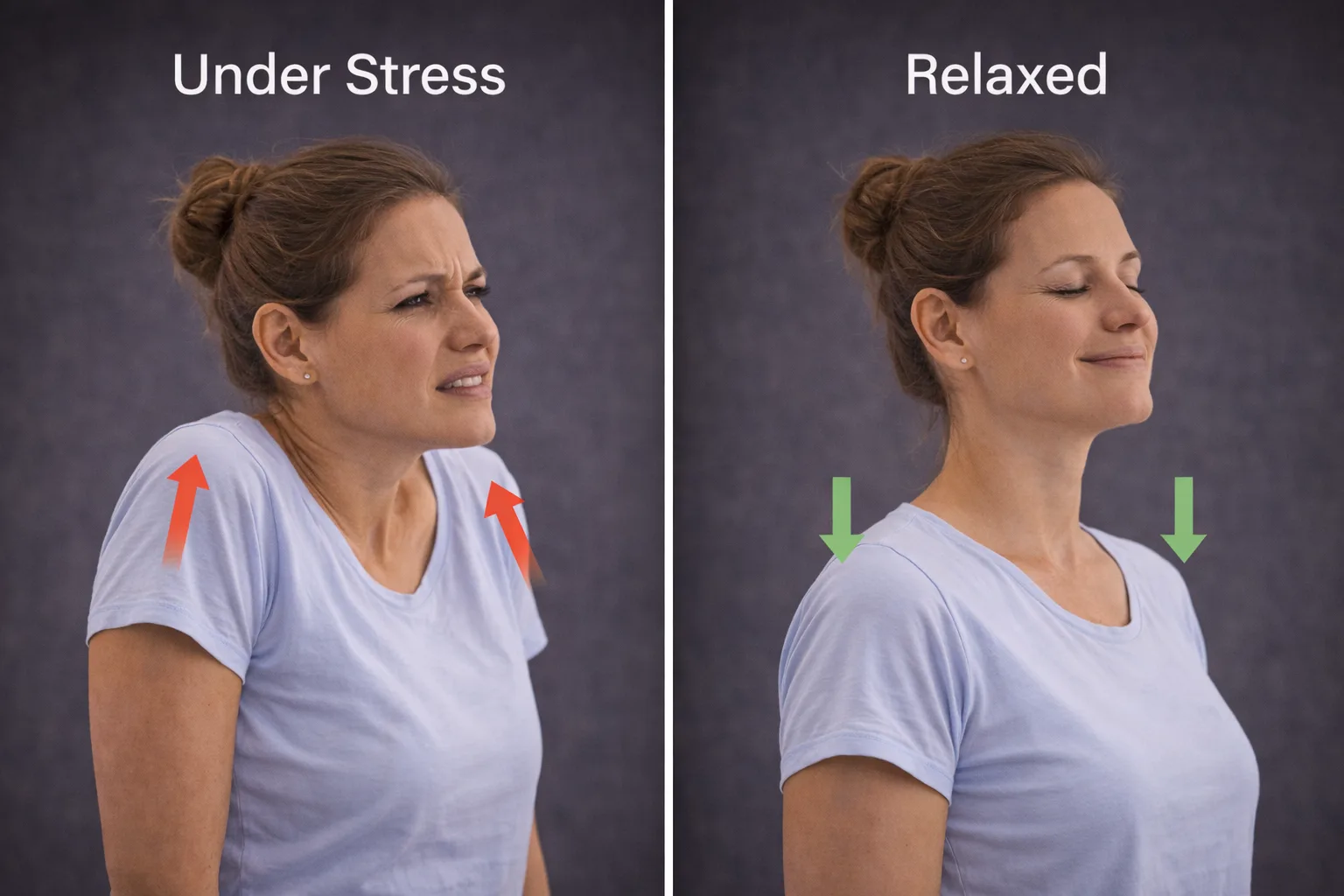
Raises your shoulders slightly
Tightens your neck
Contracts upper back muscles
Reduces deep breathing
Most people don’t notice it happening.
But if this pattern repeats daily, the muscles never fully relax.
The Nervous System and Muscle Guarding
Your nervous system controls muscle tone.
When stress stays elevated:
Muscle tone increases
Blood flow decreases
Recovery slows
Trigger points form more easily
This is why tension often feels worse:
At night
During deadlines
During emotional stress
Even without physical strain.
If you’ve experienced recurring knots, you may also want to read:
The Real Reason Your Shoulder Knots Keep Coming Back
Why Relaxing Doesn’t Always Work
Many people try:
Stretching
Massage
Heat
But if the nervous system remains activated, muscles stay partially contracted.
Relief becomes temporary.
This is why stress related tension often returns the next day.
Signs Your Shoulder Tension Is Stress Driven
You may notice:
Tightness increases during busy periods
Shoulders creep upward while working
Jaw clenching
Shallow breathing
Relief during vacations
These are nervous system patterns, not structural injuries.
How to Calm the Shoulder Stress Cycle
The goal isn’t just to stretch muscles.
The goal is to reduce nervous system guarding.
Step 1: Slow Exhale Breathing
Inhale gently for 4 seconds.
Exhale slowly for 6 seconds.
Longer exhales calm the nervous system.
Step 2: Drop the Shoulders Intentionally
Several times per day:
Let your shoulders fall
Unclench your jaw
Relax your tongue
These small resets interrupt tension cycles.
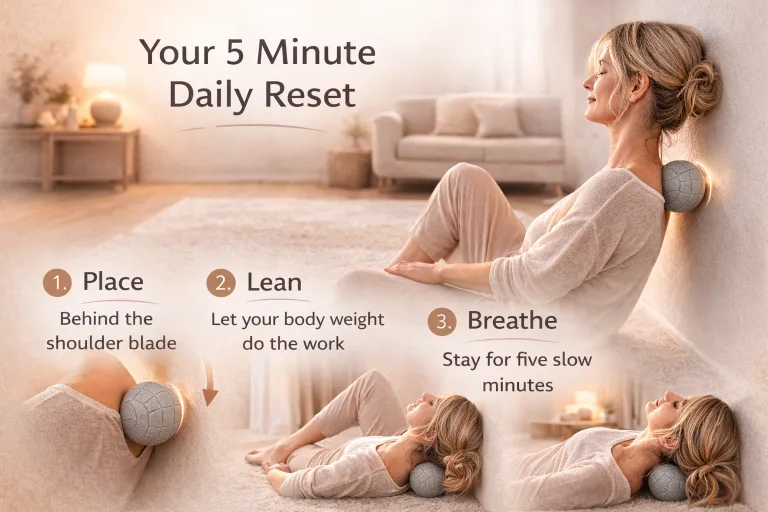
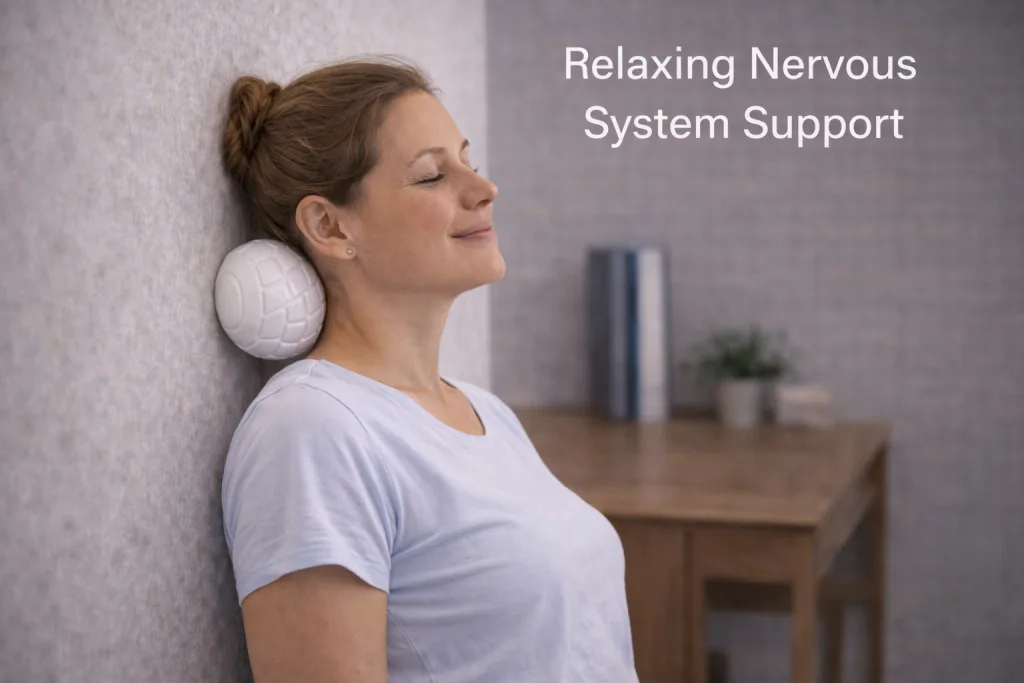
Step 3: Gentle, Consistent Muscle Support
When stress builds daily, muscles benefit from consistent decompression.
Not aggressive pressure.
Not force.
Just controlled, repeatable support that allows tissue to relax safely.
You can explore:
AcuMag Shoulder Reset
For daily stress related tension
AcuMag Deep Reset
For long standing tightness patterns
Why Evening Tension Feels Stronger
At night:
Cortisol drops
Awareness increases
Muscles that stayed tight all day become noticeable
That’s why many people feel shoulder tension most strongly in the evening.
Understanding this pattern reduces fear.
It’s not damage.
It’s accumulated guarding.
When to Seek Medical Care
If you experience:
Radiating arm pain
Numbness
Tingling
Severe weakness
Consult a professional.
Stress related tension feels dull, heavy, and tight not sharp or electric.
The Real Shift: From Fighting Pain to Calming the System
Chronic shoulder tension is not always a posture problem.
It is often a stress pattern problem.
When you calm the nervous system, muscles follow.
Relief becomes steadier.
Not dramatic.
But consistent.
And consistency is what creates long term comfort.