Many people assume upper back pain always comes from tight muscles.
But that’s only half the story.
In reality, upper back discomfort usually develops from two problems working together:
• Muscles that are too tight
• Muscles that have become too weak
Understanding the difference is important, because the solution for each problem is not the same.
Let’s break it down.
Why Tightness and Weakness Often Happen Together
Upper back tension usually develops from modern posture patterns.
Long hours of:
• Desk work
• Phone use
• Driving
• Stress related shoulder elevation
cause certain muscles to become chronically shortened, while others become inactive and weak.
For example:
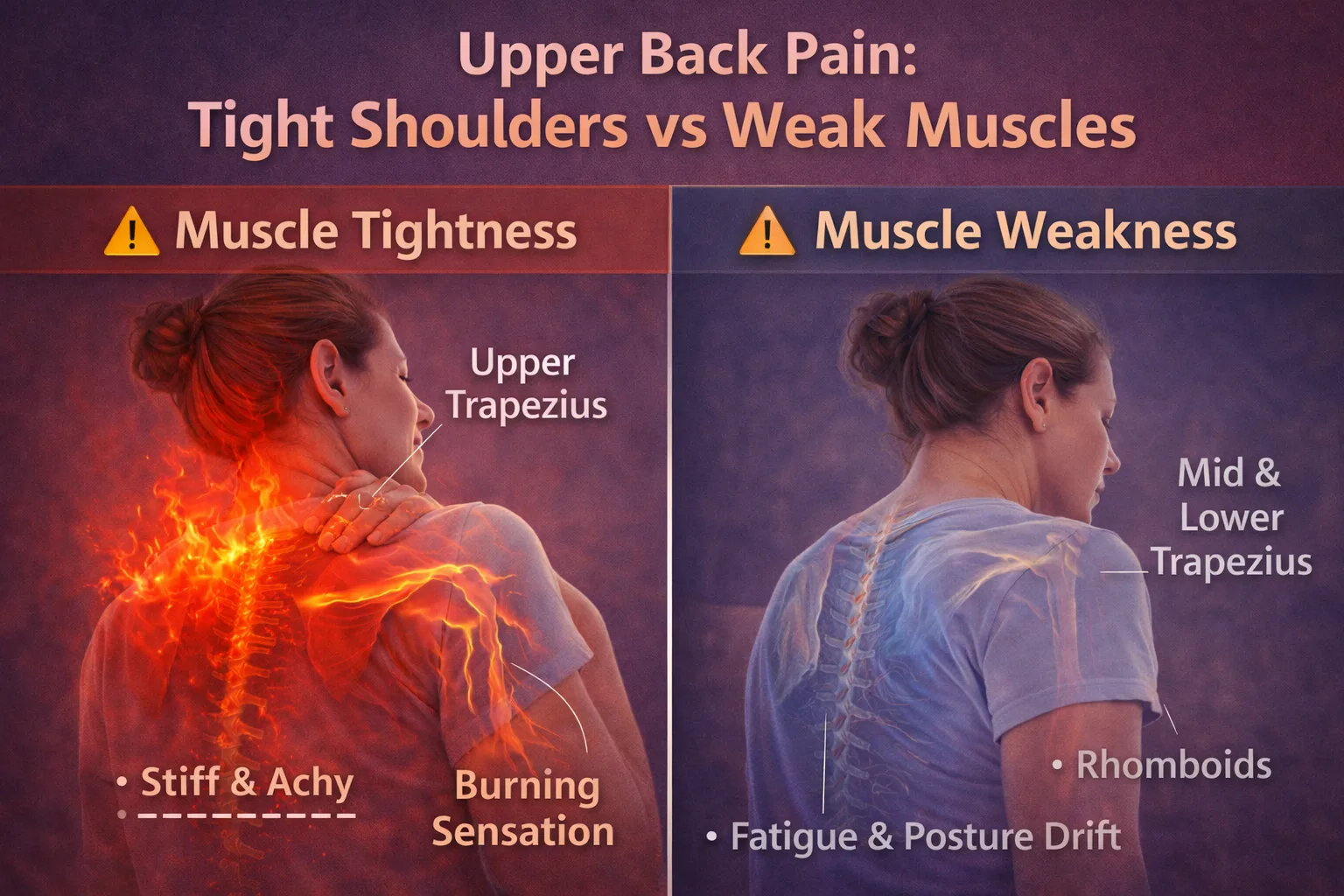
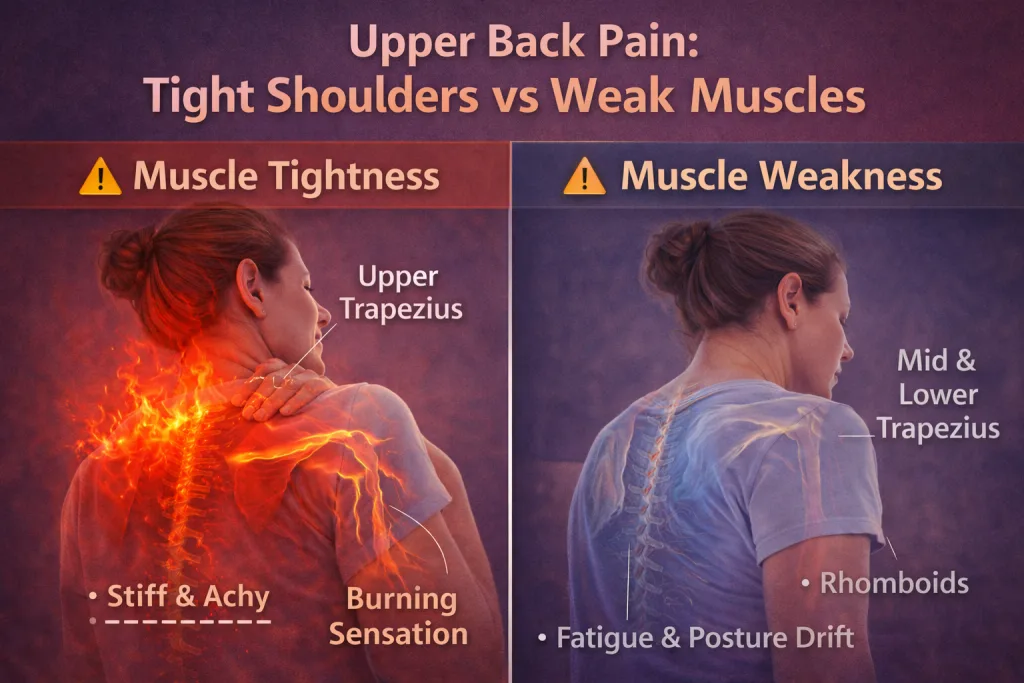
Tight muscles often include:
• Upper trapezius
• Levator scapulae
• Chest muscles
Weak muscles often include:
• Mid trapezius
• Lower trapezius
• Rhomboids
This imbalance pulls the shoulders forward and makes the upper back work harder than it should.
If your tension developed gradually from desk posture,
you may also notice patterns described in
Why Your Shoulders Feel Tight After Desk Work.
Signs Your Upper Back Pain Is Mostly Tightness
Pain caused mainly by tight muscles usually feels:
• Stiff
• Achy
• Burning between the shoulder blades
• Worse after long sitting
You might also notice:
• Temporary relief from stretching
• Tender trigger points
• Discomfort when pressing certain spots
This pattern is common when trigger points develop.
If you often feel burning or warmth in the upper back,
Why You Feel a Burning Sensation Between Your Shoulder Blades explains why this happens.
Signs Muscle Weakness May Be Involved
Pain caused by weakness feels different.
Instead of constant tightness, you may notice:
• Fatigue in the upper back
• Difficulty maintaining posture
• Shoulders drifting forward
• Pain appearing late in the day
Weak stabilizing muscles struggle to support the spine.
As a result, other muscles tighten to compensate.
Over time, this compensation leads to tension and discomfort.
A Simple Self Test
Try this quick check.
Stand naturally in front of a mirror.
Ask yourself:
• Are your shoulders rounded forward?
• Does your head sit in front of your body?
• Do your shoulder blades feel inactive?
If yes, weakness may be contributing to your discomfort.
Postural changes like this are extremely common.
You can learn how to correct them in
How to Fix Rounded Shoulders and Upper Back Posture Naturally.
Why Stretching Alone Often Fails
Many people try to stretch their upper back constantly.
But stretching tight muscles without activating weak ones can create a cycle:
tight → stretch → temporary relief → tight again
This happens because the underlying imbalance hasn’t been addressed.
A better approach combines:
• gentle decompression
• mobility
• light activation
Short daily resets can interrupt this cycle before it becomes chronic.
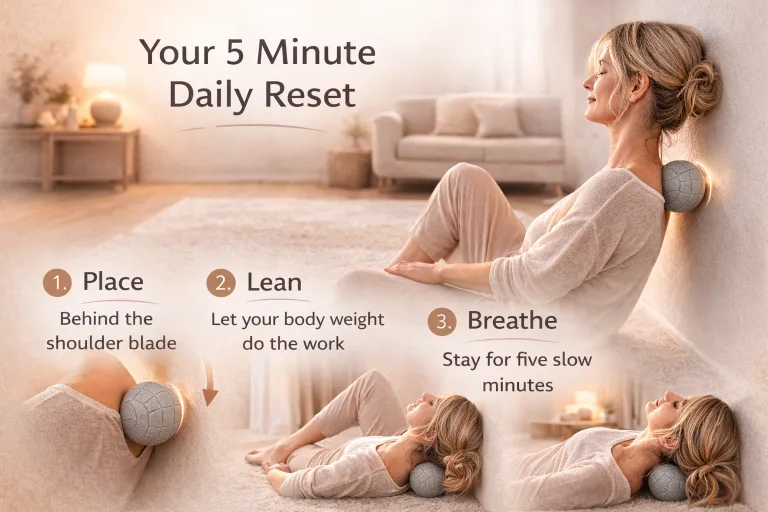
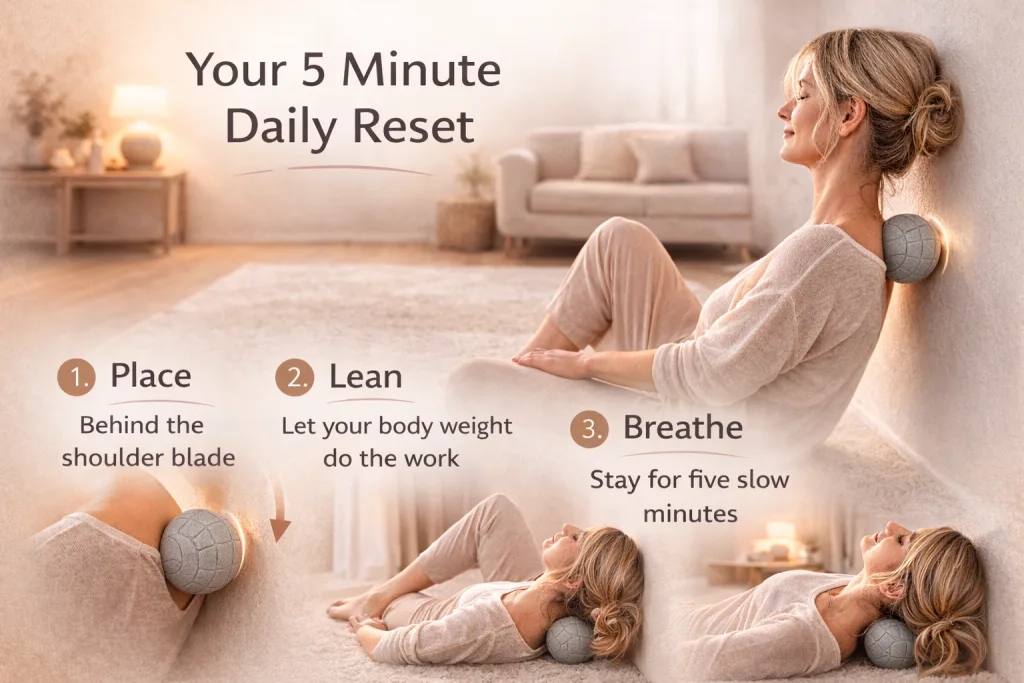
The 5 Minute Shoulder & Upper Back Reset Routine is a simple example of how to do this consistently.
When Pain Becomes Chronic
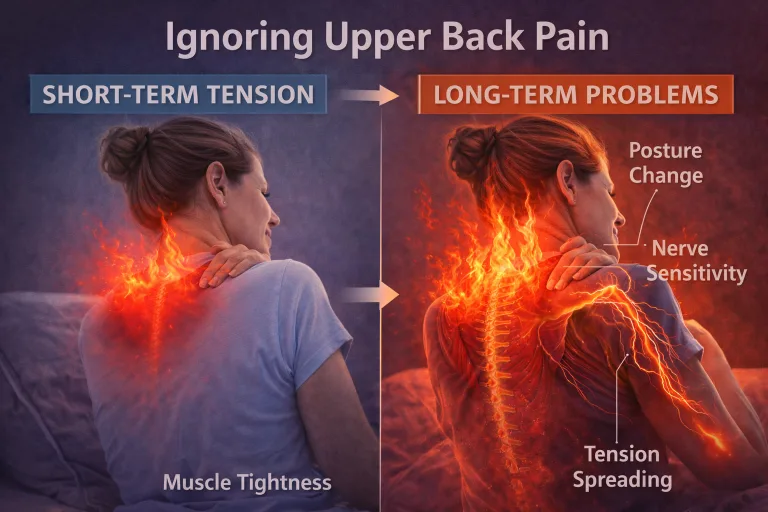
If tightness and weakness continue unchecked, tension patterns become harder to reverse.
You may notice:
• recurring trigger points
• increased burning sensations
• reduced shoulder mobility
• posture becoming harder to correct
Over time this can turn temporary tension into persistent discomfort.
If you haven’t read it yet,
What Happens If You Ignore Upper Back Pain? explains the long-term progression.
The Balanced Approach
Upper back pain rarely comes from a single cause.
The most effective approach usually includes:
• releasing tight muscles
• restoring mobility
• activating stabilizing muscles
• reducing daily stress patterns
Consistency matters more than intensity.
Small daily adjustments are often enough to prevent chronic patterns from forming.
Short daily sessions prevent accumulation.
For daily upper back tension:
For deeper, long standing tightness:
The Takeaway
Upper back pain is rarely just tightness.
And it’s rarely just weakness.
It’s usually a combination of both.
When you address both sides of the problem releasing tension and restoring support your body can return to balance.
And that’s when real relief begins.