The Real Reason Your Shoulder Knots Keep Coming Back
You stretch.
You massage.
You roll your shoulders.
And yet… the tight spot between your shoulder blade and spine always returns.
That spot isn’t random tension.
It’s likely a trigger point.
And until you understand what that really means, it won’t fully go away.
If your shoulders feel tight after long desk work, you may want to read:
→ Why Your Shoulders Feel Tight After Desk Work
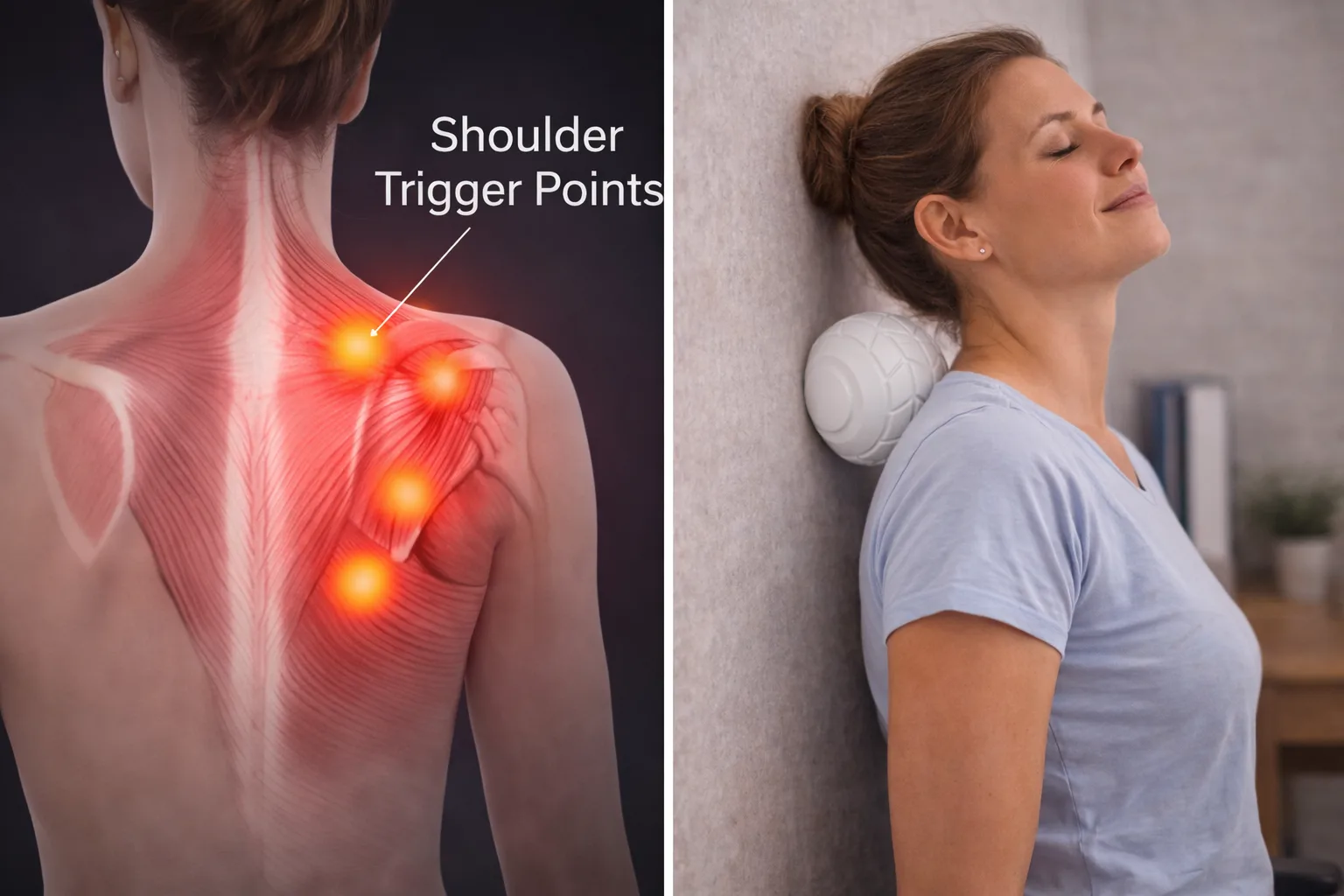
What Is a Shoulder Trigger Point?
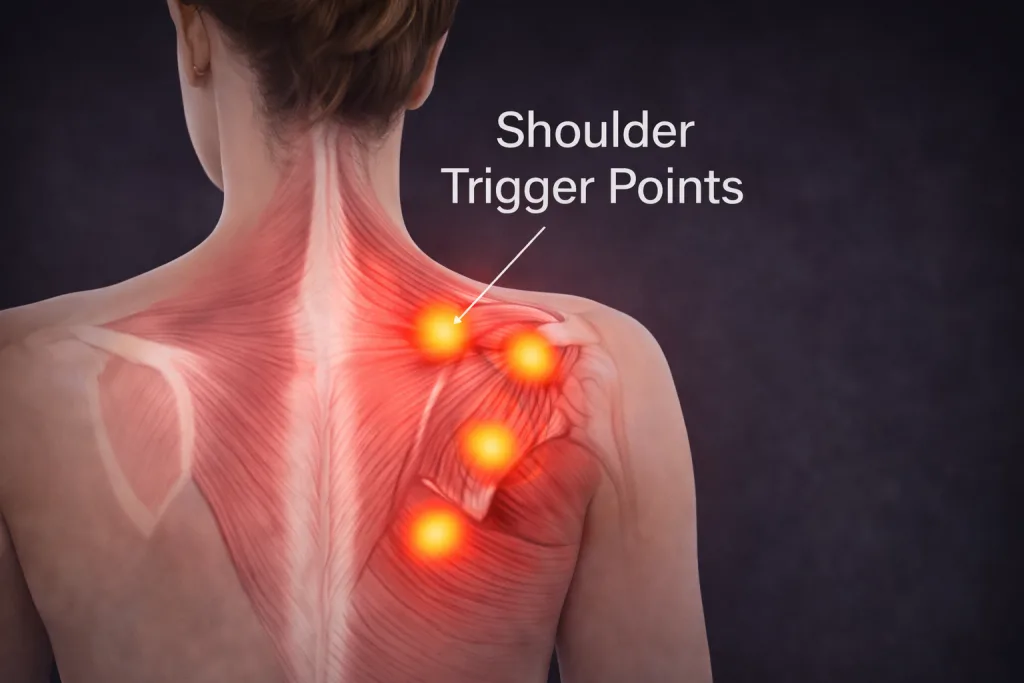
A trigger point is a small, hyper tight knot inside a muscle fiber.
It forms when:
A muscle stays contracted too long
Blood flow decreases
The muscle cannot fully relax
In the upper back, they commonly develop in:
Rhomboids
Upper trapezius
Levator scapulae
That dull, deep ache you feel under the shoulder blade?
That’s often a trigger point.
For a complete step-by-step guide on home techniques, see:
→ Shoulder Tension Relief Methods That Actually Work
Why Stretching Alone Doesn’t Fix It
Here’s the mistake most people make:
They stretch the whole shoulder.
But trigger points require direct pressure, not just movement.
If you only stretch:
The knot stays
Blood flow doesn’t fully restore
The tension cycle continues
That’s why relief feels temporary.
If the tension feels deep between the shoulder blade and spine, this guide may help:
→ How to Release Deep Shoulder Blade Tension at Home
How to Tell If You Have a Trigger Point
Try this:
Place your hand between your shoulder blade and spine.
Press slowly into the muscle.
If you feel:
A tender “pea sized” spot
Pain that radiates slightly
A deep aching sensation
You’re likely touching a trigger point.
Posture and sleeping position also contribute.
Learn more here:
→ Best Sleeping Positions for Shoulder and Upper Back Pain

How to Release Shoulder Trigger Points at Home
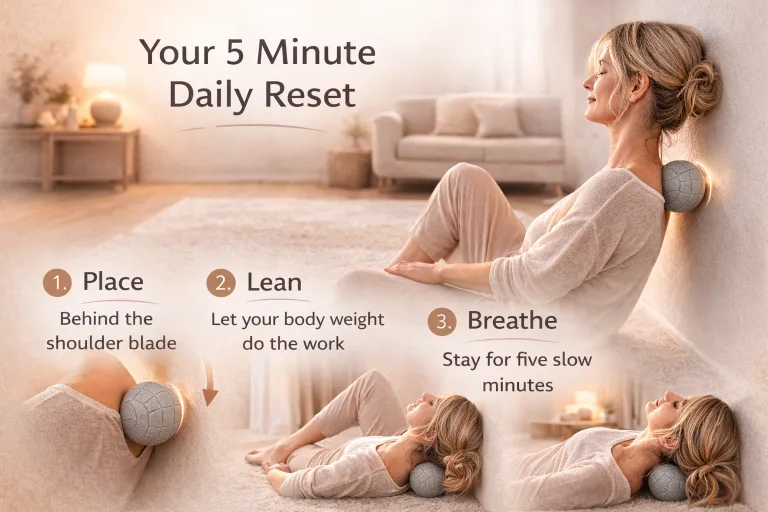
Method 1: Wall Pressure Release
Stand against a wall.
Place a firm ball between the wall and the tight spot.
Lean gently and hold for 30–60 seconds.
Breathe slowly.
Do not roll quickly.
Trigger points respond best to sustained pressure.
Method 2: Controlled Compression with Breathing
While pressing into the knot:
Inhale slowly for 4 seconds
Exhale slowly for 6 seconds
Let your shoulders drop on each exhale
Breathing reduces nervous system guarding.
Method 3: Consistency Over Force
You don’t need extreme pressure.
In fact, too much pressure can cause inflammation.
Short, consistent daily sessions (3–5 minutes) are far more effective than aggressive rolling once a week.
Why Trigger Points Keep Returning
Even if you release them, they often come back because:
You sit with rounded shoulders
Your head leans forward during desk work
Stress keeps your nervous system activated
You sleep on one side
Trigger points are not just muscle problems.
They are posture + stress + circulation problems.
That’s why recovery tools that support consistent, controlled compression tend to work better than quick fixes.
When Should You Be Concerned?
If pain:
Radiates down your arm
Causes numbness
Feels sharp or electric
See a medical professional.
Trigger points cause aching and tightness not nerve symptoms.
The Real Goal: Restore Circulation, Not Just Stretch
Trigger points form when muscles don’t receive enough oxygen.
The goal of release is to:
Increase blood flow
Calm muscle guarding
Retrain tissue to relax
That takes gentle pressure and consistency.
Not force.
If Your Trigger Points Are Chronic
If you’ve had the same knot for months:
You need something you can use consistently especially after long desk days.
You can explore our approach to daily shoulder reset here:
→ AcuMag Shoulder Reset
And for deeper tension patterns:
→ AcuMag Deep Reset