Why Stress Shows Up in Your Shoulders
Have you ever noticed that after a stressful day, your shoulders feel tight, heavy, or even slightly painful?
That’s not a coincidence.
When you experience stress, your body activates a “fight or flight” response. Muscles contract to prepare for action. The problem is modern stress doesn’t end with physical movement. We stay seated, staring at screens, while our muscles remain subtly tightened for hours.
Over time, this creates:
• Constant shoulder elevation
• Tight upper trapezius muscles
• Restricted shoulder blade movement
• Deep upper back stiffness
The result? A dull, persistent tension that feels hard to release.
If you spend long hours at a desk, this tension often builds gradually throughout the day. You can learn more about why this happens in our guide on
Why Your Shoulders Feel Tight After Desk Work

The Most Common Stress Tension Pattern
Most people under stress unknowingly:
• Raise their shoulders slightly
• Clench their jaw
• Round their upper back
• Lean forward at their desk
This posture compresses the upper back and traps tension between the shoulder blades.
Even when you “relax,” the muscles don’t fully let go.
These techniques are part of a broader set of proven relief methods. For a complete overview, see
Shoulder Tension Relief Methods That Actually Work
5 Natural Ways to Relieve Shoulder Tension from Stress
1. Reset Your Breathing
Stress tightens breathing patterns.
Try this simple reset:
Sit upright.
Inhale slowly through your nose for 4 seconds.
Exhale gently for 6 seconds.
Let your shoulders drop on the exhale.
Repeat 5 times.
Deep breathing signals safety to your nervous system allowing muscles to release.
2. Lower Your Shoulders Intentionally
It sounds simple, but it works.
Lift your shoulders toward your ears for 3 seconds.
Then completely drop them.
Do this 5–8 times.
This teaches your body the difference between tension and relaxation.
3. Release Between the Shoulder Blades
The area between your shoulder blades often holds stress. If this area feels especially tight or difficult to reach, our guide on
How to Release Deep Shoulder Blade Tension at Home
goes deeper into safe, effective techniques.
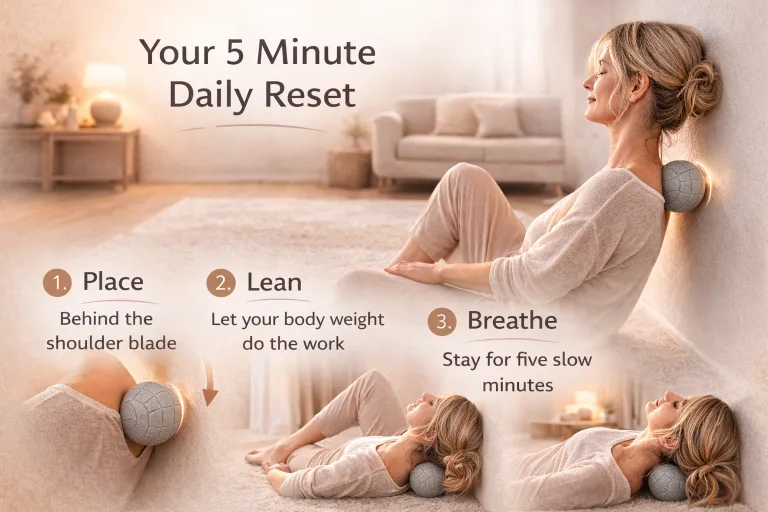
Leaning gently against a wall with a textured massage ball can help create slow, controlled pressure in this area.
Move slowly.
Pause on tender spots.
Breathe.
Many people find this especially helpful after long desk work.
4. Create a 5 Minute Evening Reset
Instead of scrolling your phone before bed, try:
• Gentle wall supported shoulder release
• Slow breathing
• Light upper back stretching
Consistency matters more than intensity.
Small daily resets prevent tension from building overnight.
5. Improve Sleep Support
Stress tension often worsens during sleep if your shoulders aren’t supported.
Sleeping flat on your back with proper pillow height can reduce compression in the upper back and shoulders.
If you sleep on your side, make sure your pillow keeps your neck aligned not tilted downward.
If your shoulder tension feels worse at night, sleeping posture may be a major factor. You may find this guide helpful:
Best Sleeping Positions for Shoulder and Upper Back Pain
Why Medication Isn’t Always the First Answer
Painkillers may reduce discomfort temporarily, but they don’t address:
• Muscle guarding
• Stress posture habits
• Nervous system tension
Sustainable relief usually comes from:
• Releasing muscle tension
• Correcting posture
• Calming the stress response

Building a Daily Shoulder Reset Routine
If stress tension is a daily pattern, your relief strategy should also be daily.
A simple routine can include:
Morning:
2 minutes of breathing reset
Midday:
Posture check + shoulder drop exercise
Evening:
5 minute shoulder blade release session
Some people choose to incorporate tools like the AcuMag Shoulder Reset as part of their wind down routine, especially after long workdays.
Consistency is more important than duration.
When to Seek Professional Help
If you experience:
• Sharp pain
• Numbness or tingling in the arm
• Persistent weakness
Consult a healthcare professional.
Stress tension is common but severe symptoms should always be evaluated.
Final Thoughts
Stress doesn’t just live in your mind.
It lives in your shoulders.
The good news? Your body responds quickly to consistent, gentle release.
Small resets throughout the day can prevent deep tension from taking over your evenings and your sleep.
Relief doesn’t have to be extreme.
It just has to be consistent.
Related Guides
• Why Your Shoulders Feel Tight After Desk Work
• Shoulder Tension Relief Methods That Actually Work