Understanding barometric pressure, circulation, and natural pain relief
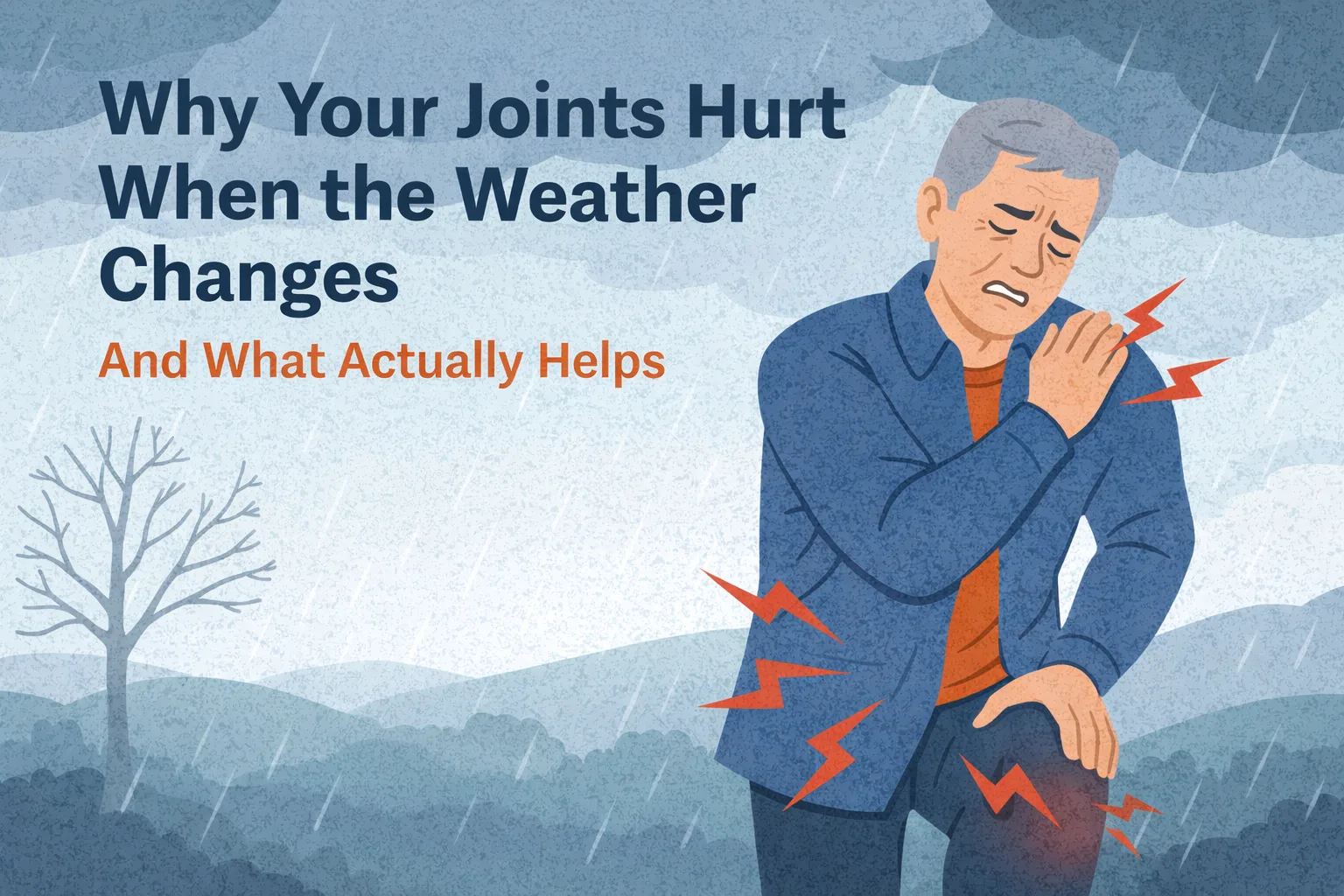
If your knees ache before rain, your shoulders stiffen when temperatures drop, or your joints feel worse on humid days, you’re not imagining it.
Weather-related joint pain is a common experience especially among adults with chronic stiffness or aging joints.
But why does weather affect joint pain?
And more importantly, what actually helps without medication?
This guide explains the science and the most effective natural solutions.
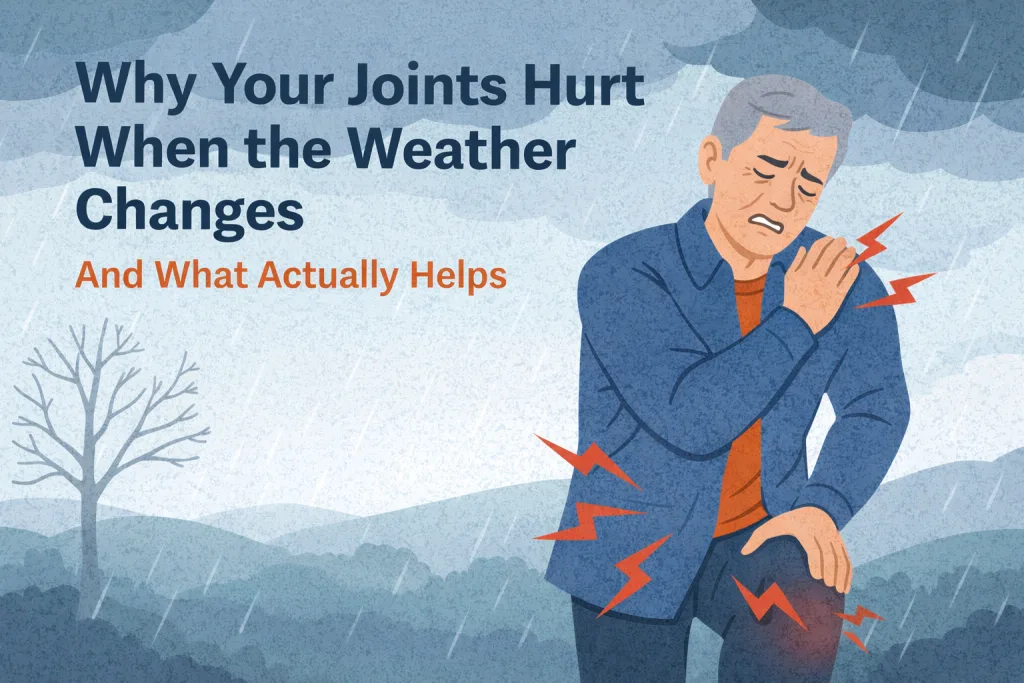
1. Why Weather Changes Can Trigger Joint Pain
The main driver is barometric (atmospheric) pressure.
When pressure drops often before storms tissues around the joints can expand slightly. In joints with inflammation or reduced lubrication, this expansion increases pressure on nerves, leading to pain or stiffness.
Key factors include:
Pressure drops that stress sensitive tissues
Cold temperatures that tighten muscles and slow circulation
Humidity that can worsen inflammation
Reduced movement during bad weather
Reference: Cleveland Clinic — Weather and Joint Pain
2. Who Is Most Affected by Weather Related Joint Pain?
Weather sensitivity is more common in people with:
Osteoarthritis or joint degeneration
Past joint injuries
Reduced circulation
Long periods of inactivity
Aging connective tissue
Commonly affected areas:
Knees
Hips
Shoulders
Fingers
Lower back
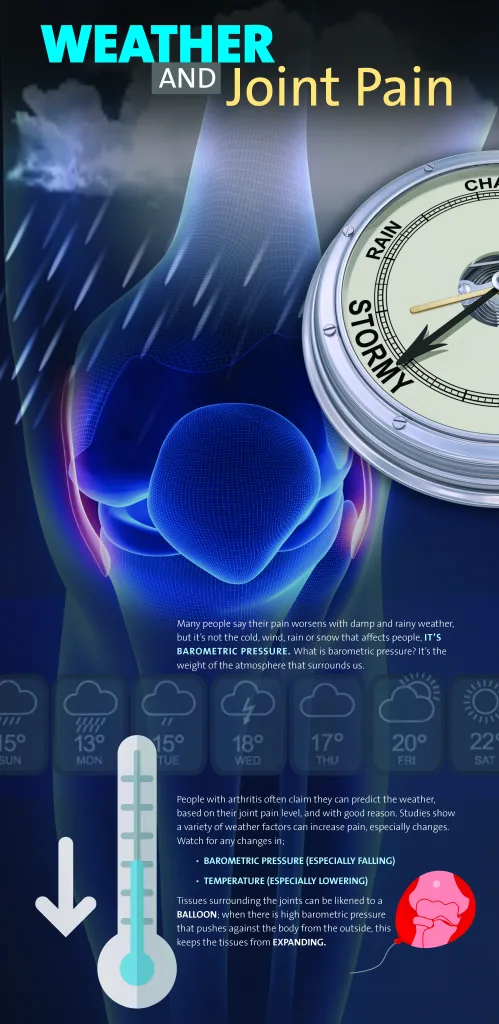
3. Why Cold and Damp Weather Make Stiffness Worse
Cold causes blood vessels to constrict.
This reduces oxygen delivery and makes synovial fluid (joint lubrication) thicker resulting in stiffness and discomfort.
Damp conditions can also increase pain sensitivity, especially in joints with existing inflammation.
The takeaway: Weather related pain is largely a circulation problem.
4. Natural Ways to Reduce Weather Related Joint Pain
The goal is to keep joints warm, lubricated, and well circulated.
4.1 Stay warm and layered
Keeping joints warm helps maintain blood flow.
4.2 Gentle daily movement
Light walking or mobility exercises keep joint fluid moving.
4.3 Heat therapy
Heat improves circulation and reduces stiffness especially in cold weather.
4.4 Magnetic therapy (circulation focused support)
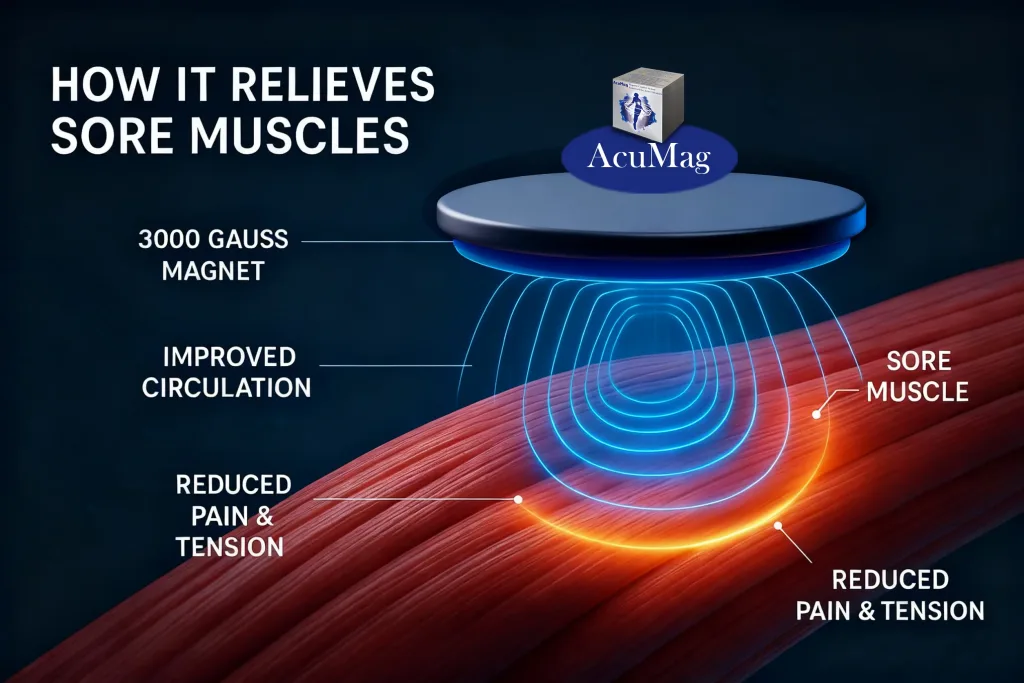
Static magnetic fields can help support microcirculation, which is crucial when cold or pressure changes reduce blood flow.
Research reviewed by the NIH suggests static magnetic fields may influence circulation and tissue relaxation key for easing weather related stiffness.
Reference: NIH — Static Magnetic Field Effects on Microcirculation

5. Why Magnetic Therapy Helps When the Weather Turns
Most relief methods work only temporarily.
Magnetic therapy provides continuous, passive support even while resting or sleeping.
Benefits include:
Maintains circulation during cold or pressure drops
Reduces stiffness buildup
No heat, chemicals, or medications
Comfortable for long wear
This makes magnetic patches especially useful during seasonal changes.
6. AcuMag™ vs. Other Weather Related Pain Solutions
| Method | Duration | Limitations |
|---|---|---|
| Heat pads | 20–30 mins | Short term |
| Pain medication | Hours | Side effects |
| Stretching | Minutes | Temporary |
| AcuMag™ Magnetic Patches | 48–72 hrs | Drug free |
AcuMag™ uses:
3000 Gauss medical grade magnets
Skin friendly hydrocolloid adhesive
Reusable, long wear design
7. When to Expect Improvement
Many users report:
Less stiffness during cold or rainy days
Improved comfort within 24–48 hours
Easier movement during seasonal transitions
Consistency matters most during weather shifts.
FAQ
Q1: Is weather related joint pain real?
Yes. Changes in pressure and temperature can affect sensitive joints.
Q2: Which weather is worst for joint pain?
Cold, damp, and low pressure conditions are most common triggers.
Q3: Can magnetic therapy help with weather pain?
Yes. It supports circulation when weather reduces blood flow.
Q4: Which joints benefit most?
Knees, hips, shoulders, fingers, and lower back.

Conclusion
If your joints ache when the weather changes, it’s not just coincidence.
Pressure shifts, cold temperatures, and reduced circulation all play a role.
By supporting circulation and joint comfort naturally, AcuMag™ Magnetic Pain Relief Patches help you stay mobile regardless of the forecast.
👉 Exploring AcuMag™ for Pain Relief
Read Next:
Why Pain Moves From One Joint to Another — And What It Means
Why Pain Feels Worse at Night — And How to Relieve It Without Medication
Why Pain Returns After Sitting Too Long — And How to Prevent It Naturally