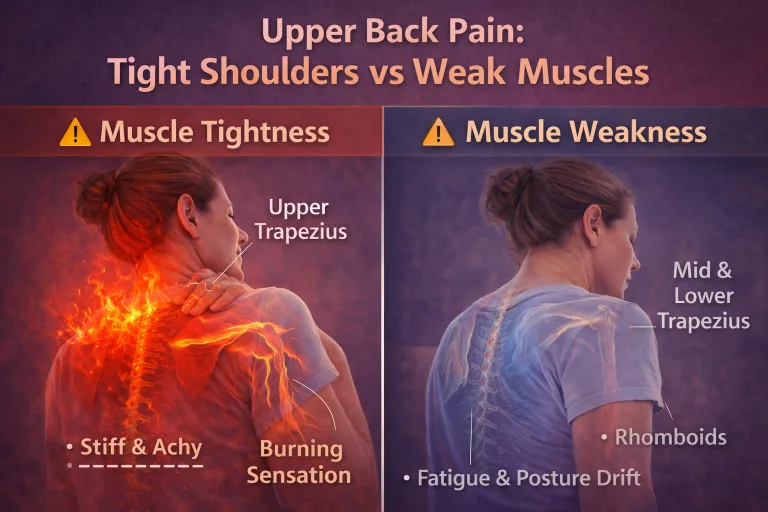
You didn’t change your job.
You didn’t start lifting heavier things.
You didn’t injure your shoulder.
And yet… your upper back feels tighter than it did ten years ago.
If you’re over 40 especially if you’re a woman this experience is extremely common.
And no, it’s not “just aging.”
There are real physiological reasons why shoulder and upper back tension often becomes more persistent after 40.
Let’s break it down.
If you’re unsure whether your tension is posture related, you may also want to read:
Why Your Shoulders Feel Tight After Desk Work

1. Recovery Speed Naturally Slows Down
In your 20s and 30s:
Muscles recover faster
Inflammation resolves quicker
Circulation rebounds more efficiently
After 40, recovery doesn’t stop but it slows.
That means small daily tension from:
Desk work
Stress
Poor sleep
Repetitive movement
doesn’t fully clear overnight anymore.
Instead, it accumulates.
And accumulated tension feels like chronic tightness.
2. Hormonal Changes Affect Muscle Tone
For many women, the 40+ transition includes hormonal shifts especially in estrogen and progesterone.
Estrogen plays a role in:
Tissue elasticity
Blood flow
Muscle recovery
Nervous system balance
As levels fluctuate or decline:
Muscles may feel stiffer
Trigger points may form more easily
Recovery may feel incomplete
This isn’t weakness.
It’s physiology.
3. Stress Becomes More Physical
In your 40s, life often includes:
Career pressure
Family responsibilities
Aging parents
Sleep disruption
Chronic stress keeps the nervous system slightly activated.
When the nervous system stays on guard:
Shoulder muscles subtly contract
Upper traps tighten
Breathing becomes shallow
Over time, this creates persistent upper back tension.
If you haven’t read it yet, our guide on
How Stress and Your Nervous System Create Chronic Shoulder Tension
explains this pattern in depth.
4. Why It Feels Worse at Night
Many women notice:
“My shoulders feel tightest when I finally lie down.”
That’s because:
Distractions fade
Muscle guarding becomes noticeable
Inflammation peaks in the evening
Cortisol naturally drops
What feels like “sudden pain” is often accumulated tension becoming visible.
It’s not new damage.
It’s unaddressed compression.
Sleeping posture can also influence tension patterns.
Best Sleeping Positions for Shoulder and Upper Back Pain
5. Why Stretching Alone Stops Working
Stretching helps.
But after 40, stretching alone often provides only temporary relief.
Why?
Because tension is no longer just about flexibility.
It’s about:
Muscle tone regulation
Circulation support
Nervous system calming
Consistent decompression
Aggressive pressure can actually increase guarding.
The goal isn’t force.
It’s consistency.
6. What Works Better After 40
Instead of aggressive fixes, focus on:
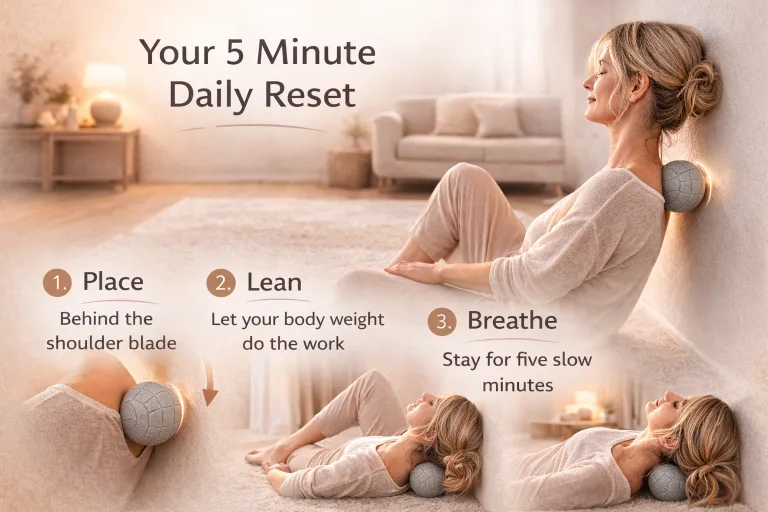
Gentle Daily Decompression
Short, controlled release sessions allow tissue to soften gradually.
Nervous System Support
Slow breathing, posture resets, and consistent release patterns calm guarding.
Repeated Micro Relief
Small daily resets prevent accumulation.
For daily tension patterns, many women prefer something they can use:
In the evening
After work
Before bed
During quiet recovery time
You can explore:
→ AcuMag Shoulder Reset
Designed for everyday upper back tension
→ AcuMag Deep Reset
For longer standing tightness and trigger point patterns
Consistency matters more than intensity.

7. The Shift After 40
The goal isn’t to “fix” your shoulders.
The goal is to:
Support recovery
Reduce accumulation
Calm muscle guarding
Create daily reset rituals
Your body isn’t failing.
It’s asking for a different recovery strategy.
And when you give it one, tension becomes manageable again.
When to See a Professional
If you experience:
Numbness
Tingling
Radiating arm pain
Severe weakness
Seek medical evaluation.
But dull, heavy, persistent tightness without injury is often cumulative tension not structural damage.
Final Thought
Shoulder and upper back tension after 40 is common.
But common does not mean inevitable.
With the right support, recovery becomes steady again.
Not dramatic.
But consistent.
And consistency is what brings long term comfort.