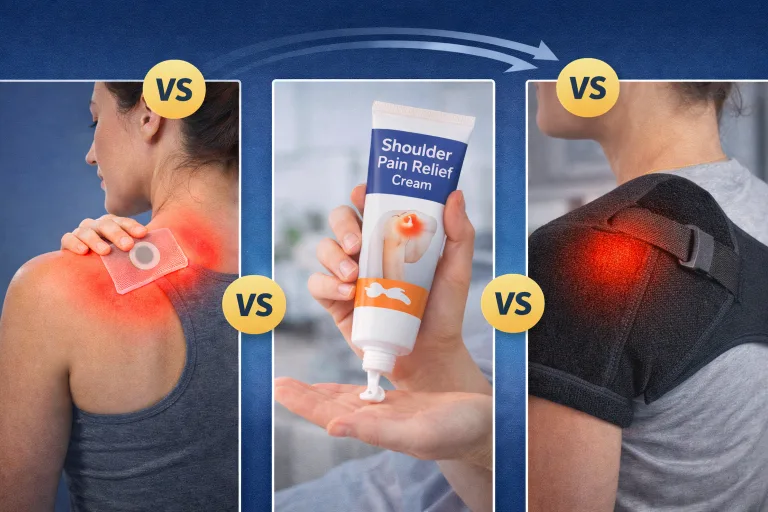
Front vs Back What Actually Makes a Difference
Many people try a shoulder pain relief patch once, feel little change, and conclude that patches “don’t work.”
In reality, placement is often the real issue.
The shoulder is not a single joint it’s a complex group of muscles and connective tissues.
Where you place a shoulder pain relief patch can significantly affect how much comfort and support you feel.
This guide explains front vs back placement, common mistakes, and how to choose the right area based on your type of shoulder discomfort not guesswork.

Why Placement Matters More for the Shoulder Than You Think
Unlike the knee, the shoulder covers multiple muscle groups that behave very differently.
Placing a patch randomly or directly on the most painful spot doesn’t always provide the best support.
Incorrect placement can lead to:
Minimal or inconsistent relief
Feeling that the patch “does nothing”
Removing the patch too early
Correct placement helps the patch:
Support muscle tension more evenly
Stay comfortable during movement
Work consistently during rest or sleep
Front of the Shoulder: When This Placement Makes Sense
Front shoulder placement is often helpful when discomfort is related to forward posture or desk work.
This includes:
Shoulder tightness from long hours at a computer
Rounded shoulders or forward head posture
Tension near the chest shoulder connection
Placing a patch near the front shoulder muscle area may help support circulation and reduce stiffness caused by prolonged sitting.
This placement is commonly used for:
Office related shoulder tension
Daily stiffness without sharp pain
Discomfort that builds gradually during the day
Back of the Shoulder: A Better Choice for Many People
For many users, back shoulder placement is more effective than front placement.
This is because much of everyday shoulder discomfort comes from:
Upper back muscle tension
Shoulder blade area tightness
Muscle fatigue after activity
Back placement can be especially helpful if:
Shoulder discomfort feels deeper or more spread out
Pain worsens at night or during rest
Tension is felt between the shoulder blade and spine
This area often benefits from long wear support, particularly overnight.
Front vs Back: It’s Not About “Right or Wrong”
There is no single “correct” placement for everyone.
The key question is not where it hurts most, but:
Which area contributes most to the tension pattern causing discomfort?
In some cases:
Front placement supports posture related tension
Back placement supports muscle fatigue and nighttime stiffness
Some users choose to alternate placement or use multiple patches around the shoulder area, depending on discomfort patterns.

Common Shoulder Patch Placement Mistakes
One of the biggest mistakes is placing the patch:
Directly on the shoulder joint
Too close to bony areas
On highly mobile skin that shifts constantly
These placements often reduce contact stability and comfort.
Instead, patches work best when placed over muscle dense areas rather than joints or bones.
How Long to Wear a Shoulder Pain Relief Patch
Long-wear shoulder pain relief patches are typically designed for 24–72 hours, depending on skin tolerance and activity level.
Many people find shoulder comfort improves when:
The patch is worn continuously
Placement remains consistent
The patch is not removed too early
Short term use may not provide enough time for muscles to relax evenly.
When Placement Alone Isn’t Enough
Placement matters but it’s not the only factor.
Shoulder pain relief patches work best when combined with:
Regular movement or light stretching
Avoiding prolonged static posture
Consistent daily use rather than occasional application
Patches are designed to support comfort, not replace movement or medical care.

How This Fits Into a Shoulder Care Routine
Understanding placement helps set realistic expectations.
A shoulder pain relief patch won’t “fix” every shoulder issue, but correct placement can make the difference between:
Feeling little change
And experiencing steady, noticeable comfort
For a complete overview of when shoulder pain relief patches help and how to use them safely, you can read the full guide here →
Shoulder Pain Relief Patch: When It Helps & How to Use It Safely
Final Thought
If a shoulder pain relief patch hasn’t worked for you before, it may not be the patch itself but where it was placed.
Choosing front or back placement based on your specific discomfort pattern can significantly improve the experience.