
Shoulder and upper back tension has become one of the most common physical complaints today.
Long hours at a desk, constant phone use, stress, and poor posture place continuous pressure on the muscles around the neck, shoulders, and upper spine.
For many people, the discomfort begins as mild tightness.
But over time, it can develop into:
• burning sensations between the shoulder blades
• stiff shoulders
• reduced mobility
• chronic upper back pain
This guide brings together the most important insights about shoulder and upper back tension including why it happens and how to relieve it naturally.

Why Shoulder and Upper Back Tension Happens
Modern lifestyles place the upper body in a constant forward position.
When the shoulders remain rounded and the head moves forward, certain muscles become overworked while others weaken.
Common contributing factors include:
• desk work and screen use
• stress and nervous system tension
• poor sleeping posture
• lack of upper back mobility
• weak stabilizing muscles
If you spend long hours at a computer, you may recognize the pattern described in:
Why Your Shoulders Feel Tight After Desk Work
Understanding the root cause is the first step toward real relief.
The Hidden Role of Trigger Points
Many people with upper back pain actually suffer from trigger points small areas of muscle tension that can create deep aching or burning sensations.
Trigger points often form in muscles such as:
• upper trapezius
• rhomboids
• levator scapulae
When these areas remain tight for long periods, they can produce discomfort that spreads across the upper back.
You can learn more about this mechanism in:
How to Release Deep Shoulder Blade Tension at Home
Releasing these tension points often brings immediate relief.
When Upper Back Pain Becomes Chronic
Upper back discomfort usually begins gradually.
At first it may appear only after long workdays.
But without correction, the tension can become persistent.
Many people eventually experience:
• burning sensations between the shoulder blades
• stiffness in the neck and shoulders
• worsening discomfort at night
• reduced posture control
If this sounds familiar, the progression is explained in:
What Happens If You Ignore Upper Back Pain
Recognizing the warning signs early can prevent long term problems.
The Importance of Posture and Muscle Balance
Upper back pain is rarely caused by tight muscles alone.
In most cases, discomfort develops from muscle imbalance.
Some muscles become too tight while others become weak.
This imbalance can pull the shoulders forward and increase strain on the spine.
Understanding this balance is essential for long term improvement.
You can learn how posture influences tension in:
How to Fix Rounded Shoulders and Upper Back Posture Naturally
Correcting posture helps restore normal movement patterns.
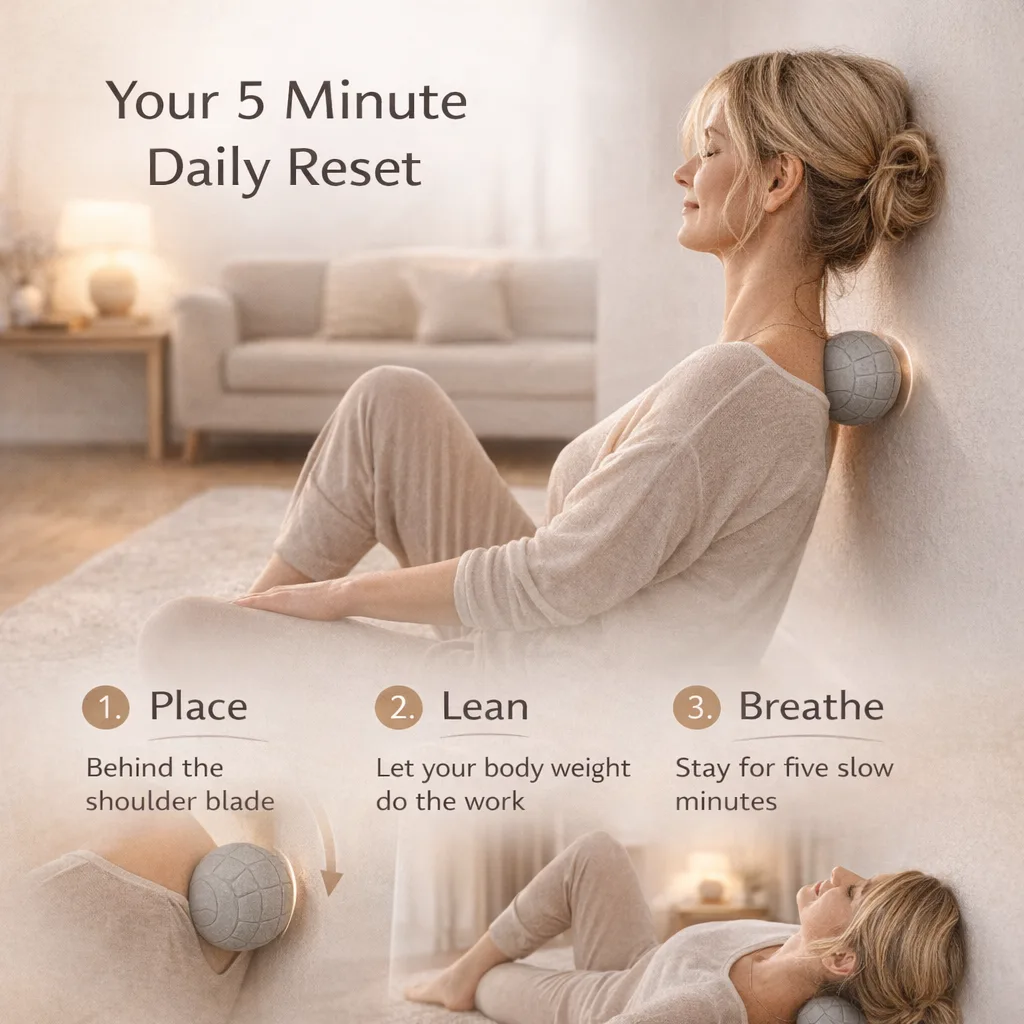
Daily Reset Routines That Help
Many people try aggressive stretching or intense workouts to fix upper back tension.
But the most effective approach is often much simpler.
Short daily routines that combine mobility and gentle release can gradually restore balance.
For example:
• wall shoulder resets
• upper back mobility drills
• gentle trigger point release
A simple daily routine is explained in:
The 5 Minute Shoulder & Upper Back Reset Routine
Consistency matters more than intensity.
The Role of Sleep and Recovery
Upper back tension often worsens at night.
This happens because sleeping posture can place pressure on the shoulders and spine.
Poor sleep positioning may increase:
• shoulder compression
• upper back stiffness
• morning pain
Choosing the right sleeping position can significantly reduce strain.
You can explore this in:
Best Sleeping Positions for Shoulder and Upper Back Pain
Small adjustments during sleep can make a big difference.
Stress and Nervous System Tension
Muscle tension is not always caused by posture alone.
Stress also plays an important role.
When the nervous system is under pressure, the shoulders often rise and tighten automatically.
Over time this creates chronic upper back stiffness.
This mind-body connection is explained in:
How Stress Causes Shoulder and Upper Back Tension
Relaxation and gentle release techniques can help reset this pattern.
When Relief Requires a Reset
For many people, upper back tension builds slowly over months or years.
Stretching alone may provide temporary relief, but lasting improvement often requires a deeper reset.
Effective recovery usually includes:
• releasing tight muscles
• restoring mobility
• improving posture
• supporting muscle balance
This combined approach helps restore natural alignment and movement.
Many people find that consistent daily resets help the body gradually return to balance.
The key is consistency.
5 minutes daily is more effective than 30 minutes once per week.
Consistency matters more than force.
Short daily sessions prevent accumulation.
For daily upper back tension:
For deeper, long standing tightness:

Final Thoughts
Shoulder and upper back tension is extremely common but it doesn’t have to become permanent.
Understanding the causes behind the discomfort is the first step toward relief.
When you combine better posture, gentle mobility, and consistent daily resets, the body can gradually release built-up tension.
Small changes practiced consistently often lead to the biggest improvements.