You think your shoulders are tight.
But what if they’re not just tight…
what if they’re overloaded?
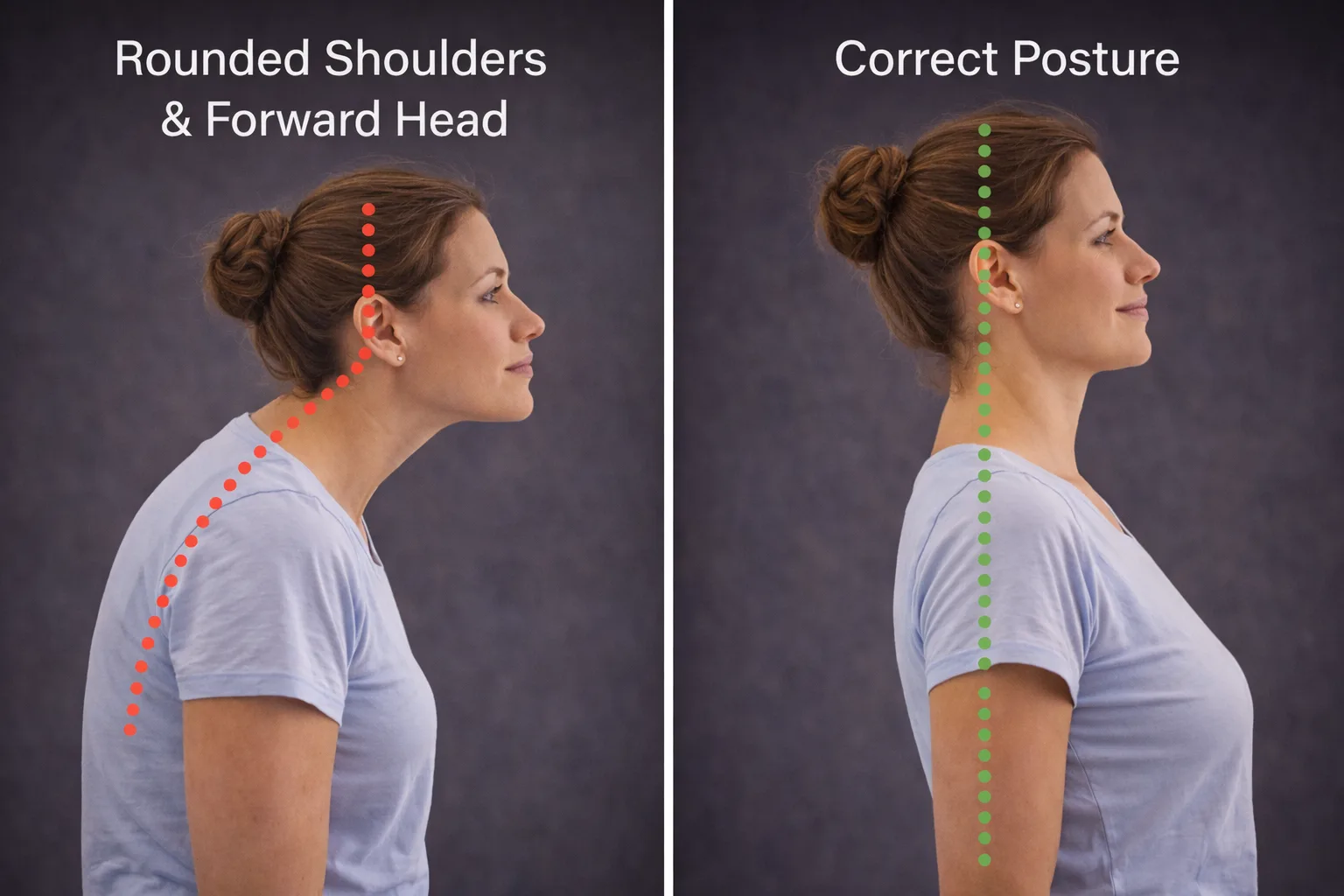
Rounded shoulders and forward head posture silently increase tension in your upper back all day long especially during desk work.
Even when you’re sitting still, your muscles may be working overtime.
And over time, that constant strain turns into:
Deep shoulder blade tension
Recurring trigger points
Neck stiffness
Upper back aching that never fully disappears
Let’s break down why this happens and what you can actually do about it.
What Are Rounded Shoulders?
Rounded shoulders happen when:
Your shoulders roll forward
Your chest muscles shorten
Your upper back muscles overstretch and overwork
This posture is extremely common in people who:
Work at a desk
Use laptops daily
Drive frequently
Spend long hours on phones
When shoulders round forward, the muscles between your shoulder blades must work constantly just to hold you upright.
That constant contraction reduces circulation which is one of the key reasons tension builds.
If you’re unsure whether desk posture is affecting you, you may want to read:
Why Your Shoulders Feel Tight After Desk Work
What Is Forward Head Posture?
Forward head posture happens when your head shifts in front of your shoulders.
Even one inch forward dramatically increases strain on your upper back.
For every inch your head moves forward, your neck and upper back support several extra pounds of load.
This creates:
Tight upper trapezius muscles
Stressed levator scapulae
Reduced shoulder blade stability
Over time, this imbalance contributes to recurring muscle knots.
How Poor Posture Creates Trigger Points
When posture collapses:
Muscles never fully relax
Blood flow decreases
Oxygen supply drops
Small hyper tight knots develop
These knots are known as trigger points.
If you’ve ever felt a deep, tender spot between your shoulder blade and spine, that’s likely what you’re experiencing.
You can learn more about how these form here:
The Real Reason Your Shoulder Knots Keep Coming Back (Trigger Points Explained)
Trigger points aren’t random. They’re often posture driven.
Why Stretching Alone Isn’t Enough
Many people try to stretch their shoulders when they feel tight.
But stretching doesn’t fully solve posture-related tension.
Why?
Because posture is not just about flexibility it’s about balance.
If your chest stays tight and your upper back stays overloaded 8 hours a day, tension rebuilds daily.
That’s why short term relief often fades.
If you’re looking for practical techniques, you can also read:
Shoulder Tension Relief Methods That Actually Work (Without Medication)
How to Check Your Posture at Home
Wall Alignment Test
Stand with:
Your back against a wall
Heels a few inches from the wall
Upper back touching
Head gently against the wall
If your head cannot comfortably touch the wall without tilting up, forward head posture may be present.
You may also notice:
One shoulder higher than the other
Tightness when trying to stand upright
Immediate fatigue in the upper back
These are signs your muscles are compensating.
How to Start Correcting Rounded Shoulders
Posture correction is not about forcing yourself rigidly upright.
It’s about restoring muscle balance gradually.
Step 1: Gentle Shoulder Blade Reset
Sit or stand upright.
Gently draw your shoulder blades slightly back and down.
Do not squeeze aggressively.
Hold for 5 seconds. Relax. Repeat 5–8 times.
The goal is awareness, not force.
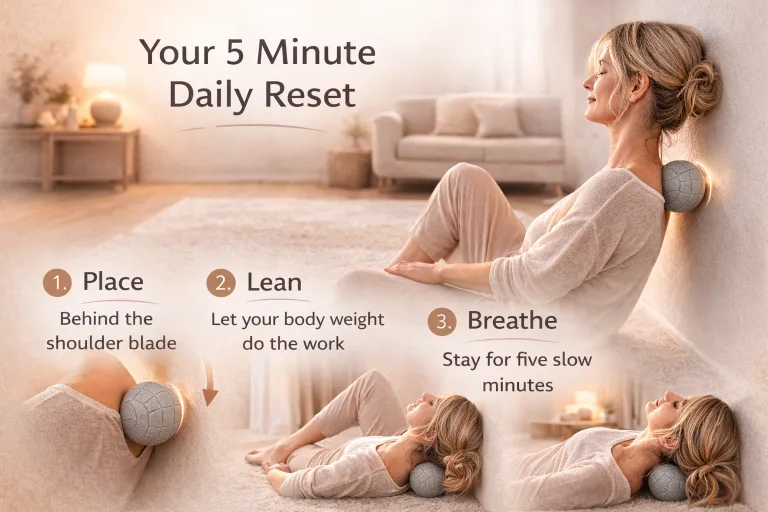
Step 2: Controlled Decompression
Muscles that stay contracted need gentle compression and circulation support.
Consistent, short sessions of controlled pressure between the shoulder blade and spine can help restore tissue balance.
This is especially useful after long desk hours.
If you want a structured approach, you can explore:
AcuMag Shoulder Reset
For daily desk related tension
AcuMag Deep Reset
For long standing or recurring upper back tightness

Don’t Forget Sleep Position
Posture imbalance continues at night if your sleep position collapses your shoulders forward.
Side sleeping without support can reinforce rounded shoulders.
You can review better sleep alignment here:
Best Sleeping Positions for Shoulder and Upper Back Pain
Why Posture Fixes Reduce Recurring Pain
When posture improves:
Muscles relax more fully
Blood flow improves
Trigger points form less often
Upper back fatigue decreases
Pain reduction becomes more stable not just temporary.
The goal isn’t perfect posture.
The goal is reducing chronic overload.
When to Seek Professional Help
If you experience:
Numbness in arms
Tingling in fingers
Sharp or shooting pain
Consult a medical professional.
Posture related tension typically causes dull aching and tightness not nerve symptoms.
The Real Shift: From Stretching to Rebalancing
Upper back pain is often treated like a flexibility issue.
But in many cases, it’s a load distribution issue.
Rounded shoulders shift strain backward.
Forward head posture increases muscle demand.
Correcting posture gently and supporting muscle recovery consistently is what creates long term change.
Relief doesn’t come from forcing your body straight.
It comes from restoring balance so upright feels natural again.