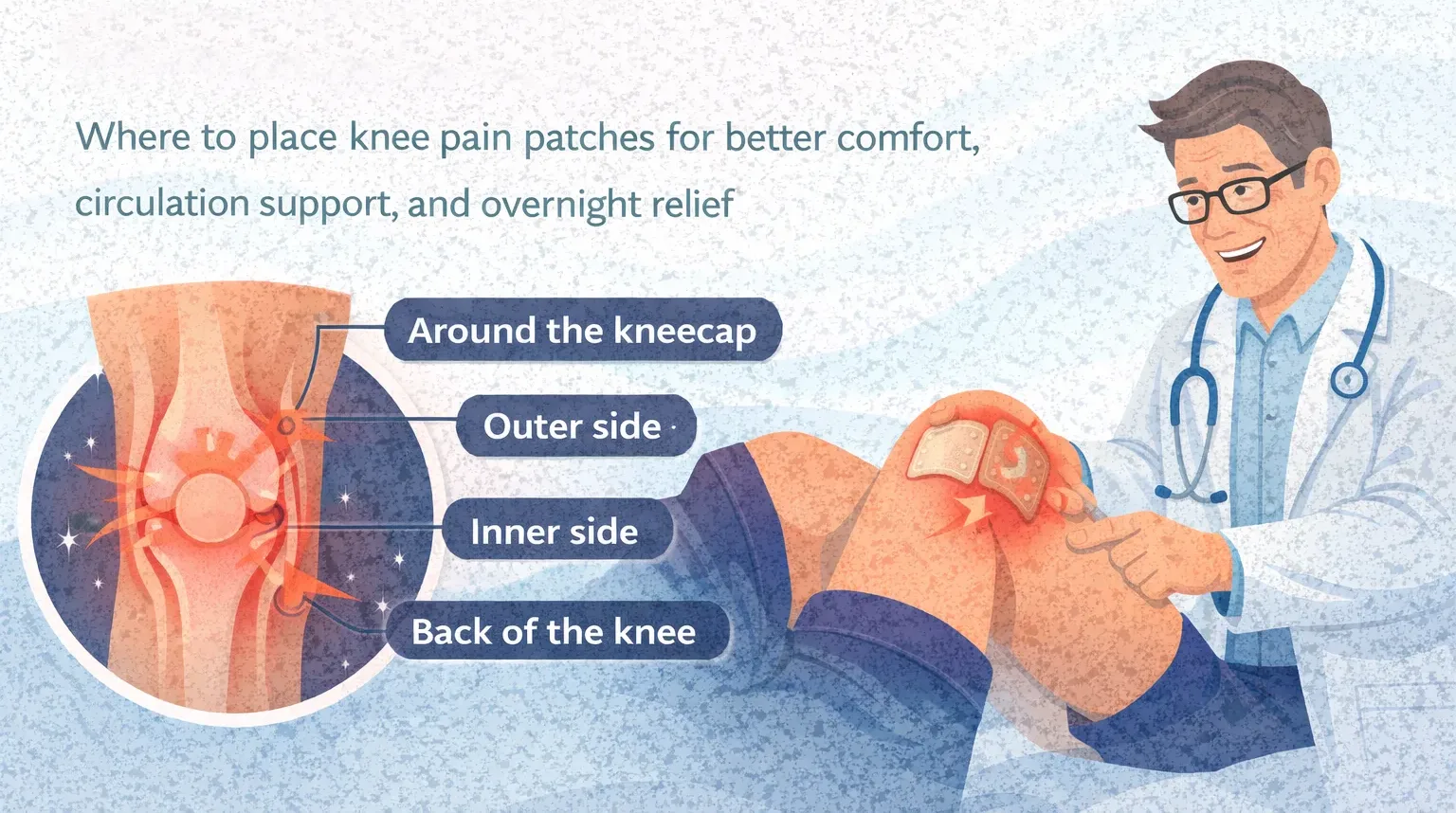
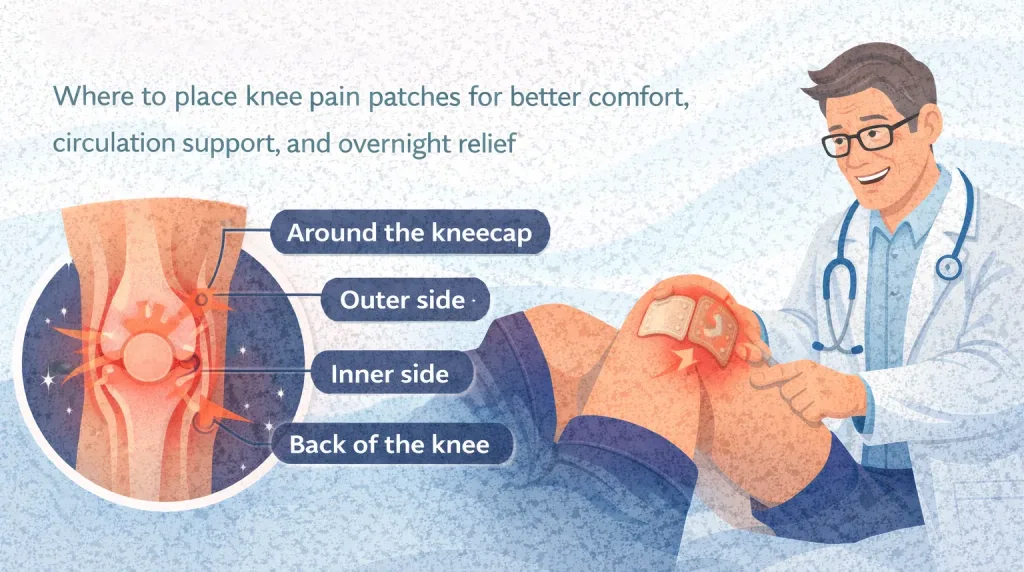
Where to place knee pain patches for better comfort, circulation support, and overnight relief
Many people try knee pain relief patches and feel disappointed
not because patches don’t work,
but because they’re placed incorrectly.
Knee pain is rarely spread evenly across the joint.
Placement matters.
In this guide, you’ll learn:
The best placement zones for knee pain relief patches
How placement affects circulation and comfort
Common mistakes that reduce effectiveness
How to adjust placement for day vs. night use
1. Why Placement Matters for Knee Pain Relief
Knee pain usually originates from specific stress points, not the entire joint.
Correct placement helps by:
targeting high stress tissue zones
supporting localized circulation
reducing stiffness during rest
Incorrect placement often results in minimal or inconsistent relief.
2. The 4 Most Effective Placement Zones
2.1 Around the kneecap (patellar region)
Best for:
general knee stiffness
pain when standing up
discomfort after walking
Place the patch around, not directly on, the kneecap to avoid pressure.
2.2 Inner knee (medial side)
Best for:
knee pain during stairs
mild arthritis related stiffness
pain that worsens at night
This area often has reduced circulation and benefits from continuous support.
2.3 Outer knee (lateral side)
Best for:
pain from walking or running
overuse related knee discomfort
Placing a patch here helps support tissues that stabilize the knee during movement.
2.4 Back of the knee (popliteal area)
Best for:
stiffness after long sitting
nighttime knee tightness
⚠️ Avoid placing directly over major folds; position slightly above or below for comfort.
3. How Placement Changes for Nighttime Knee Pain
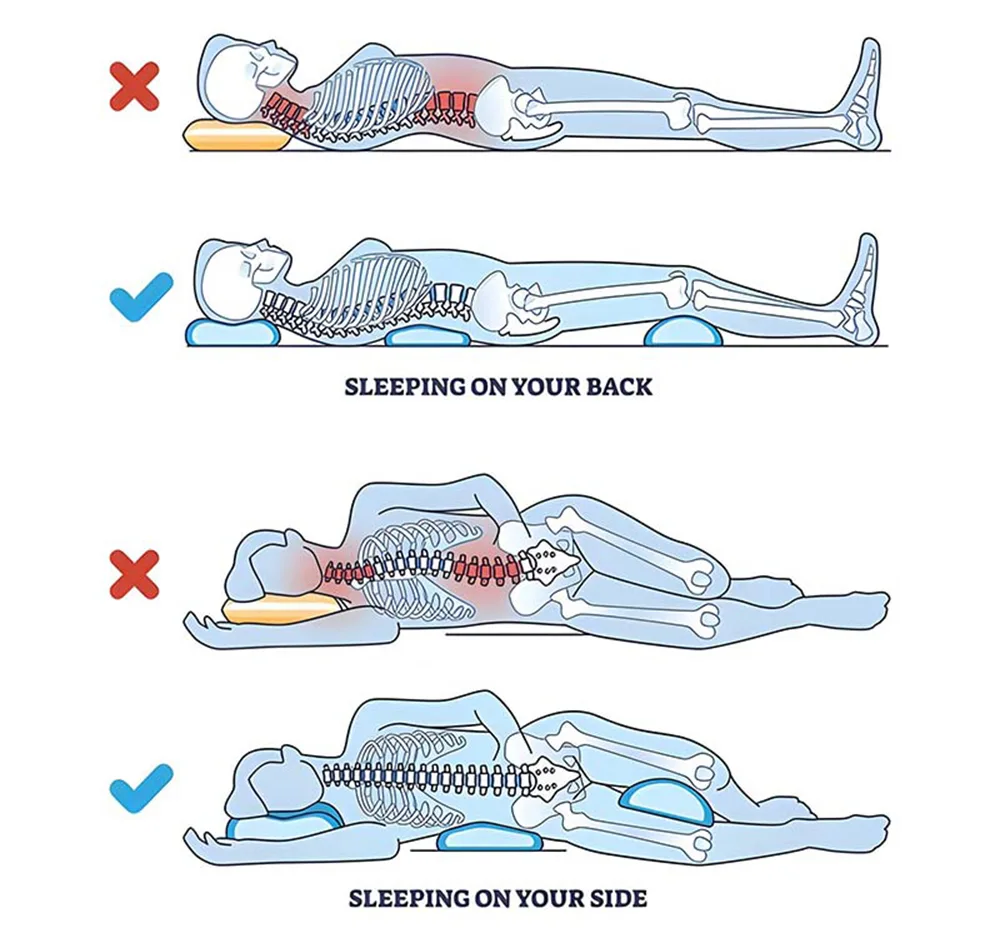
At night, the knee remains still for hours.
This makes circulation support more important than pressure relief.
Recommended night placement:
Inner knee or around the kneecap
Avoid direct pressure points
Ensure the patch lies flat for long wear
According to guidance referenced by Cleveland Clinic, reduced circulation during rest is a major contributor to nighttime joint pain.
4. Common Placement Mistakes to Avoid
❌ Placing directly on the kneecap
May reduce comfort and adhesion.
❌ Covering the entire knee joint
Targeted placement works better than full coverage.
❌ Constantly moving the patch
Give each placement at least 24 hours to assess results.
❌ Ignoring the pain pattern
Place the patch where pain starts, not where it spreads.
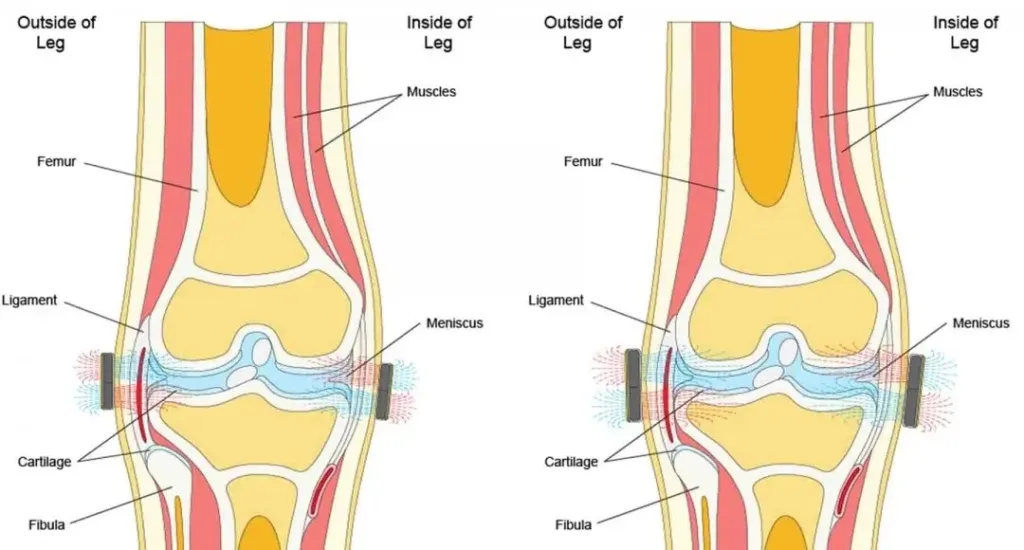
5. How Magnetic Knee Patches Support Placement Effectiveness
Magnetic knee pain relief patches work by supporting localized microcirculation.
Research reviewed by the National Institutes of Health suggests static magnetic fields may influence circulation and tissue relaxation which is why precise placement matters.
When placed near high stress areas, patches can:
reduce stiffness buildup
support overnight recovery
improve comfort during movement
6. How Long to Keep a Patch in One Position
Most long wear knee pain relief patches are designed for 24–72 hours.
Best practice:
keep the patch in one position for at least 24 hours
assess comfort and stiffness changes
adjust placement only if relief is inconsistent
Frequent repositioning can prevent consistent results.
7. Placement Tips for Best Results
Apply to clean, dry skin
Avoid lotions before placement
Smooth edges to prevent peeling
Pair with light movement during the day
Consistency beats experimentation.
FAQ
Q1: Where should I place a knee pain relief patch?
A: Knee pain relief patches are usually placed around the kneecap or the inner knee area, depending on where stiffness or discomfort is most noticeable.
Q2: Does placement affect how well knee pain relief patches work?
A: Yes. Correct placement helps ensure consistent contact and support. Poor placement may reduce effectiveness or cause discomfort during movement.
Q3: Can I move the patch location each day?
A: Slightly rotating placement around the knee is recommended, especially for daily users. This helps reduce skin sensitivity while maintaining effectiveness.
Q4: Should the patch be placed above or below the kneecap?
A: Placement depends on pain location. Many people find better results when placing the patch near the inner or lower edge of the kneecap.
Q5: Can I wear a knee pain relief patch while walking or exercising lightly?
A: Yes. Most knee pain relief patches are designed to stay in place during normal daily movement and light activity.

Conclusion
Knee pain relief patches are most effective when placed correctly.
By targeting the right knee zones and allowing consistent wear time, you can significantly improve comfort especially at night and after long periods of rest.
AcuMag™ Magnetic Knee Pain Relief Patches are designed to provide targeted, drug free knee support where it matters most.
👉 Explore AcuMag™ Knee Pain Relief Patches
👉 Read Next:
Knee Pain Relief Patch: What Actually Helps & How to Use It Safely
Is a Knee Pain Relief Patch Safe for Daily Use? (What to Know Before Wearing It Every Day)
Why Knee Pain Is Worse After Sitting (And How Patches Help)
Knee Pain Relief Patch for Arthritis: Does It Help?
How Long Does a Knee Pain Relief Patch Take to Work?
Can You Sleep With a Knee Pain Relief Patch On?
How Knee Pain Relief Patches Work for Knee Pain (Science Explained)
Why Knee Pain Gets Worse at Night — And How Knee Pain Relief Patches Help