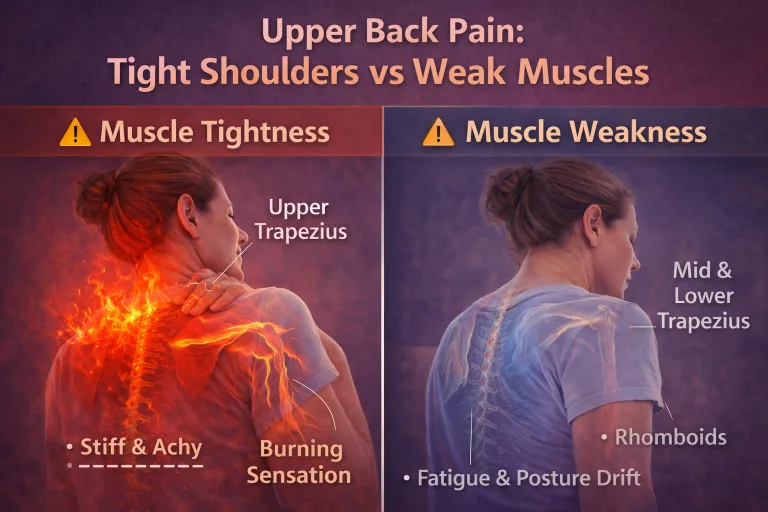
Shoulder blade tension is one of the most common and most stubborn types of muscle discomfort today.
It builds slowly, often without you noticing, until simple movements like turning your head, reaching behind your back, or even sitting comfortably begin to feel restricted.
For many people, the discomfort isn’t sharp. It’s dull, persistent, and deeply rooted between the shoulder blades.
The encouraging news is that you can safely release shoulder blade tension at home without medication or aggressive treatments.
Understanding how tension forms is the first step toward lasting relief.

Why Shoulder Blade Tension Develops
The shoulder blade, also called the scapula, is supported by stabilizing muscles such as the rhomboids, trapezius, and levator scapulae.
These muscles are responsible for maintaining posture and supporting arm movement throughout the day.
However, modern desk work places these muscles under constant low level strain.
Common causes include:
• Sitting with rounded shoulders
• Leaning forward toward screens
• Limited movement during long work sessions
• Mental stress that causes muscle guarding
• Poor ergonomic support
Over time, circulation decreases, and the muscles remain in a semi contracted state.
This creates the sensation of stiffness, heaviness, or tightness deep beneath the surface. (Related)
Why Stretching Alone Often Doesn’t Fully Solve the Problem
Stretching can improve flexibility and movement, but it does not always release deeply held tension.
This is because shoulder blade tension often forms in localized areas known as trigger zones small regions where muscle fibers remain contracted.
These areas require gentle, sustained pressure to encourage release.
Without sufficient pressure and time, circulation remains limited, and muscles return to their tightened state shortly afterward.
This explains why many people feel temporary relief from stretching, only to have tension return later.
The Most Effective At Home Method: Gentle Wall Supported Pressure
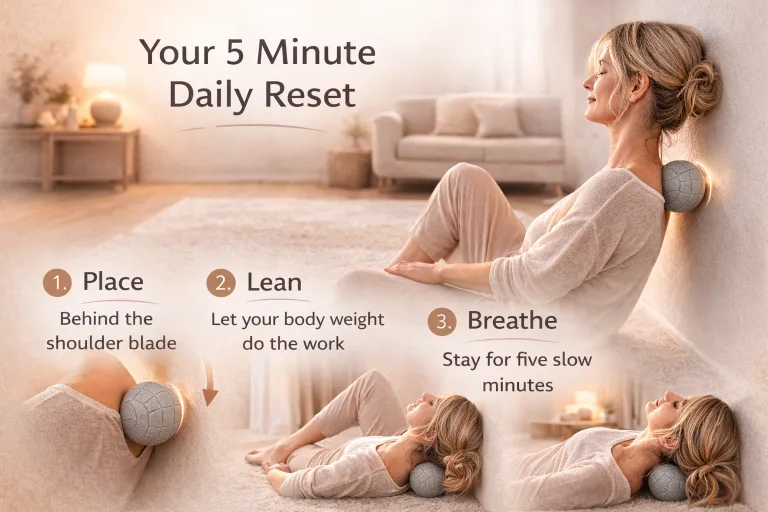
One of the safest and most effective ways to release shoulder blade tension is controlled pressure using a wall for support.
This allows you to target tension precisely while controlling the intensity safely.
To perform this method:
Stand with your back against a wall.
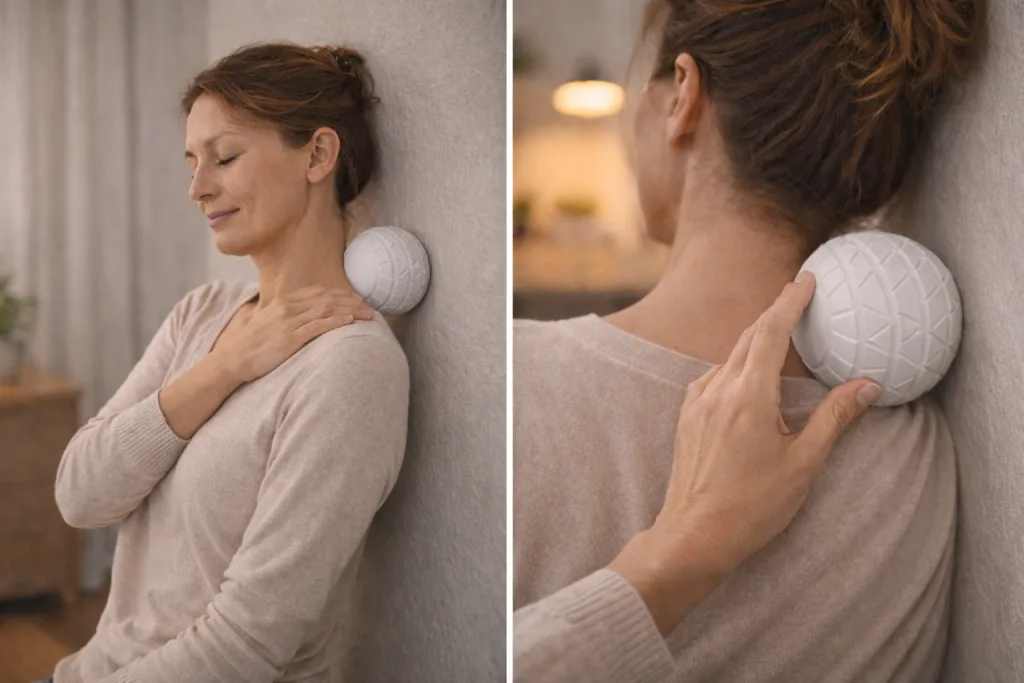
Position support between the wall and the area of tension near your shoulder blade.
Lean gently into the pressure.
Hold this position for 2 to 5 minutes while breathing normally.
Avoid forcing pressure. Allow your muscles to gradually relax.
Over time, this method can help restore circulation and reduce stiffness.
Many people notice gradual improvements in comfort, posture, and freedom of movement.
Why Consistency Is More Effective Than Intensity
Muscles respond best to gentle, consistent release rather than aggressive pressure.
Excessive force can cause muscles to tighten defensively, slowing recovery.
Instead, consistent daily release helps retrain muscles to relax naturally.
Even five minutes per day can support:
• Reduced stiffness
• Improved circulation
• Greater posture comfort
• Better daily mobility
This is why sustainable recovery routines work best when they integrate easily into your normal schedule.
Supporting Long Term Shoulder Comfort
Your body has a natural ability to recover when muscles receive consistent circulation and gentle release.
Simple daily practices that help include:
• Gentle pressure release
• Regular movement breaks
• Maintaining posture awareness
• Using supportive recovery tools when needed
Over time, these small habits help prevent tension from building again.
If you want to explore a tool specifically designed to support shoulder blade tension release, you can learn more here:
Final Thoughts
Shoulder blade tension is extremely common, especially for people who spend long hours working at desks.
The key to lasting relief is not aggressive treatment, but consistent, gentle support that allows muscles to return to their natural state.
With simple daily habits and proper support, your body can gradually restore comfort, mobility, and ease.
Small, consistent recovery steps often lead to the most meaningful long term results.
Explore more guides in our Shoulder and Upper Back Tension Guide