If you spend hours at a desk, you may notice a familiar feeling by the end of the day: your shoulders feel heavy, tight, or stiff. It’s not usually caused by injury. Instead, it develops slowly from how your body adapts to prolonged sitting and repetitive posture.
This kind of tension is extremely common among office workers, remote professionals, and anyone who spends long periods using a computer. Understanding why it happens is the first step toward relieving it.

According to orthopedic research, prolonged static posture can lead to muscle fatigue and tension.
The Real Reason Shoulder Tension Builds During Desk Work
Your shoulders are designed for movement, not stillness. When you sit and work for extended periods, several things happen simultaneously.
First, your muscles remain in a semi contracted state for hours. Even small contractions, when held continuously, reduce blood flow and oxygen delivery. Over time, this creates fatigue and stiffness.
Second, your upper back and shoulder muscles compensate for posture. When your head moves slightly forward toward a screen, the muscles between your shoulder blades work harder to stabilize your body.
This constant effort creates accumulated tension, even if you don’t notice it immediately.
Why It Often Feels Worse in the Afternoon or Evening
Many people feel relatively fine in the morning but experience increasing stiffness later in the day. This happens because muscle tension builds gradually.
As the day progresses:
circulation becomes less efficient in stationary muscles
small muscle fibers become fatigued
tension accumulates without release
By late afternoon, your shoulders may feel tight, heavy, or resistant to movement.
This is not a sign of damage. It’s a sign your muscles need recovery.
Why Rest Alone Doesn’t Always Solve the Problem
You might assume that simply resting after work will resolve the tension. While rest helps, it often isn’t enough on its own.
When muscles remain tight for extended periods, they can develop areas of persistent stiffness sometimes referred to as muscle knots or trigger points.
These areas do not always release automatically. They often require gentle, targeted pressure to restore normal muscle function and circulation.
Without this release, tension can carry over from one day to the next.
Common Signs of Desk Related Shoulder Tension
You may be experiencing desk related shoulder tension if you notice:
stiffness between the shoulder blades
heaviness in the upper back
reduced shoulder mobility
discomfort after long computer sessions
relief when applying pressure to certain areas
These are normal responses to prolonged static posture.

Simple Ways to Relieve Shoulder Tension Naturally
Fortunately, relieving shoulder tension does not require complicated treatments. Small daily recovery habits can make a significant difference.
Effective methods include:
gentle movement breaks during the day
posture awareness and adjustment
stretching the chest and upper back
applying steady, controlled pressure to tense areas
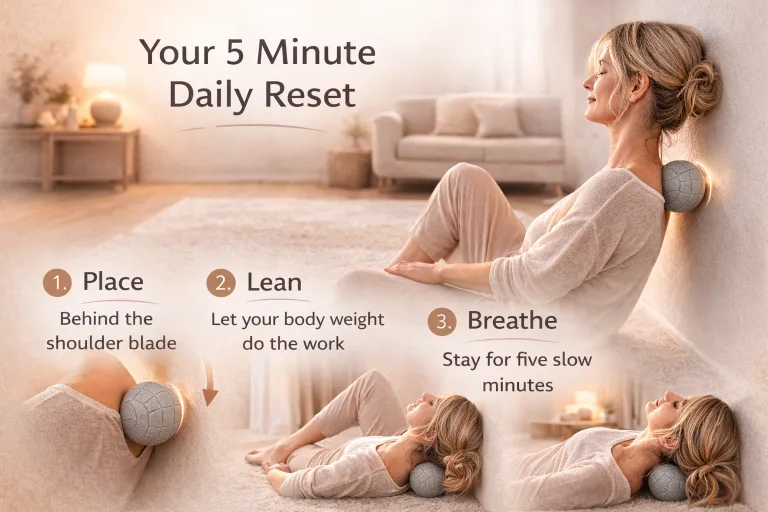
One of the most effective approaches is using a Recovery Tool that allows you to apply consistent, gentle pressure to the muscles between your shoulder blades.
This helps restore circulation, release built up tension, and support natural muscle recovery.
Why Gentle Daily Recovery Works Better Than Occasional Intense Treatment
Consistency is more effective than intensity. Muscles respond best to regular, gentle recovery rather than aggressive or infrequent intervention.
A few minutes of targeted pressure at the end of the day can help your shoulders return to a relaxed, balanced state.
This reduces accumulated tension and supports long term comfort and mobility.
Supporting Your Body’s Natural Recovery Process
Your body already has the ability to recover. It simply needs the right conditions.
By understanding why shoulder tension develops and incorporating simple daily recovery practices, you can reduce stiffness, improve comfort, and prevent tension from becoming chronic.
Many desk workers find that adding a short daily reset routine helps them feel lighter, more comfortable, and more mobile over time.
Summary
Shoulder tension after desk work is not unusual. It’s a natural result of prolonged posture, reduced circulation, and muscle fatigue.
The good news is that it can be relieved through simple, consistent recovery habits.
By supporting your muscles with gentle daily release and movement, you can restore comfort and maintain long term shoulder health.
How to Relieve Shoulder Tension at Home
Explore more guides in our Shoulder and Upper Back Tension Guide